What Light Bulb Is the Brightest? A Practical Guide to Lumens
Explore which light bulb is the brightest, how lumens and beam angle affect perceived brightness, and practical tips for selecting high-lumen bulbs for home use.


The brightest common residential bulbs are high-lumen LEDs. In typical home fixtures, LED options reach around 1600 lumens in a standard A19 bulb, offering more brightness per watt than halogen or CFLs. For outdoor floodlights or specialty fixtures, LED options can exceed 1800 lumens. Perceived brightness also depends on beam angle and room lighting context.
Understanding Brightness: Lumens, Watts, and Perception
Brightness is commonly misunderstood because people equate wattage with light. In reality, brightness is measured in lumens, and the key relationship is lumens per watt (efficacy). A bulb’s wattage tells you energy use, not output. For residential lighting, modern LEDs deliver far more lumens per watt than traditional incandescent or halogen bulbs, meaning you can achieve the same or greater perceived brightness with far less energy. When evaluating 0what light bulb is the brightest, start with lumens: aim for high-lumen LEDs in the typical fixture size (for example, an A19 or BR30 form factor) to maximize visible light without draining power. In addition to lumens, consider beam angle and distance to the task, as these heavily influence perceived brightness at eye level.
The Brightest Bulbs Across Technologies: LED vs Halogen vs CFL
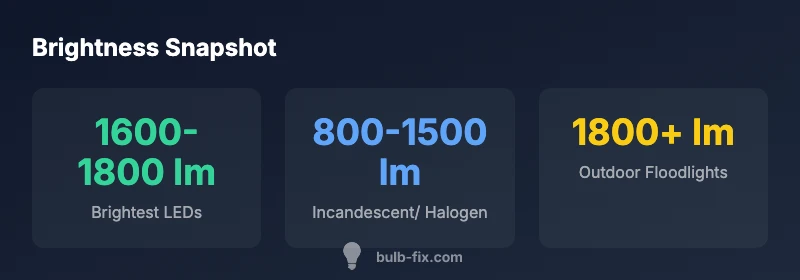
Among common household technologies, LEDs provide the strongest brightness-to-watt efficiency. High-lumen LED bulbs in standard shapes like A19 commonly reach 1600-1800 lumens, with outdoor LED floodlights occasionally exceeding 1800 lumens. Halogen bulbs can rival LEDs in raw lumens (often 800-1500 depending on wattage) but consume much more energy for the same output. CFLs sit in the middle range (roughly 450-1000 lumens) and degrade in brightness over time. The takeaway is straightforward: if raw brightness per watt is your goal, LEDs dominate, especially in the 1600-1800 lumen range for daily home use.
How Brightness Is Measured: Lumens, Candela, and Foot-Candles
Lumens measure total light output. Candela measures intensity in a specific direction, and foot-candles quantify brightness at a distance. For room lighting, lumens are the primary spec: a higher lumen count generally means a brighter space, but the perceived brightness depends on fixture design, room color, and surrounding light. A well-designed LED bulb in a small lamp can outperform a higher-lumen incandescent bulb in a poorly lit fixture. When comparing bulbs, gather the lumen rating, consider the beam angle, and assess the room’s reflective surfaces to judge real-world brightness.
Real-World Brightness in Living Spaces
In living rooms, a single table lamp with a 1600-1800 lumen LED bulb can light the seating area effectively, while overhead ceiling fixtures may require multiple bulbs with 800-1500 lumens each to evenly illuminate the space. For kitchens and work areas, higher-lumen, cooler-color LEDs (typically 4000-5000K) can help with task visibility, but glare can reduce perceived brightness if there are dark, glossy, or highly reflective surfaces. Outdoor spaces demand higher outdoor-rated lumens, with brightness often calculated to cover longer distances and eliminate shadows. Always check fixture limitations and dimmer compatibility before upgrading to very bright bulbs to avoid harsh glare.
Dimming, Beam Angles, and Perceived Brightness
Brightness isn’t just about lumens. The beam angle and how the light is distributed matter a great deal. A narrow beam (spotlight) at the same lumen rating will feel much brighter in a focused area than a wide-beam bulb filling a large room with diffuse light. Dimmable LEDs add a layer of complexity: lowering brightness can reduce glare and eye strain, but the perceived brightness can vary with dimming rules and color temperature. When choosing the brightest option, check the fixture’s compatibility with dimmers and consider the intended use of the space.
Color Temperature and Brightness Perception
Color temperature affects how we perceive brightness. Cooler temperatures (around 4000-5000K) tend to appear brighter to the human eye than warm temperatures (2700-3000K), even at the same lumen rating. If you want the space to feel brighter, a higher color temperature can help, but this is a perceptual effect rather than a true lumen increase. For living spaces where comfort matters, many homeowners prefer 2700-3500K for a balance of brightness and warmth. When shopping, compare lumens first, then evaluate color temperature to match your space’s mood and function.
How to Choose the Brightest Bulb for Your Room: A Quick Guide
Start with lumens: for most living areas, aim for 1600-1800 lumens total in task zones. For smaller lamps, 800-1200 lumens may suffice, while overhead or outdoor lighting may require higher outputs. Match the bulb shape and size to your fixture, verify wattage and dimmer compatibility, and consider color temperature based on room function. Don’t overlook beam angle; a broader distribution can feel brighter across a larger area. Finally, check the fixture’s safety ratings and ensure the bulb is rated for enclosed fixtures if needed. If unsure, test a few options in the space to gauge true brightness and comfort.
Safety and Longevity Considerations for High-Brightness Bulbs
Higher-lumen bulbs generate more light quickly and can heat fixtures more. Ensure your fixture, wiring, and dimmer are rated for the wattage and heat output of high-lumen bulbs. Always use bulbs with proper enclosure ratings when placed in enclosed fixtures, and avoid placing very bright bulbs in areas where glare could cause discomfort or unsafe navigation. Finally, consider longevity: LEDs typically outlast incandescent and halogen, offering 15,000-25,000 hours of life under normal use, which translates to fewer replacements and lower maintenance over time.
Brightness overview by bulb type
| Bulb Type | Brightness (lm) | Typical Wattage | Notes |
|---|---|---|---|
| LED (A19) | 1600-1800 | 10-15 | High efficiency, long life |
| Incandescent | 450-800 | 60-100 | Low efficiency, shorter life |
| CFL | 450-1000 | 13-26 | Moderate efficiency, older tech |
| Halogen | 800-1600 | 40-100 | Bright, but energy-intensive |
Got Questions?
What bulb is the brightest?
In general, high-lumen LED bulbs deliver the most brightness for typical home use. LED options around 1600 lumens in standard shapes are common, with outdoor and specialty LEDs exceeding this range in some cases. Always pair brightness with the fixture’s design and dimmer compatibility.
High-lumen LEDs usually provide the most brightness in homes; look for 1600 lumens for typical fixtures, and consider placement and dimmers.
Do higher lumens always mean more usable brightness?
Higher lumens generally translate to more light, but perceived brightness depends on beam angle, distance, and room color. A focused 1500-lumen beam can appear brighter than a diffuse 1800-lumen fill in a large room. Context matters.
More lumens don’t always mean brighter in the way you experience it; beam and layout matter.
Does color temperature affect brightness?
Color temperature changes how bright a space feels but not the total light output. Cooler temps (around 4000-5000K) can seem brighter to the eye at the same lumen level, while warm temps feel cozier. Use lumens as the brightness baseline and adjust color temperature for mood and task needs.
Color temperature changes how bright a space feels, but lumens measure actual light output.
Can I just install the brightest bulb I can find?
Safety and fixture compatibility matter. Exceeding wattage or dimmer ratings can cause overheating or nuisance glare. Always check the fixture’s rating and use bulbs that match the fixture’s enclosed rating and dimmer compatibility.
Don’t just pick the brightest bulb; make sure your fixture can safely handle it.
What about outdoor brightness?
Outdoor brightness often requires higher lumens due to distance and ambient conditions, but weatherproofing and fixture design matter. Choose outdoor-rated LEDs with appropriate lumens for the area you want to illuminate, and consider glare on neighbors and dark sky guidelines.
Outdoor lighting needs higher lumens but also proper weatherproofing and placement.
“Brightness is a function of lumens, beam angle, and distance to the task. Don’t chase raw lumens alone—design and placement matter.”
Key Points
- Choose LED bulbs for maximum brightness per watt
- Aim for 1600-1800 lumens in common living spaces
- Consider beam angle and distance to the task for perceived brightness
- Color temperature affects perceived brightness, not only lumens
- Check fixture compatibility before upgrading to very bright bulbs