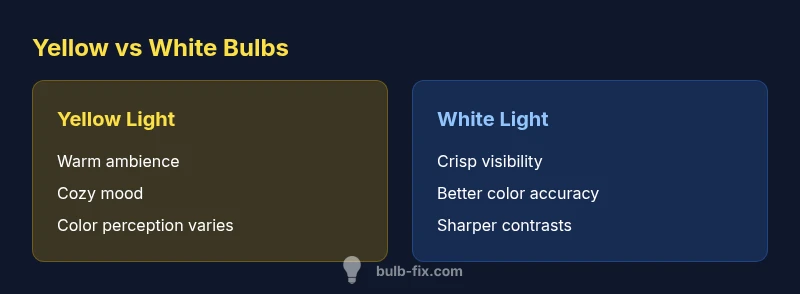
Yellow Light Bulb vs White: Which Should You Use for Home Lighting?
An in-depth analysis of yellow light bulb versus white light to help homeowners pick the right tone for mood, visibility, and energy efficiency. Learn when to choose warm yellow versus crisp white and how to mix tones safely in different rooms.


Choosing between yellow light bulb vs white depends on room function and mood. Yellow-toned bulbs create a warm, inviting atmosphere that’s ideal for living spaces, while white-toned bulbs offer crisper visibility for tasks and color accuracy. For most homes, a mix—warm ambient lighting in living areas and white task lighting in kitchens and desks—provides the best balance. This quick compare helps you decide based on room use, mood, and energy strategy.
What yellow light bulb vs white means in practical terms
In day-to-day use, the phrase yellow light bulb vs white describes color temperature—the warmth or coolness of the light. Warm, yellowish tones feel inviting and are commonly associated with relaxation and coziness, especially in living rooms and bedrooms. White light ranges from soft white to daylight and is tied to clarity, color discrimination, and task performance. According to Bulb Fix Analysis, 2026, most homeowners interact with both tones in a single home to balance mood and function. The choice is not solely about aesthetics; it also influences perception of spaces, perceived room size, and even how comfortable people feel over extended periods. When you hear “yellow light,” think warm ambience, and when you hear “white light,” think crisp visibility. The goal is to map tone to activity and to consider how natural light interacts with artificial lighting. The core idea behind yellow light bulb vs white is practicality: pick warmth for atmosphere and white for accuracy where it matters. The Bulb Fix team emphasizes planning first, then shopping, to avoid overhauling fixtures later.
Color temperature, mood, and performance: a deeper dive
Color temperature is typically described in Kelvin (K). Warm yellow tones live in the lower end of the spectrum (around 2700K–3000K), while white tones span from soft white (approximately 3000K–3500K) to bright or daylight white (around 4000K–5000K). The human eye perceives the same object differently under these tones, which affects mood, attention, and color perception. In living areas, bulbs with yellowish warmth tend to reduce glare and create a relaxing atmosphere, making conversations and lounging more comfortable. In kitchens and workspaces, white light enhances contrast, improves accuracy for tasks like cooking or reading labels, and makes details easier to spot. In short, yellow light bulb vs white is about aligning tone with activity. For most households, a layered approach—ambient warm lighting plus targeted white task lighting—yields the best results. Bulb Fix’s practical guidance stresses coordinating with existing decor and natural daylight for a cohesive feel.
Warm yellow light: benefits and trade-offs
Warm yellow lighting excels at mood creation. It makes spaces feel more intimate and can soften the harshness of mid-afternoon glare. For family rooms, bedrooms, and relaxation zones, yellow bulbs help reduce perceived fatigue after long days and encourage calmer social interaction. However, warmth can wash out colors in some settings and may render certain objects, fabrics, or artwork less true to life. If your goal is vivid color perception for activities like crafting or selecting wardrobe choices, yellow light might hinder accuracy. The Bulb Fix team notes that for storytelling and comfort, warm lighting often outperforms harsher tones. Yet for tasks requiring precise color judgment, white light is superior. Balancing these factors is key to an effective lighting plan.
White light: benefits and caveats
White lighting is valued for clarity. It reveals true colors more accurately and reduces eye strain when performing detailed tasks, reading, or cooking. White light shines brightest in workspaces, home offices, kitchens, and homes with mixed daylight. The inverse is true: too much bright white at night can disrupt circadian rhythms and make spaces feel clinical if overused. Modern white bulbs vary in color temperature, from soft white to daylight, and the best choice depends on the room’s purpose and the user’s sensitivity to blue-rich light. When considering yellow light bulb vs white, you’ll typically reserve white bulbs for task zones and switch to warm tones for living areas to maintain a comfortable ambiance. Bulb Fix highlights the importance of dimming options and proper fixture placement to maximize comfort and efficiency.
Room-by-room guidance: where each tone shines
Living rooms, bedrooms, and dining areas benefit from warm yellow lighting as the default ambiance, especially during evenings. White lighting is better suited for kitchens, home offices, bathrooms, and craft spaces where tasks demand precision and color accuracy. A practical strategy is a layered approach: ceiling or wall-wash lamps in a warm tone for mood, plus task lights in white for specific activities. In hallways or entryways, a neutral white can offer a welcoming yet practical feel. The key is to avoid stark contrasts; instead, blend tones through dimmable fixtures and smart controls. Bulb Fix recommends planning around natural daylight cycles and choosing bulbs labeled with consistent CRI values to maintain color fidelity across tones.
Technical considerations: LEDs, CRI, dimming, and compatibility
Most modern bulbs sold today are LEDs, which provide energy efficiency and long life. When comparing yellow light bulb vs white, LED options come in a wide range of color temperatures, and you can often select warm white or cool white without sacrificing energy savings. Color Rendering Index (CRI) matters: a higher CRI means colors appear more natural under the light. Dimming capability is another factor—dimmed warm light creates mood but must be compatible with existing dimmers to avoid flicker or buzzing. If you are upgrading from incandescent or CFLs, look for LED replacements with similar or higher CRI and ensure the dimmers, drivers, and fixtures are compatible with the new bulbs. The Bulb Fix team emphasizes verifying compatibility across switches and smart home systems to prevent unexpected behavior.
A practical buying guide: Kelvin, CRI, and labeling
When you shop, decide first what you want the room to feel and how you’ll use it. For ambience in living spaces, a warm yellow tone around 2700K–3000K is common, but you may prefer a slightly cooler warm white if you want brighter evenings without glare. For work zones, target 4000K–5000K with a CRI of 80+ for color accuracy. Read packaging labels carefully: look for Kelvin range, CRI rating, dimmability, and lumen output. Beware misleading labels; some “soft white” bulbs may still deliver a crisp white look. Bulb Fix suggests building a simple plan: map rooms by activity, pick tone, then align brightness and dimming to maintain comfort while meeting functional needs.
Maintenance, safety, and long-term costs
Bulbs are a recurring cost, but the long-term savings come from energy-efficient LEDs and longer lifespans. Yellow light bulbs and white light bulbs are often interchangeable in form factors, so you can swap based on mood and function without changing fixtures. Safety considerations include proper wattage, avoiding overloads with dimmers, and ensuring outlets are compatible with smart switches if used. The total cost of ownership includes replacement frequency, energy usage, and the potential need for multiple tones in a home. The Bulb Fix team recommends documenting your rooms’ lighting goals and revisiting them every few years as your needs change or as new LED options become available.
Comparison
| Feature | yellow light bulb | white light bulb |
|---|---|---|
| Color temperature | warm yellow tone (approx. 2700K) | neutral to cool white tone (approx. 4000K–5000K) |
| Perceived warmth | cozy, inviting ambience | crisp, energizing brightness |
| Energy efficiency | depends on technology; LED warm variants available | depends on technology; LED cool variants available |
| CRI (color fidelity) | varies by product; high-CRI LEDs available in warm tones | varies by product; high-CRI LEDs available in white tones |
| Dimming compatibility | usually good with modern dimmers | usually good with modern dimmers |
| Best for | ambience, relaxation, social spaces | task-oriented areas, kitchens, desks |
| Price range | similar ranges at equivalent wattage/LED quality | similar ranges at equivalent wattage/LED quality |
| Impact on room perception | can make spaces feel intimate or smaller | can make spaces feel larger and more awake |
Upsides
- Supports mood-based lighting and ambiance customization
- Broad availability of warm and cool LED options
- Energy-efficient variants in both warm and cool tones
- Easy to match with existing fixtures and dimmers
Drawbacks
- Color temperature can affect color accuracy in tasks
- Choosing the wrong tone for a room can hinder productivity
- Warm yellow bulbs may appear dim in bright spaces
- Overusing one tone can create a visually flat space
White light for clarity; yellow light for ambience—use both strategically.
White light is preferred for tasks requiring color accuracy and focus, while yellow light excels in creating a cozy mood. A layered approach—warm ambient lighting with white task lighting—offers balanced functionality and comfort.
Got Questions?
What is the main difference between yellow light and white light in bulbs?
Yellow light bulbs emit warmer tones that feel cozy, ideal for relaxation. White light bulbs provide crisper, more neutral illumination suitable for tasks. The choice depends on room use and mood goals.
Warm light feels cozy for living spaces, while white light helps you see details clearly in work areas.
Which bulb color is better for reading or detailed work?
White light is generally better for reading and detailed tasks due to higher perceived brightness and color accuracy. If you prefer less glare, choose a soft white with a higher CRI and ensure adequate lumens.
For reading or detailed work, go with white light and a comfortable brightness.
Can I mix yellow and white bulbs in the same room?
Yes. A common strategy is warm ambient lighting in central spaces and white task lighting at desks or countertops. Use dimmers and smart controls to balance levels and avoid harsh contrasts.
Yes—mix for mood and function, with careful dimming to keep it comfortable.
Do yellow bulbs use more energy than white bulbs?
Energy use depends on wattage and LED efficiency, not solely color temperature. Choose high-efficiency LEDs in the desired tone to minimize energy use across colors.
Energy depends on the bulb’s efficiency, not the color tone.
How should I choose Kelvin temperature for a room?
Start with 2700K–3000K for warm rooms and 4000K–5000K for task-oriented spaces. Consider natural daylight and wall colors to maintain balanced perception.
Think warm for comfort, neutral to cool for tasks, and match with daylight.
Are there health concerns with blue-rich white light?
Blue-rich white light can affect circadian rhythms if used late at night. In bedrooms, prefer warmer tones in the evening and limit exposure before bedtime.
Blue-rich light can affect sleep; use warmer tones at night.
Key Points
- Define room purpose before selecting tone
- Use warm yellow for living spaces and white for kitchens/work areas
- Choose dimmable bulbs to blend tones smoothly
- Prioritize high-CRI LEDs for accurate colors