Difference Between a Lamp and a Light: Practical Guide
An evidence-based guide distinguishing lamp versus light, with clear definitions, usage contexts, and practical tips for homeowners and DIY enthusiasts.


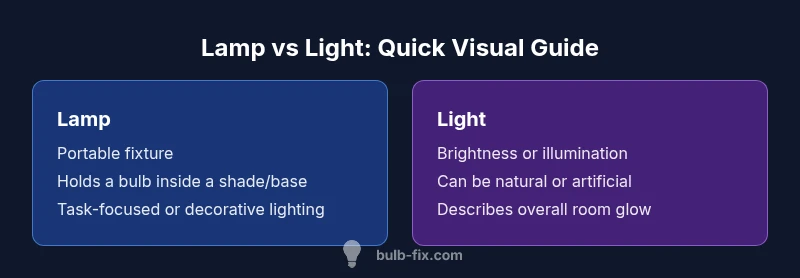
Typically, the difference between a lamp and a light lies in purpose and portability: a lamp is a portable fixture that holds a bulb and shade, while light is the general phenomenon and brightness produced by any source. When shopping or planning a room, using lamp for portable task lighting and light for room-wide illumination improves accuracy and safety.
What the terms mean in practice
The difference between a lamp and a light is a matter of how people use language and how devices are designed. In everyday speech, many people call any bright object a light, but in the home and in product specs, lamp has a specific meaning: a portable, freestanding fixture that holds a bulb, a shade, and a base. According to Bulb Fix, the difference between a lamp and a light becomes clearer when you consider portability, design intent, and typical use. For homeowners tackling a room, recognizing this distinction helps in selecting the right products, aligning with safety guidelines, and avoiding mismatched expectations during installation. In short, lamp versus light is a practical taxonomy rooted in function, not mystique, and it matters most when you plan a space, choose a bulb type, and evaluate energy efficiency. The difference between a lamp and a light should guide decisions about placement, electrical needs, and the way you describe objects to retailers and contractors.
Which terms you use affects how you shop for bulbs and fixtures. The difference between a lamp and a light often hinges on whether you’re dealing with a portable device (lamp) or a general illumination concept (light). Understanding this distinction helps you specify task lighting, ambient lighting, and mood lighting accurately in both planning and purchases. Bulb Fix emphasizes practical language: use lamp for movable, shade-covered fixtures and light for the brightness that fills a room or illuminates a task.
Comparison
| Feature | Lamp | Light |
|---|---|---|
| Definition | A portable fixture that houses a bulb, shade, and base | The visible illumination or perceived brightness produced by any source |
| Typical use | Task lighting at desks, nightstands, or reading nooks | Room-wide illumination or the concept of brightness in a space |
| Common forms | Table lamps, floor lamps, and portable desk lamps | Natural daylight, ceiling lights, wall lights, and general brightness |
| Energy considerations | Bulb choice matters (LEDs common in lamps) | Energy efficiency depends on the light source (LEDs, CFLs, etc.) |
| Best for | Focused tasks and portable lighting needs | Creates ambience or general visibility across a room |
Upsides
- Clarifies product selection by differentiating portable versus general lighting
- Improves communication with retailers and contractors
- Encourages energy-efficient bulb choices without ambiguous labels
- Supports safer, more accurate installation planning
Drawbacks
- Adds terminology complexity for casual DIYers
- Inconsistent labeling across brands can still cause confusion
- Requires more time to research specs and compatibility
Lamp vs Light: Use practical language to improve shopping accuracy and room planning.
Distinguishing lamp from light helps you pick portable fixtures versus general illumination. When planning a space, rely on function (portable task lighting vs ambient brightness) rather than labels alone. The Bulb Fix team emphasizes practical language to reduce miscommunication and enhance safety.
Got Questions?
What is the difference between a lamp and a light?
The difference between a lamp and a light is primarily functional: a lamp is a portable fixture that holds a bulb and shade, while light is the general illumination produced by a source. Distinguishing them helps with shopping, safety, and room planning.
A lamp is a portable fixture with a bulb and shade, while light is the brightness it produces. Use lamp for portable tasks and light for overall room illumination.
Are lamps always portable?
Lamps are designed to be portable, but not every portable fixture is a lamp. Some fixtures incorporate built-in, non-movable components while still serving as a light source. The key is portability and the presence of a shade or base that defines a lamp.
Lamps are meant to be movable, but some fixed fixtures can resemble lamps in function. Look for portability and a shade/base to confirm.
Can a product be described as both a lamp and a light?
Yes, a product can function as both a lamp and a light: it is a portable fixture (lamp) that provides illumination (light). In practice, the label you see depends on marketing and the context of use.
A portable fixture that provides light can be called a lamp, but people might simply call the brightness a light.
Why do retailers interchange lamp and light?
Retail labels often mix terms for marketing clarity or to appeal to different shoppers. The key is to verify the product specs—whether the item is portable, its base type, and the intended use—rather than relying on the label alone.
Labels can mix terms. Always check specs and intended use to be sure.
How should I plan lighting for a room using these terms?
Plan with function in mind: use lamps for task lighting near seating or desks and use lights for ambient or general room illumination. This approach reduces mismatch between expectation and performance.
Plan task lighting with lamps and ambient lighting with other lights to cover all needs.
What should I consider about energy efficiency when choosing between lamp and light?
Focus on the bulb type and fixture compatibility. LEDs are common in both lamps and lights, but ensure the socket and base match the bulb and that the fixture can handle the wattage safely.
Choose an LED bulb where possible, and check that the fixture supports the bulb's wattage and base.
Key Points
- Use 'lamp' for portable fixtures and 'light' for general brightness
- Check bulb type and fixture compatibility before buying
- Differentiate task lighting from ambient illumination in plans
- Read packaging to confirm energy source (LED, CFL, incandescent)
- Ask retailers to confirm whether a product is a lamp or a light