Difference Between a Bulb and a Torch: A Practical Guide
A detailed comparison of bulbs and torches, covering definitions, operation, energy use, durability, disposal, and buying guidance to help homeowners choose wisely for fixed vs portable lighting.


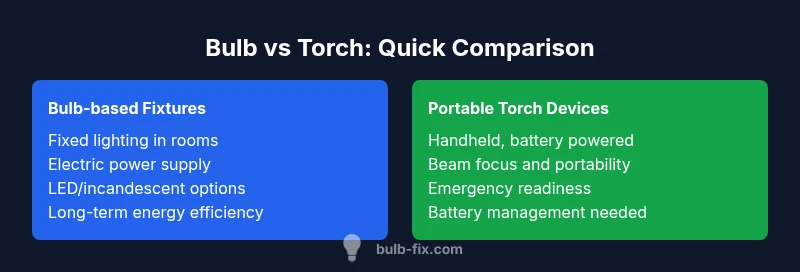
The difference between a bulb and a torch is that a bulb is the light-emitting component inside a fixture, while a torch is a portable handheld lighting device that houses one or more bulbs and a power source. In practice, bulbs provide efficient, fixed lighting for interiors, whereas torches offer mobility for outdoor tasks, emergencies, and flexible use. Understanding this distinction helps homeowners plan both stationary and portable lighting across daily activities.
Difference between a bulb and a torch
In everyday language, people often conflate a "bulb" with the light itself and use the term "torch" to describe any portable light. The difference between a bulb and a torch becomes clear when you separate components from devices: a bulb is the glass or filament-based source of light, while a torch is a complete handheld device that contains a bulb, a power source, and a switch. The Bulb Fix team emphasizes this distinction because it frames how you approach lighting projects in a home—from fixed fixtures that rely on a bulb to portable devices you carry for outdoor tasks and emergencies.
A bulb alone does not produce light without an electrical or chemical driver within a fixture or tool. The torch, by contrast, bundles the bulb with circuitry, a housing, and a power source designed for mobility. Both terms live within the same lighting ecosystem, but their roles in your home and on the job site differ in scope, usage, and maintenance needs.
How bulbs work: from filament to phosphor to LED
A traditional incandescent bulb relies on a filament that heats up when electricity passes through it, emitting visible light as it resists electrical flow. Modern bulbs often use LED technology or phosphor-coated layers to convert energy into light with higher efficiency and longer life. LED bulbs generate light through semiconductors, producing less heat and using far less energy for the same brightness. This block explains how different bulb technologies affect energy use, heat output, dimming compatibility, and replacement cycles, all of which influence the perceived difference between a bulb and a torch in practical terms.
Key takeaways: bulb efficiency, color rendering, and compatibility with dimmers or smart controls matter when choosing LED or other bulb types for fixed lighting. Understanding these factors helps ensure comfort, safety, and long-term cost savings in a home setting.
How torches work: components and operation
A torch is a portable lighting device that integrates a bulb, a compact power source (often rechargeable or disposable batteries), and a housing that directs light into a beam. The switch connects the power source to the bulb, enabling instant illumination. Torches vary in size, beam angle, and durability. Some models emphasize rugged construction for outdoor use; others prioritize compact design for everyday carry. They may include features such as adjustable focus, multiple brightness modes, and waterproofing for reliability in challenging environments.
Compared with a fixed bulb in a lamp, a torch’s design prioritizes portability, quick access, and resilience under handling. The choice between a basic flashlight and a high-lumen multi-beam torch reflects how often you need mobility and how you balance brightness with battery life.
Historical context: bulbs and torches through time
Bulbs and torches trace different paths in lighting history. Early bulbs evolved from simple filament lamps to the modern LED-based technologies that dominate indoor lighting. Torches, originally flame-based devices, evolved into battery-powered handheld tools designed for independence from wall outlets. The evolution of both items demonstrates a central theme in lighting: efficiency, safety, and convenience drive design choices. This historical perspective helps homeowners appreciate why today’s bulbs and torches offer such diverse options for different tasks.
Understanding historical milestones enables better decisions about upgrading interiors or stocking a reliable emergency kit with the right kind of portable light.
Energy sources and efficiency: fixed power vs portable power
Bulbs in homes typically rely on a fixed power source or replaceable lamps, with energy efficiency driven by bulb type (incandescent, CFL, LED). LED bulbs are widely adopted for their long life and low energy use, while incandescent bulbs remain for specific color warmth or dimming characteristics. Torches depend on batteries—disposable or rechargeable—and their efficiency hinges on battery chemistry, runtime per charge, and the LED or incandescent choice in the torch itself. This distinction affects operating costs, environmental impact, and readiness for power outages.
For homeowners, the energy choices influence long-term expenses and climate considerations, making LED bulbs and energy-efficient torches a smart pairing for a resilient lighting setup.
Output and control: how light is delivered
Fixed bulbs illuminate spaces through fixtures that tailor light distribution via shades, lens patterns, and room geometry. This arrangement often enables uniform, controlled lighting across a whole area. Torches provide directional light that can be aimed precisely where illumination is needed, which is valuable for outdoor activities, inspections, or nighttime tasks. The control mechanisms differ: a wall switch or smart lighting system manages bulbs, while torches rely on the user’s grip and beam adjustment.
Choosing between a bulb-based approach and a torch-centric approach hinges on how you want to direct light and manage energy use in varying environments.
Durability and safety: handling risk and maintenance
Bulbs in fixtures are protected by housings and are typically shielded from the elements, which reduces immediate damage risk. However, bulbs can fail or degrade over time, especially in high-heat fixtures or with frequent switching. Torches expose the bulb to handling, drops, and outdoor conditions, increasing the risk of impact damage and moisture exposure. Regular maintenance for both includes replacing bulbs of the correct type and ensuring batteries in torches are charged and free of corrosion. Safety practices include avoiding overheating, using appropriate power sources, and following disposal guidelines for bulbs and batteries.
In sum, durability profiles differ: stationary bulbs emphasize fixture protection, while torches require rugged housing and reliable power sources.
Lifetime, replacement, and maintenance expectations
LED bulbs offer extended lifespans compared with older incandescent models, reducing replacement frequency in fixed lighting. Torches vary by brand and battery type, with rechargeable models typically offering the most convenient maintenance cycle. The balance between upfront cost and long-term use is a key consideration when planning a home lighting strategy. Regular battery checks and bulb replacements help maintain performance, efficiency, and safety in both fixed and portable lighting scenarios.
Sizing, compatibility, and common uses
Fixed lighting relies on standardized bulb sockets and fixture types, making it easy to match bulbs to existing lamps and ceiling fixtures. Torches come in a wider variety of sizes and beam patterns, from narrow spotlights to broad floodlights, and they may include features such as waterproofing or heat management. Understanding your typical use cases—daily interior lighting versus outdoor exploration or emergency readiness—guides your choice between investing in new bulbs or acquiring a reliable torch collection.
Common uses include ambient interior lighting versus task lighting, safety lighting for outdoor paths, and emergency lighting in power outages. Having both types helps ensure you always have appropriate illumination.
Disposal, recycling, and environmental considerations
Bulbs must be disposed of according to local rules for bulbs, especially for fluorescent or LED technologies. Batteries in torches require careful handling and recycling according to battery-type guidelines. Many communities offer recycling centers or take-back programs, reducing environmental impact. Choosing LEDs over incandescent bulbs can lower energy consumption over time, contributing to a smaller carbon footprint. Maintaining a responsible disposal plan for both bulbs and batteries is an important part of home lighting stewardship.
Cost considerations, value, and budgeting
Budgeting for lighting involves upfront costs for fixtures and bulbs as well as ongoing energy costs and replacement expenses. LED bulbs typically offer lower operating costs and longer life, while torches vary in price based on features such as beam focus, brightness modes, and battery technology. Planning for a mix of fixed lighting with LED bulbs and portable lighting with reliable torches can provide both efficiency and flexibility. When evaluating options, consider total cost of ownership rather than upfront price alone.
Buying guide: how to choose between a bulb-centered plan and a torch-centered plan
A practical buying guide starts with task analysis: what spaces need fixed lighting, and which outdoor or emergency tasks require portable illumination? For fixed lighting, prioritize energy efficiency, color rendering, dimming compatibility, and fixture compatibility. For portable lighting, assess battery life, ruggedness, beam pattern, and charging options. A balanced home lighting strategy typically combines LED bulbs for indoor efficiency with a reliable set of torches for mobility and emergencies. By clarifying your priorities, you’ll avoid overbuying one type while ensuring reliable illumination across scenarios.
Key decision factors and final guidance
The central decision is whether your lighting needs lean toward stationary, fixture-based illumination or portable, flexible light. In most homes, a mix of LED bulbs and well-chosen torches provides the best outcomes for energy efficiency, resilience, and practical usability. Remember to align with safety guidelines, environmental considerations, and disposal best practices to maintain a responsible lighting setup that serves daily needs.
Comparison
| Feature | Bulb-based Fixtures | Portable Torch Devices |
|---|---|---|
| Light Source Type | Bulb-based fixtures (LED, incandescent, CFL) | Portable torches with integrated bulbs (LED, incandescent) |
| Power Source | Mains or fixture-supplied electricity | Battery-powered or rechargeable batteries |
| Best Use Case | Fixed interior lighting, long-term operation | Outdoor/portable tasks, emergencies, quick lighting |
| Durability/Construction | Socket-mounted, stationary | Rugged, handheld, battery-dependent |
| Output Control | Environment-dependent, often dimmable via fixture | Typically on/off with adjustable beam (focus) |
| Cost Range (Upfront) | Varies by fixture and bulb type | Lower upfront for basic torches; higher for feature-rich models |
| End-of-Life/Disposal | Disposal by bulb type (LED, CFL, incandescent) | Battery disposal; LED modules disposed as bulbs |
Upsides
- Clarifies lighting choices for homeowners
- LED bulbs offer long life and energy efficiency
- Torches provide mobility and emergency readiness
- Bulb choices are widely available and varied
Drawbacks
- Can be confusing to choose between fixed vs portable lighting
- Battery disposal adds environmental considerations
- Different disposal rules for bulbs and batteries
- Upfront costs can vary widely based on features
Bulbs form the backbone of stationary lighting; torches complement with mobility and emergency readiness.
For most homes, a solid lighting plan relies on LED bulbs for efficiency and fixtures, supplemented by dependable torches for tasks away from outlets or during outages. The right mix reduces energy use while preserving flexibility.
Got Questions?
What is the difference between a bulb and a torch?
A bulb is a light-emitting component that fits inside fixtures, while a torch is a portable handheld device that houses a bulb and a power source. The difference lies in scope: one is a component, the other a complete tool. This distinction informs how you plan stationary versus portable lighting.
A bulb is the light source inside a fixture, and a torch is a complete handheld light that includes a bulb and power source.
Can I use a bulb in a torch?
Torches are designed with specific sockets and power systems. While some universal torches accept replaceable bulbs, many are built around fixed LED modules or compact designs. Always check the torch’s specifications before attempting to swap bulbs.
Torches are designed for their own bulbs and batteries; check compatibility before changing components.
What energy sources do bulbs and torches use?
Bulbs draw power from a fixed electrical supply or from a fixture’s circuit, while torches are powered by batteries, which can be disposable or rechargeable. The energy source affects running costs, use cases, and readiness during outages.
Bulbs use household power or replaceable bulbs; torches run on batteries.
How long do LED bulbs last compared with torches?
LED bulbs typically offer longer operational life than traditional incandescent bulbs, reducing replacement frequency for fixed lighting. Torch longevity depends on battery type and usage patterns; rechargeable models often provide a convenient cycle of charging and use.
LED bulbs tend to last longer; torch life depends on battery health and usage.
How should bulbs and batteries be disposed of?
Bulbs should be recycled according to their type (LED, CFL, incandescent) and local rules. Batteries require separate recycling streams. Following local guidelines helps minimize environmental impact and keeps your home safe.
Recycle bulbs and batteries properly per local rules; don’t mix disposal streams.
Are torches energy-efficient overall?
Efficiency depends on the torch model and battery type. LED-based torches with good battery life offer strong efficiency for portable use, while lower-cost models may consume more energy per hour. Choosing high-efficiency LEDs and reliable batteries improves overall performance.
Efficiency varies by model; high-quality LED torches perform best.
Key Points
- Define your primary lighting needs: fixed vs portable
- Choose LED bulbs for long-term energy savings
- Keep a small torch kit for emergencies
- Plan for proper disposal of bulbs and batteries
- Maintain a balanced budget across fixtures and portable lights