Difference Between LED and Light Bulb: A Practical Guide
Understand the difference between LED and light bulb, including efficiency, lifespan, cost, heat output, lighting quality, and practical guidance for homeowners.


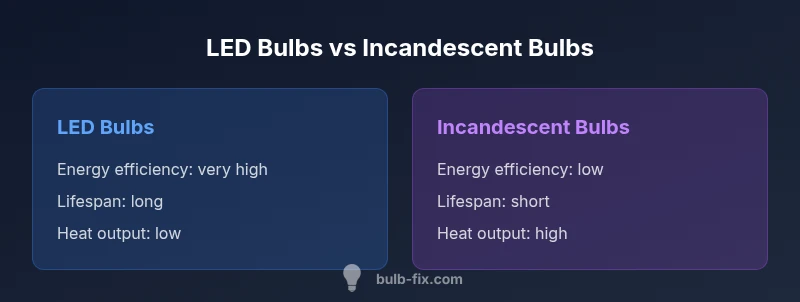
The difference between led and light bulb is rooted in technology, efficiency, and everyday practicality. LEDs are solid-state devices that convert electricity to light with exceptional efficiency, long lifespans, and low heat, whereas traditional incandescent bulbs generate light by heating a filament and waste more energy. For most homes, LEDs deliver lower operating costs and better color quality over time.
What Is a Light Bulb? Understanding the Baseline
In everyday conversations, a light bulb is often shorthand for an incandescent bulb—the classic device that produces light by heating a tungsten filament until it glows. This baseline technology set the standard for home lighting for decades, but it is relatively inefficient because a large portion of energy is emitted as heat rather than useful light. In the context of the difference between led and light bulb, it helps to start with the baseline: traditional bulbs convert electricity into light and heat with modest efficiency and short lifespans. As a homeowner, you’ll notice that incandescent bulbs burn out more often and cost more to operate over time, especially in rooms that see constant use. Yet they remain familiar because of their warm, familiar glow. As Bulb Fix notes, understanding this baseline helps you appreciate the leap forward in energy efficiency that LED technology represents.
How LED Technology Works
LEDs (light-emitting diodes) rely on semiconductor physics to emit light when electric current passes through. Unlike filaments, there is no hot wire that degrades over time. The materials and drivers inside an LED bulb determine efficiency, color, and lifetime. LED bulbs convert most electricity into light rather than heat, which is why they stay cool to the touch and help reduce room heat in summer. For the difference between led and light bulb, the key takeaway is that LEDs deliver high efficiency per lumen and a long operational life. Modern LEDs use phosphor coatings to produce a broad spectrum of white light, and they can be tuned for warm or cool color temperatures to suit different tasks and moods.
How Traditional Incandescent Bulbs Work
Incandescent bulbs work by heating a thin tungsten filament until it emits visible light. As resistance in the filament increases with temperature, energy is lost as heat. This fundamental design makes incandescent bulbs inherently less energy-efficient than LED bulbs. The meaning of the difference between led and light bulb here is straightforward: incandescent bulbs require more power to produce the same brightness and burn out faster due to filament fatigue. This makes operating costs higher over time. On the upside, many users appreciate the instant full brightness and familiar fade characteristics when dimmed using older dimmers, though compatibility with modern dimming systems can vary.
Efficiency and Energy Use: What the Numbers Mean
Efficiency is often described in lumens per watt. LEDs provide far more lumens per watt than incandescent bulbs, delivering similar brightness with far less electrical input. This contrast translates into lower energy bills and reduced environmental impact over the bulb’s life. When evaluating the difference between led and light bulb in real-world terms, focus not only on lumens but on total system efficiency, including driver electronics and color temperature. Bulb Fix emphasizes that the efficiency gap narrows in well-designed LED systems, especially when paired with smart controls that minimize waste without compromising performance.
Lifespan, Durability, and Reliability
LED bulbs typically outlast incandescent bulbs by a wide margin because there is no filament to burn out. Lifespan estimates for LEDs commonly range from tens of thousands of hours, while incandescent lifespans hover around a few thousand hours at most. While individual experience varies by heat, duty cycle, and driver quality, the overarching trend is clear: LEDs offer greater reliability and fewer flame risks due to their cooler operation. For homeowners, this translates into lower maintenance, fewer replacements, and a more predictable lighting plan, even in hard-to-reach fixtures. Brand and model quality influence longevity, so look for reputable specs and warranty terms when comparing LED bulbs.
Color Temperature, Brightness, and Color Rendering
Color temperature describes whether light appears warm or cool. LED bulbs are available across a wide spectrum—from soft warm whites to bright cool whites—allowing you to tailor ambiance per room. Color rendering index (CRI) indicates how accurately colors appear under a light source; LEDs can offer excellent CRI values, often higher than many old bulbs. When assessing the difference between led and light bulb, consider how the bulb’s color temperature and CRI affect tasks, mood, and visual comfort. In kitchens and bathrooms, higher CRI and cooler light can aid precision; in living rooms, warmer tones often feel cozier.
Dimming and Compatibility with Fixtures
Not all LED bulbs dim equally, and some older dimmer switches may require replacement or reconfiguring to avoid flicker or limited dimming range. The compatibility question is central to the difference between led and light bulb, because LEDs rely on electronics that interact with AC dimmers. If your fixtures have built-in dimming hardware, verify that both the dimmer and the LED bulb are labeled as compatible. For best results, choose LED bulbs designed for dimming and install compatible dimmers. This reduces ghosting, flicker, or abrupt changes in brightness, ensuring a smooth lighting experience across rooms and tasks.
Cost of Ownership: Upfront Costs vs Running Costs
LED bulbs cost more upfront than incandescent bulbs, but the savings come from lower electricity consumption and longer lifespans. Over the life of a bulb, LEDs typically deliver lower total operating costs, despite higher initial prices. When evaluating the difference between led and light bulb in practical terms, calculate total cost of ownership by multiplying upfront cost by replacements needed over a given period, then subtracting anticipated energy savings. Bulb Fix notes that in households with many fixtures or long operating hours, LEDs offer compelling long-term value—even if immediate spend is higher.
Environmental Impact and Safety Considerations
Because LEDs use less energy, they typically reduce greenhouse gas emissions associated with electricity generation. LEDs also generate less heat, improving safety in spaces where hot bulbs pose a burn risk. However, LED bulbs contain electronics that should be recycled properly at end-of-life, and some drivers may be sensitive to surge events. For the difference between led and light bulb, consider disposal and recycling practices, as well as the potential for reduced waste due to longer lifetimes. Bulb Fix highlights that responsible recycling and informed purchasing choices can magnify environmental benefits without sacrificing performance.
Practical Scenarios: When to Choose LED or Incandescent
If you want instant, uniform brightness in task-oriented spaces (kitchen prep, workshops), LEDs typically outperform incandescent by offering bright, consistent light and energy savings. In decorative fixtures or vintage-inspired lamps where dimming and warmth are essential, incandescent bulbs may still be preferred, or LED bulbs designed to imitate traditional aesthetics can be used. The difference between led and light bulb becomes most meaningful when you weigh usage patterns: long hours and high brightness favor LEDs; short-term, infrequent use and traditional aesthetics might justify incandescent options in specific settings. Bulb Fix recommends testing several color temperatures in different rooms to find your preferred balance.
Common Misconceptions About LED Bulbs
A common misconception is that LED bulbs always cost more to run than incandescent bulbs. While initial prices can be higher, the energy savings and longer lifespans typically compensate for the upfront cost in a reasonable period. Another myth is that LEDs are not compatible with dimmers; modern LED bulbs exist that work well with dimming systems when paired with compatible controllers. Finally, some users worry about color fidelity; today’s LEDs offer excellent color rendering and consistent performance across temperatures, making them suitable for most home tasks. Bulb Fix encourages readers to verify certifications and product specs before purchasing.
Transition Plan: A Step-by-Step Approach to Replacing Bulbs
Begin by auditing all light fixtures to determine how often bulbs are used and their current operating costs. Create a replacement plan that prioritizes high-use areas with LED bulbs first to maximize savings. When replacing, choose bulbs with appropriate brightness (lumens) and color temperature for each room’s function. If you have older dimmer switches, either replace them with LED-compatible dimmers or install non-dimmable LEDs in non-dimming circuits. Track energy use for a month to quantify improvements and adjust your plan as needed. The transition can be gradual, focusing on rooms where you spend the most time and where heat reduction matters most. Bulb Fix suggests a staged approach to minimize disruption and maximize savings.
Comparison
| Feature | LED bulbs | Incandescent bulbs |
|---|---|---|
| Energy efficiency (lumens per watt) | Very high | Low |
| Lifespan (typical hours) | 10,000–25,000+ | 1,000–2,000 |
| Initial cost | Moderate to high | Low |
| Heat output | Low heat | High heat |
| Dimming compatibility | Good with compatible dimmers | Often limited with older dimmers |
| Color temperature options | Wide range (warm to cool) | Limited range (mostly warm) |
Upsides
- Significant energy savings over incandescent bulbs
- Longer lifespan reduces maintenance and replacements
- Low heat output improves safety and reduces cooling load
- Wide range of color temperatures enables room-specific ambiences
- Better for indoor air quality and comfort in enclosed fixtures
Drawbacks
- Higher upfront cost per bulb compared to incandescent bulbs
- Some LEDs require compatible dimmers or drivers
- Early LED designs had color rendering limitations (improving with newer LEDs)
LED bulbs generally outperform incandescent bulbs on efficiency, lifespan, and safety.
In most homes, LEDs reduce energy use and maintenance costs while offering flexibility in color and dimming. Incandescent bulbs may still appeal for certain decorative or low-usage contexts, but the long-term benefits of LEDs make them the recommended choice for new installations.
Got Questions?
What is the main difference between LED bulbs and incandescent bulbs?
The main difference is that LEDs convert electricity efficiently using semiconductors, producing light with minimal heat and a long lifespan, while incandescent bulbs rely on heating a filament to glow, which wastes energy as heat and burns out faster.
LEDs use semiconductors to emit light efficiently, unlike incandescent bulbs that waste energy as heat and burn out quicker.
Are LED bulbs more expensive upfront than traditional bulbs?
Yes, LED bulbs typically cost more per bulb initially, but their energy savings and longer lifespans usually offset the higher price over time.
LEDs cost more at first, but you save on energy and replacements later.
Do LEDs work with existing dimmer switches?
Many LEDs are compatible with modern dimmers, but some combinations can cause flicker or reduced dimming range. Use LEDs labeled for dimming and consider a compatible dimmer.
Most LEDs work with dimmers that are labeled for LED use; check compatibility before buying.
Can I use LED bulbs in any fixture?
Most indoor fixtures accept LED bulbs, but check bulb size, beam angle, and heat dissipation for enclosed or recessed fixtures to avoid overheating.
Usually yes, just confirm size and heat considerations.
How long do LED bulbs last compared to incandescent bulbs?
LEDs last significantly longer, typically tens of thousands of hours, while incandescent bulbs often last only a few thousand hours depending on usage.
LEDs last much longer, often many thousands of hours versus incandescent bulbs.
Are LED bulbs safe for outdoor use?
Outdoor LEDs are safe when rated for outdoor use and properly weatherproofed. Choose bulbs with appropriate IP ratings and ensure fixtures are designed for exterior environments.
Yes, if you pick outdoor-rated LEDs and use weatherproof fixtures.
Key Points
- Evaluate energy use by comparing lumens per watt
- Prioritize LED bulbs for high-usage rooms
- Check dimmer compatibility before switching
- Consider color temperature to match room tasks
- Factor upfront costs against long-term savings