Bulb vs LED: A Practical Home Lighting Guide
Compare bulb types and LED lighting to choose smarter, safer, and cost-efficient home illumination. Learn differences, costs, lifespan, color, and installation tips.


When deciding between bulb vs led for home lighting, LED bulbs deliver higher energy efficiency, longer life, and better dimming compatibility, but may cost more upfront and vary in color quality. This quick comparison highlights performance, cost, and installation considerations for common rooms and fixtures in real life.
Energy basics: bulb vs led in everyday homes
Understanding the core difference between bulb vs led starts with how each technology converts electricity into visible light. Traditional incandescent bulbs rely on a filament heated until it glows, wasting a large portion of energy as heat. In contrast, LED bulbs use semiconductors to emit light efficiently with far less heat. This efficiency translates into lower energy bills over time, especially in rooms with long or frequent usage. According to Bulb Fix, the practical takeaway for homeowners is to prioritize LED options for rooms with long daily runtimes, such as living rooms and hallways, while keeping traditional bulbs in places where warm, familiar glow is desired only occasionally. The key performance factors to compare include energy use, heat generation, and the potential for heat damage to fixtures. In the bulb vs led debate, energy efficiency is often the deciding factor for most households, especially when upgrading an entire circuit or retrofit project.
How LED technology differs from traditional bulbs
LEDs achieve light through electroluminescence in semiconductors, producing light with minimal energy loss as heat. This results in a longer lifespan, reduced maintenance, and less heat in enclosed fixtures. LED bulbs are now available in a range of color temperatures—from warm white to daylight—allowing homeowners to craft ambiances that match activities and rooms. In contrast, incandescent bulbs offer a classic warm glow but fade faster and demand more frequent replacements. Bulb vs led is not just about efficiency; it’s about how you want your spaces to feel and function. Bulb Fix’s analysis emphasizes that color rendering and consistency can vary by LED model, so selecting high-CRi options can improve fidelity for artwork, cooking, and reading tasks.
Cost considerations: upfront vs long-term value
Upfront cost is a common hurdle when evaluating bulb vs led. Traditional incandescents tend to be cheaper per bulb, while LEDs carry a higher initial price. However, the long-term value becomes clear when you factor in energy savings and replacement frequency. Over the life of a typical LED bulb, you may replace incandescent bulbs many times, adding up to higher cumulative costs. While LED prices have dropped significantly in recent years, there is still variation across brands, brightness levels, and features like smart connectivity. A practical approach is to estimate total cost of ownership over the expected life of the bulbs and weigh it against your budget cycles and local electricity rates. Bulb Fix guidance recommends prioritizing LED for high-usage rooms to maximize savings, while considering vintage fixtures where incandescent warmth might be preferable in specific locations.
Color quality, warmth, and ambiance
Color temperature (measured in kelvin) and color rendering index (CRI) are central to bulb vs led decisions. LED bulbs offer a broad spectrum of temperatures, but some cheaper LEDs can render colors less naturally or skew hues in artwork and fabrics. For living rooms and dining areas, many homeowners prefer a warmer, dimmable LED option that mimics incandescent warmth while delivering energy efficiency. If you value consistent warmth, consider selecting LEDs labeled as soft white (around 2700K) with high CRI. Bulb Fix notes that the perceived warmth can vary by fixture and driver quality, so it’s wise to test a few options in a representative setting before replacing multiple bulbs.
Dimming compatibility and fixture considerations
Dimming is a frequent area of confusion in the bulb vs led comparison. LEDs typically require compatible dimmers and may hum or flicker with older dimming systems. Modern dimmers and bulbs designed for dimming can deliver smooth, flicker-free performance, but you should verify compatibility with your existing wall controls and fixtures. In some cases, a simple dimmer switch upgrade is enough to unlock LED performance without compromising longevity. Bulb Fix recommends consulting fixture specs and dimmer compatibility charts when planning a retrofit, especially in kitchens and home offices where precise lighting levels matter for tasks and mood.
Lifespan and maintenance considerations
LED bulbs commonly offer far longer lifespans than incandescent bulbs, reducing maintenance and replacement intervals in high-use rooms. Expect LED bulbs to go thousands of hours longer before failure, which translates into fewer disruptions and lower maintenance costs over time. It is worth noting that lifespan can be affected by heat buildup, temperature extremes, and electrical surges, so ensuring proper fixture ventilation and avoiding extreme ballast or dimmer mismatches helps maximize longevity. Bulb Fix highlights that a long-lived LED reduces waste and the environmental footprint of your lighting plan, particularly in hard-to-reach fixtures.
Environmental impact and disposal practices
Both bulbs and LEDs have environmental considerations, but LED bulbs generally offer a lower carbon footprint over their lifetimes due to energy savings. Recycling options for bulbs vary by type: incandescent bulbs can often be disposed with regular waste in many regions, while LEDs and other electronics require proper recycling to recover materials and prevent toxic elements from entering landfills. When planning a retrofit, consider your local recycling programs and disposal guidelines. Bulb Fix emphasizes responsible end-of-life handling as part of any sustainable lighting strategy, especially for multi-room or retrofit projects.
Room-by-room buying guide: where LED shines, where incandescent still matters
Living rooms and home offices benefit from LED bulbs for energy efficiency and consistent color; kitchens may benefit from brighter LED task lighting but’ll want good color rendering for food prep. Bedrooms often use warm LEDs for ambiance, while bathrooms might require bright, cool whites with accurate color representation for grooming tasks. In spaces with old fixtures that can’t accommodate LED drivers or dimmers, you might retain incandescent bulbs for warmth or use halogen capsules for compact high-CRI options. The bulb vs led decision should reflect room use, fixture types, and personal preferences for light quality. Bulb Fix encourages homeowners to map out usage patterns, then select LED variants that align with both function and mood.
Practical buying guide: choosing the right LED or traditional bulb
Start by auditing each fixture: is there a dimmer, a fixture mask, or enclosed space that could trap heat? For high-use areas, pick LED bulbs with genuine energy efficiency ratings and high CRI. Check compatibility with smart switches if you want automated scheduling or remote control. Compare brightness in lumens rather than watts to ensure you’re achieving the same light output. If you’re unsure, choose bulbs that offer easy returns and test a small set before committing to a full switch. The bulb vs led decision is ultimately about balancing upfront costs with long-term savings, light quality, and fixture compatibility.
Common pitfalls and how to avoid them
Don’t assume all LEDs brighten the same way as incandescent bulbs; beam angles, dimming behavior, and color temperature can differ dramatically between models. Avoid mixing LED types in rooms with dimming controls unless you verify compatibility. Don’t ignore heat buildup in enclosed fixtures, which can shorten LED life. Finally, avoid low-CRI LEDs for spaces where color accuracy matters, like kitchens and bathrooms. Planning, testing, and documenting your results helps ensure a successful transition from bulb to LED where it makes sense.
Quick-start recommendations by scenario
If you’re upgrading a whole house, start with living and task lighting using LED bulbs with a balanced color temperature (2700K-3000K for warmth, 4000K for work areas). For rooms with vintage fixtures, consider LED retrofits that preserve warm aesthetics while delivering energy savings. In general, LED bulbs offer the best long-term value for most households, but you should verify dimmer compatibility and fixture heat dissipation. Use a mix of LED models to tailor brightness and mood across bedrooms, living spaces, and hallways while maintaining consistent color rendering.
Case studies: small apartment vs. large home lighting strategies
In a compact apartment, LEDs help maximize energy efficiency and reduce heat in smaller rooms, with under-cabinet LED strips for kitchen work areas and warm-white bulbs in living spaces for comfort. In a larger home, LEDs enable layered lighting: bright task lighting in work zones, ambient LEDs for living rooms, and decorative bulbs for entryways and fixtures. The bulb vs led decision hinges on usage patterns, fixture types, and the homeowner’s priorities—savings, ambiance, or both. Bulb Fix analysis suggests crafting a room-by-room plan to optimize energy use and mood while avoiding overbuying or mismatched color temperatures.
Comparison
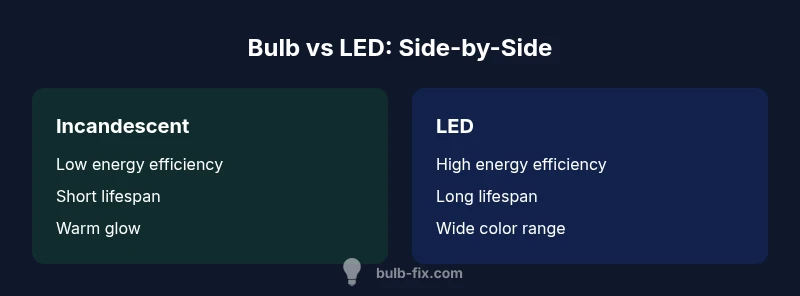
| Feature | Incandescent Bulb (Traditional) | LED Bulb |
|---|---|---|
| Energy Efficiency | Low energy efficiency | High energy efficiency |
| Lifespan | Approx. 1,000-2,000 hours | Approx. 15,000-25,000 hours |
| Upfront Cost | Low | Moderate to high |
| Color Temperature Options | Warm glow, limited range | Wide range (2700K-6500K) |
| Dimming Compatibility | Most older dimmers; potential hum | Better with modern dimmers; many models dim well |
| Disposal/Environmental Impact | Higher energy use; more frequent replacements | Lower energy use; longer life reduces waste |
| Best For | Budget-conscious, short-term needs | Long-term savings, versatile spaces |
Upsides
- LEDs reduce energy use and last longer, cutting heat and maintenance
- Longer lifespan means fewer bulb replacements
- Wide selection of color temperatures and dimming options
- Lower heat output reduces fixture stress and room heat
- Growing market and price reductions improve affordability
Drawbacks
- Higher upfront cost compared to incandescent bulbs
- Color rendering and consistency can vary by model
- Some low-cost LEDs may flicker or buzz without proper drivers
- Disposal of electronic components requires careful recycling
LED bulbs generally outperform traditional bulbs for most home lighting needs
LEDs offer energy savings and longevity, making them the practical default for new installations. Reserve incandescent options for niche uses where warm glow is essential or fixtures cannot accommodate LED technology.
Got Questions?
What is the main difference between bulb and LED?
The main difference is efficiency and longevity. LED bulbs use semiconductors to produce light with far less energy and longer life, while traditional bulbs rely on a heated filament and burn out sooner. The bulb vs led comparison highlights energy savings, replacement frequency, and lighting quality factors to consider.
LED bulbs are more energy-efficient and last longer than traditional bulbs, which affects cost and maintenance. If you value speed and clarity, LED is usually the better option.
Are LED bulbs safe for dimmer switches?
Many LEDs are designed to work with dimmers, but some combinations can flicker or hum if the dimmer and bulb aren’t matched. Check the product specs for dimmability and compatibility with your existing dimmer. If in doubt, consult a lighting professional to avoid common dimming pitfalls in the bulb vs led comparison.
Most modern LEDs work with dimmers, but verify compatibility to avoid flicker or hum.
Do incandescent bulbs still have a place in modern lighting?
Incandescents can be useful where warm ambience is a priority and fixtures are not easily upgraded. However, they consume more energy and burn out faster. In the bulb vs led decision, LEDs are generally preferred for most spaces, with incumbents reserved for specific mood lighting or retro-style fixtures.
Incandescent bulbs offer warm ambience but use more energy and burn out faster.
How long do LED bulbs typically last?
LED bulbs typically last many years—often tens of thousands of hours—depending on usage and heat management. This extended lifespan is a major factor in the bulb vs led comparison, reducing replacement frequency and maintenance.
LEDs last a long time, reducing replacements, especially in busy areas.
Can I mix bulb types in the same room?
You can mix bulbs, but be mindful of color temperature differences and dimming behavior. Mixing warm incandescent with LED can create uneven lighting. For a cohesive look, plan a balanced color temperature strategy and test in the room.
Mixing can work, but differences in warmth and dimming can stand out.
Is color temperature important when choosing LED bulbs?
Yes. Color temperature affects mood, task visibility, and room feel. Warmer temperatures (~2700K) feel cozy, while cooler temperatures (~4000K) feel brighter and more energizing. The bulb vs led choice should reflect intended use and ambiance.
Color temperature shapes mood and task clarity; pick based on room use.
What should I know about disposal of LEDs?
LED bulbs contain electronic components that should be recycled where possible. Check local guidelines for e-waste recycling. Proper disposal reduces environmental impact and aligns with a thoughtful bulb vs led strategy.
Recycle LEDs where possible to reduce e-waste.
Are there health considerations with LED lighting?
LEDs are generally safe, but some people may be sensitive to flicker or blue-rich light. Choose high-CRI LEDs with appropriate color temperatures to minimize eye strain, especially for screens and tasks.
LEDs are safe for most, but pick high-CRI options to reduce eye strain.
Key Points
- Assess fixture compatibility before replacing bulbs
- Prioritize LED for high-use rooms to maximize savings
- Test color temperature to match room mood and tasks
- Weigh upfront cost against replacement frequency
- Recycle LEDs and dispose of bulbs responsibly