Difference Between Bulb and LED: A Lighting Guide for Homes
A thorough comparison of incandescent bulbs and LED bulbs, examining energy use, lifespan, light quality, dimming, costs, and practical advice for homeowners seeking efficient, reliable lighting.


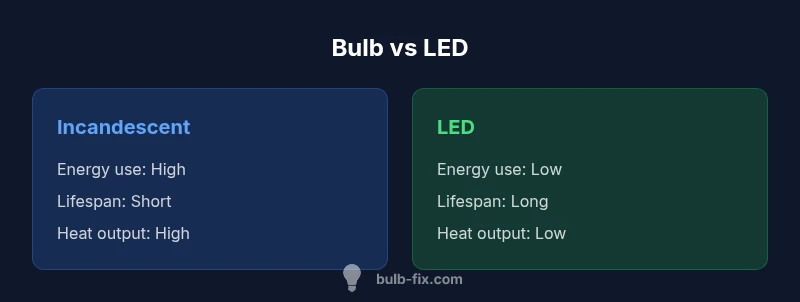
The difference between bulb and led is that traditional incandescent bulbs use a filament and waste most energy as heat, while LED bulbs use semiconductors to create light with far greater efficiency. LEDs provide instant brightness, longer lifespans, and better energy savings, with more versatile dimming and color options. Initial costs are higher, but running expenses are lower over time. In short, LED wins on efficiency and longevity for most homes.
difference between bulb and led: historical context and definitions
Light bulbs come in several generations, with the traditional incandescent bulb serving as the baseline for many decades. LED stands for light-emitting diode, a fundamentally different technology that converts electricity into light via semiconductors rather than a heated filament. The difference between bulb and led goes beyond naming; it reflects core physics and performance.
Incandescent bulbs waste most energy as heat and have relatively short lifespans. LEDs, by contrast, convert a larger share of electrical energy into light and emit far less waste heat, which helps keep rooms cooler and reduces thermal stress on fixtures. This shift has practical implications: LEDs typically last many thousands of hours, require less frequent replacements, and operate efficiently across a wide range of voltages and temperatures. Dimming, color temperature, and brightness behavior are also more controllable with LED technology. For homeowners, understanding this distinction is essential to plan replacements, avoid mismatched fixtures, and estimate cost of ownership.
According to Bulb Fix, recognizing the distinction supports smarter choices for living spaces, entryways, and exterior lighting. In the following sections we compare performance, costs, and practical usage, with actionable tips for common rooms and outdoor areas. The Bulb Fix team found that most households benefit from switching to LED lighting as a default choice due to efficiency and reliability.
Core performance attributes
- Energy efficiency: LED bulbs use significantly less electricity for the same light output than incandescent bulbs; this translates into lower energy bills over time.
- Lifespan: LED bulbs typically last many thousands of hours, compared with a fraction of that for traditional bulbs.
- Heat and safety: LED bulbs run cooler, reducing heat load in enclosed fixtures and risks of overheating.
- Light quality and color: LED options range from warm to cool white, with improving color rendering.
- Dimming and control: LEDs pair with most dimmers well, and support smart controls.
- Form factors and compatibility: LED bulbs come in many shapes, bases, and sizes; but some fixtures may require adapters or dedicated LED replacements.
- Environmental impact: LEDs contain fewer hazardous materials than some other lamp types and can be recycled, though recycling streams vary by region.
Energy efficiency and cost of ownership
Energy efficiency is no longer a luxury—it's a practical consideration for any home. LED bulbs consume far less electricity to deliver the same light level as traditional bulbs, which can translate into meaningful savings on monthly energy bills over the life of the bulb. While the upfront price of LED bulbs is higher, the extended lifespan reduces replacement frequency and maintenance costs. For households balancing budgets and sustainability goals, LED lighting often presents a clear win. Bulb Fix notes that the cost of ownership for LEDs tends to be favorable when you evaluate service life, waste reduction, and the need for fewer replacements over time. When planning renovations or re-lamping, consider the total energy footprint and long-term cost of ownership rather than only the upfront price.
Color temperature and light quality
LEDs offer a wide spectrum of color temperatures, from warm (2700K) to daylight (6500K), and improving color rendering indices (CRI). This variety allows you to tailor mood and task performance in different rooms. Incandescent bulbs naturally render warm tones, but older LEDs had issues with color accuracy. Today’s LED options deliver consistent color output across many fixtures, making it easier to match existing decor and achieve desired ambiance. If color fidelity matters—for example, in art studios or kitchens—choose LEDs with a high CRI and verify the rated temperature that suits your space. The difference between bulb and led in color performance comes down to phosphor formulations and binning practices; shopping with reputable brands can help you avoid undesirable tint shifts.
Dimming, compatibility, and smart lighting
Dimming behavior is a common pain point with older LED products, but modern LEDs are designed to work with a broad range of dimmers. Check the dimmer’s compatibility with LED lamps and consider replacing incompatible dimmers if you plan a full LED upgrade. Smart lighting features—remote control, schedules, and voice integration—are often easier to implement with LED ecosystems. In contrast, incandescent bulbs generally dim well only with compatible dimmers and can suffer from flicker and inconsistent brightness as they age. When upgrading, verify fixture compatibility (shape, base type, and enclosed vs. open fixtures) and consider color temperature preferences for each room to avoid a jarring mix of warm and cool tones.
Life cycle, replacement, and maintenance
Lifespan is one of the strongest arguments for LEDs: LEDs typically outlast incandescent and CFL options, reducing maintenance tasks such as bulb replacements in hard-to-reach fixtures. In areas like stairwells, attics, or outdoor lighting, fewer replacements translate to less maintenance time and lower labor costs. Temperature, usage patterns, and fixture design influence lifespan, so plan for realistic usage when estimating performance. The maintenance advantage extends beyond replacement frequency; LEDs also emit less heat, which can reduce cooling costs in warm climates and contribute to safer operation in enclosed spaces.
Choosing the right lamp for different spaces
Different rooms have different lighting needs. For living rooms and bedrooms, aim for warm, inviting LED temperatures around 2700K–3000K with good CRI. Task-oriented spaces like kitchens or home offices can benefit from cooler temperatures (3500K–4000K) for better visibility and focus. Exterior lighting typically requires higher efficiency and longer lifespans, with weather-resistant LED fixtures. When selecting bulbs, consider the fixture type, base size (E26, GU10, etc.), and whether the space is dimmed or smart-controlled. By aligning the lamp technology with room use, you maximize both comfort and energy savings.
Common myths and misconceptions
A popular myth is that LEDs are too cold or that cooler light is always better; in reality, LEDs come in a range of temperatures, and warmth in living spaces remains preferred for comfort. Another misconception is that LEDs always cost more to operate; while upfront costs may be higher, the long-term energy savings and extended lifespans generally offset the initial price. Some homeowners worry about LED color accuracy, but high-quality LEDs now offer excellent CRI values and stable color across temperatures. Finally, concerns about flicker are largely outdated for modern LEDs when paired with compatible drivers and dimmers.
Practical buying tips
- Prioritize high CRI LED options for accurate color rendering in spaces where color perception matters.
- Match color temperature to room function: warm for living areas, cooler for work areas.
- Check for dimmer compatibility and consider a dedicated LED-compatible dimmer if necessary.
- Look for reputable brands and verify warranty terms to ensure long-term reliability.
- Consider total cost of ownership by calculating expected energy savings and replacement frequency over the lamp’s lifetime.
Comparison
| Feature | Incandescent bulb | LED bulb |
|---|---|---|
| Energy Consumption | High energy use | Low energy use |
| Lifespan | Short (hundreds of hours) | Long (thousands of hours) |
| Heat Output | High heat emission | Low heat emission |
| Dimming Flexibility | Limited dimming | Excellent with compatible dimmers |
| Initial Cost | Low upfront cost | Moderate to high upfront cost |
| Color Temperature Options | Warm-only options common | Wide range of temps available |
| Environmental Impact | More waste heat, more frequent replacements | Fewer replacements; recyclable materials |
Upsides
- Lower upfront costs for basic bulbs (incandescent)
- Familiar warm light in many vintage fixtures (older bulbs)
Drawbacks
- Higher ongoing energy costs with incandescent bulbs
- Frequent replacements due to shorter lifespan
- Limited dimming and color options in older models
LED bulbs are the recommended default for homes due to efficiency and longevity.
LEDs deliver better energy efficiency, far longer lifespans, and improved light control. Incandescent bulbs may be cheaper upfront but cost more over time and require more maintenance.
Got Questions?
What is the main difference between a bulb and LED?
The main difference is the underlying technology: incandescent bulbs rely on a heated filament, while LED bulbs use semiconductors. This leads to greater efficiency, longer life, and less heat with LEDs. Both can provide similar light levels, but LEDs do so with far less energy and heat output.
The main difference is the technology: bulbs use a filament, LEDs use semiconductors, giving LEDs better efficiency and longer life.
Are LED bulbs compatible with standard light fixtures?
Most LED bulbs fit standard fixtures and bases, but some older fixtures or dimmers may require adapters or LED-compatible dimmers. Always check base type (like E26) and fixture enclosure to ensure proper fit and performance.
Most LEDs fit standard fixtures, but check your base type and dimmer compatibility before upgrading.
Do LEDs really save money over time?
Yes. LEDs typically use far less electricity and last much longer than traditional bulbs, reducing both energy costs and replacement rates. The upfront price is higher, but long-term savings often outweigh the initial investment.
Yes, LEDs save money over time due to efficiency and longevity, even if the upfront cost is higher.
Can LED bulbs be used outdoors?
Many LED bulbs are rated for outdoor use, but you must choose bulbs and fixtures designed for weather exposure. Look for IP ratings and ensure fixtures are suitable for exterior conditions.
Yes, just pick LEDs rated for outdoor use and proper weather protection.
What about color rendering in LEDs?
LED quality varies, but high-CRI LEDs now provide accurate color rendering similar to traditional bulbs. If color accuracy matters (artwork, fabrics), choose LEDs with a CRI close to 90+.
For accurate colors, choose high-CRI LEDs with CRI near 90 or higher.
Are there any disposal considerations?
LEDs are generally more environmentally friendly but still require proper recycling where available. Do not dispose of LEDs with regular household waste; check local programs for recycling options.
Recycle LEDs where possible; don’t throw them in regular trash.
Key Points
- LEDs outperform incandescent bulbs in efficiency and lifespan.
- Dimming and color temperature options are more versatile with LEDs.
- Total cost of ownership favors LEDs despite higher upfront price.
- Choose LED lighting tailored to room function and atmosphere.
- Check fixture compatibility and ease of disposal when upgrading.