LED Bulb vs Regular Bulb: A Practical Comparison
A comprehensive comparison of LED bulbs and regular incandescent bulbs, covering energy efficiency, lifespan, light quality, cost, compatibility, and best-use scenarios for homeowners.


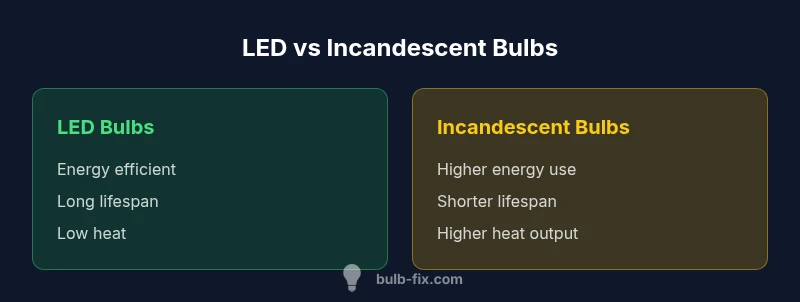
LED bulbs deliver long life and energy efficiency compared to regular incandescent bulbs. The key differences are efficiency, lifespan, heat output, upfront cost, light quality, and environmental impact. For most homes, LED bulbs are the better choice for long-term savings, while incandescent bulbs remain cheaper upfront but cost more over time.
Understanding LED bulbs vs regular bulbs: core concepts
LED bulbs and regular bulbs refer to two generations of lighting technology. An LED bulb uses solid-state lighting to convert electricity into light with minimal heat. A traditional regular bulb, typically incandescent, relies on a tungsten filament that glows as electricity passes through it, producing significant heat. When you compare the two, you cannot ignore the key differences in efficiency, heat generation, and electrical design. In the context of led bulb vs regular bulb, homeowners should consider energy use, longevity, and compatibility, as these factors directly impact monthly electricity bills, replacement frequency, safety, and overall lighting quality.
- LED bulbs achieve high luminous efficacy, producing more light per unit of energy
- Incandescent bulbs waste a lot of energy as heat, lowering overall efficiency
- The electronics in LED bulbs allow for greater control over color temperature and dimming
Energy efficiency: the primary differentiator
The most significant gap between LED bulbs and regular incandescent bulbs is energy efficiency. LEDs convert a higher proportion of electrical power into visible light, while incandescent bulbs waste a large portion as heat. This translates into lower energy bills over time and cooler fixture surfaces, which can reduce air conditioning loads in warm months. When comparing led bulb vs regular bulb, think in terms of lumens per watt and system efficiency rather than wattage alone.
- LED bulbs commonly deliver the same light output at a fraction of the energy use
- Incandescent bulbs require more watts to achieve similar brightness, increasing electricity costs
- Efficiency translates into smaller, more manageable electricity bills and environmental impact
Lifespan and reliability
Lifespan is another critical differentiator. LED bulbs last many times longer than traditional incandescent bulbs, which means fewer replacements and less waste over the life of a lighting plan. Reliability also tends to be higher for LEDs, as solid-state components are less prone to filament breakage. However, real-world longevity depends on quality, operating temperature, and use patterns. Higher-quality LEDs with robust heat management typically outperform cheaper models in long-term reliability. When planning, consider that long-term savings come from fewer bulb replacements rather than from upfront price alone.
- Expect tens of thousands of hours of use under normal operation for quality LEDs
- Incandescent bulbs typically require more frequent changes in high-use areas
- Heat management and driver quality can affect actual lifespan
Light quality and color temperature
Light quality influences how a space feels and functions. LED bulbs offer a wide range of color temperatures, from warm hues resembling traditional filament bulbs to cool daylight tones for task lighting. In contrast, incandescent bulbs emit a warmer, more uniform light with excellent color rendering, but at the cost of efficiency. LEDs often boast high color rendering indices (CRIs) in modern options, but very cheap LEDs can exhibit color shifts or muted rendering if not selected carefully. When choosing led bulb vs regular bulb, map color temperature to room function: living spaces benefit from warmer tones; work areas and kitchens may prefer cooler, brighter temperatures for clarity.
- Warm white (2700–3000K) creates cozy atmospheres; cool white (4000–5000K) supports focus
- LED CRI has improved significantly, offering accurate color perception
- Color temperature affects mood, perception, and perceived brightness
Heat management and safety considerations
One practical advantage of LED bulbs is their low heat emission. LEDs convert most energy into light rather than heat, which reduces the risk of heat buildup around fixtures. This matters in enclosed fixtures or ceiling fittings where excess heat can impact plastics, wiring, or surrounding materials. Incandescent bulbs, by contrast, release a higher fraction of their energy as heat, contributing to warmer room temperatures and potential safety concerns in confined spaces. For households with small children or pets, the cooler surface temperature of LEDs is a notable safety benefit. Proper ventilation remains important for any lighting installation, but LEDs add a margin of safety due to lower heat output.
- Cooler fixture surfaces reduce burn risk and fire potential
- Lower heat helps with overall HVAC load in warm seasons
- Ensure proper ventilation and avoid overloading circuits
Dimmability and control: how compatibility matters
Dimming behavior varies between LED and incandescent lighting. While incandescent bulbs dim smoothly across a wide range, many LEDs require compatible dimmers to avoid flicker, buzzing, or reduced lifespan. When considering led bulb vs regular bulb for dimmed applications, request LED-compatible dimmers or fixtures with integrated drivers, and verify that the dimmer supports the bulb’s wattage range and dimming curve. Some older dimmers may cause incompatibility, resulting in unstable light output. With proper matching, LEDs can deliver reliable dimming with smooth transitions.
- Use LED-compatible dimmers and driver-controlled lamps
- Incompatible dimmers can cause flicker or premature failure
- Dimming performance varies by LED quality and fixture design
Upfront cost vs long-term savings
Price parity between LED and incandescent bulbs has shifted as LED technology matured. LEDs typically carry a higher upfront price; however, their energy efficiency and longer lifespan often produce significant savings over time. To evaluate led bulb vs regular bulb, perform a simple payback calculation: estimate annual electricity savings and the expected lifespan, then weigh against the upfront cost. You’ll often find that the total cost of ownership favors LEDs in most homes, especially in high-usage areas or for outdoor fixtures exposed to the elements.
- Higher initial price, lower operating costs over time
- Savings accumulate with longer runtimes and fewer replacements
- For low-use rooms, incandescent bulbs can still be economical in the short term
Environmental impact and end-of-life considerations
LEDs are generally kinder to the environment thanks to lower energy consumption and longer service life, which translates into less frequent replacements and reduced waste. End-of-life disposal matters because LEDs contain electronic components and small amounts of materials that should be recycled rather than landfilled. Many communities offer electronics recycling or special LED recycling programs. By opting for LEDs, homeowners contribute to a smaller carbon footprint and a more sustainable lighting approach, aligning with responsible disposal practices.
- Reduced energy usage lowers greenhouse gas emissions
- Longer life means fewer bulbs in the waste stream
- Recycle LEDs through community programs to recover materials
Room-by-room guidance: choosing the right bulb for each space
Different rooms benefit from different LED specifications. For living areas and bedrooms, choose warm to neutral color temperatures (2700K–3500K) with high CRI to preserve colors and create inviting atmospheres. Kitchens and home offices may benefit from cooler temperatures (3500K–5000K) for task lighting and alertness. Bathrooms benefit from bright, clean light with high CRI. Outdoor lighting should be selected for weather resistance and consistent color rendering. In all cases, prioritize LED bulbs with appropriate dimming and weatherproof features where needed. Lastly, consider dimming needs on a room-by-room basis, ensuring compatibility with existing switches and smart home systems.
- Living rooms: warm, cozy lighting with good color rendering
- Kitchens: bright, neutral lighting for clarity and safety
- Bathrooms: bright, color-accurate lighting for grooming
- Outdoor: weather-resistant LED bulbs with adequate lumen output
- Smart homes: look for bulbs with reliable connectivity and controls
Practical upgrade plan: a step-by-step path to LED adoption
- Audit each fixture and determine whether LED-compatible bulbs are suitable based on socket type and dimmer. 2. List rooms by usage patterns and select color temperatures accordingly. 3. Replace in high-use areas first (kitchen, living room, hallway) to maximize savings quickly. 4. If you use dimmers, swap to LED-compatible dimmers or bulbs designed for dimming. 5. Recycle old incandescent bulbs through local programs and store replacement LEDs in consistent color temperatures to maintain uniform lighting. 6. Monitor energy usage over the first few months to quantify savings and adjust the color temperature or brightness as needed.
- Start with high-use rooms for fastest return on investment
- Ensure dimmer compatibility to avoid flicker
- Keep a color-temperature plan for each space
Putting it all together: final reflections on led bulb vs regular bulb
Choosing between LED bulbs and regular incandescent bulbs boils down to expected behavior: LEDs excel in energy efficiency, longer life, and cooler operation; incandescent options deliver warm glow and low upfront cost in the short term. Though initial prices for LEDs can be higher, the long-term savings—especially in high-usage rooms—often make LEDs the wiser choice. The ultimate decision should reflect usage, fixture compatibility, and personal preferences for light quality. By applying these considerations, homeowners can upgrade with confidence, ensuring better lighting outcomes and a more sustainable household.
Comparison
| Feature | LED bulb | Regular incandescent bulb |
|---|---|---|
| Energy Efficiency | high | low |
| Lifespan | longer | shorter |
| Heat Output | low heat | high heat |
| Upfront Cost | higher upfront cost | lower upfront cost |
| Light Quality / Color Options | wide range + high CRI in many LEDs | limited to warm tones with lower efficiency |
| Dimmability & Compatibility | best with LED-compatible dimmers | older dimmers may not work well |
| Environmental Impact | lower energy use and waste over time | higher energy use and more frequent replacements |
Upsides
- Lower energy consumption reduces bills
- Longer lifespan means fewer replacements
- Cooler operation reduces heat buildup
- Greater flexibility in color temperature and lighting effects
- Fewer bulbs replaced over time lowers maintenance
Drawbacks
- Higher upfront cost per bulb
- Potential compatibility issues with older fixtures or dimmers
- Some cheaper LEDs may have poorer color rendering or flicker
LED bulbs are the recommended default choice for most homes. They offer energy savings and longer life, with flexible color temperature options. Always check dimmer compatibility and fixture specs before upgrading.
LED bulbs provide clear advantages in energy use and longevity. The main caveat is ensuring compatibility with existing fixtures and dimmers, and choosing the right color temperature for each space.
Got Questions?
What is the key difference between LED bulbs and regular bulbs?
The main difference is efficiency and longevity; LEDs use less energy and last longer. In most homes, LEDs reduce energy bills and replacement frequency.
LEDs save energy and last longer; they're the better choice for most homes.
Do LED bulbs use less electricity?
Yes. LEDs convert most electrical energy into light rather than heat, so they use far less electricity for the same light output.
Yes—the energy use is much lower with LEDs.
Can all fixtures use LED bulbs right away?
Most LED bulbs fit standard sockets, but some fixtures with built-in transformers or dimmers require compatibility checks. For older fixtures, use LED-compatible dimmers.
Check socket type and dimmer compatibility before upgrading.
Are LED bulbs more expensive upfront?
Yes, LEDs typically cost more per bulb than incandescent options, but the payoff comes from energy savings and longer life.
Yes, but the savings add up over time.
Will LED bulbs fit in dimmer switches?
Many LEDs work with compatible dimmers; older dimmers may cause flicker or poor performance. Use 'LED-compatible' dimmers.
Use LED-compatible dimmers for best results.
How long do LED bulbs last?
LEDs last tens of thousands of hours under normal use; actual life depends on quality and usage patterns.
They last a very long time when used normally.
Key Points
- Choose LED for energy savings and longevity.
- Check dimmer compatibility before upgrading.
- Match color temperature to room function.
- Consider upfront cost against long-term savings.
- Recycle LEDs through electronics programs.