LED Bulb vs Halogen: Which Should You Choose for Your Home?
A detailed, objective comparison of LED bulbs and halogen bulbs, covering energy efficiency, lifespan, brightness, dimming, cost, installation, and best-use scenarios for homeowners and DIY enthusiasts.


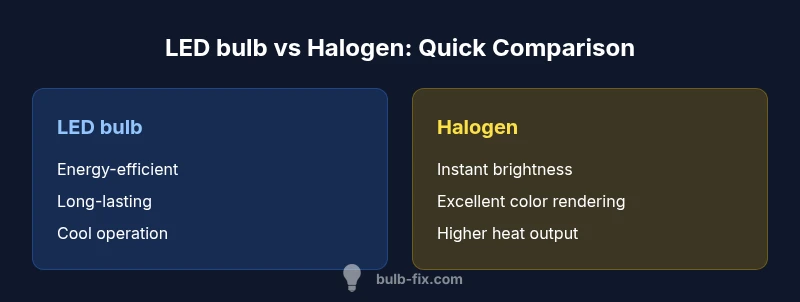
LED bulb vs halogen: For most homes, LED bulbs win on energy use, lifespan, and total cost of ownership, while halogen bulbs excel in immediate brightness and color rendering. The Bulb Fix team finds LEDs deliver substantial long-term savings with less heat and maintenance. Use halogen only where instant brightness or precise color in a fixed budget matters.
LED bulb vs halogen: Why the comparison matters for homeowners
Choosing between LED bulbs and halogen bulbs affects energy bills, heat, longevity, and fixture compatibility. In most homes, the decision isn't just about brightness—it's about how often you replace bulbs, how much energy you consume, and how the light quality supports daily tasks. The phrase led bulb vs halogen captures this debate concisely. According to Bulb Fix, LED bulbs generally deliver energy savings and longer life, making them a practical default for most rooms. Halogen bulbs can excel in scenarios that demand immediate full brightness or very accurate color rendering, but they come with higher energy use and more frequent replacements. When you plan a retrofit or a fresh install, starting with led bulb vs halogen considerations helps you design lighting that stays comfortable and cost-effective for years.
Energy efficiency and cost of ownership
The core difference between LED bulbs and halogens is energy efficiency and total cost of ownership. LED bulbs convert electricity into light with minimal wasted heat, while halogen bulbs lose more energy as waste heat. Over the life of a typical home, LED lighting reduces running costs due to lower energy consumption and the much longer lifespan. While LED bulbs often have a higher upfront price tag, the long-term savings from fewer replacements and lower electricity bills tend to offset the initial cost. Bulb Fix notes that energy savings accumulate across multiple bulbs in a living room, kitchen, and hallway, leading to noticeable reductions in annual energy use. For homeowners budgeting, it is important to consider both upfront expenditure and anticipated replacement cycles when comparing led bulb vs halogen options.
Brightness, color quality, and performance
LED and halogen bulbs can appear different in brightness perception, color temperature, and dimming performance. LED bulbs offer a wide range of color temperatures from warm to cool, which helps set the mood or task lighting. Halogen bulbs typically render colors very vividly with a warm tone, often preferred for accent lighting or traditional fixtures. Brightness is rated by lumens; LEDs typically produce the same or higher perceived brightness at a fraction of the energy, but some low-cost LEDs may have uneven color or flicker during dimming. For critical tasks like reading or creative work, choose a higher-quality LED with stable dimming, or consider a halogen option if you need very specific color rendering at a fixed price.
Heat output and safety considerations
One practical concern with halogen bulbs is heat. Halogen versions emit more radiant heat, which can raise room temperature and increase the risk of burns when touched. LEDs produce far less heat, contributing to cooler rooms and safer usage around heat-sensitive fixtures or enclosed spaces. Reduced heat also means less strain on dimmers and transformers in some fixtures. For households with children or pets, LED bulbs provide a safer, cooler lighting solution without sacrificing brightness. The heat difference is a recurring factor when evaluating led bulb vs halogen for ceiling and pendant lights, under-cabinet strips, and enclosed luminaires.
Lifespan, maintenance, and replacements
LED bulbs last significantly longer than halogen bulbs, reducing maintenance and bulb replacement frequency. This longevity helps decrease the total cost of ownership and minimize inconvenient outages. Halogen bulbs tend to burn out sooner, requiring more frequent replacements, especially in high-use areas like kitchens or hallways. In spaces with hard-to-reach fixtures, the longer life of LEDs means fewer climbs to change bulbs and less downtime. When planning an upgrade, calculate the expected number of replacements over several years and compare that to the energy savings. Bulb Fix emphasizes that the reduced maintenance burden is a major factor in favor of led bulb vs halogen, particularly in commercial spaces or multi-room homes.
Dimming, compatibility, and installation tips
Dimming behavior is a common source of confusion with LED bulbs. Many LEDs are compatible with standard dimmers, but some require compatible dimming drivers or specific dimmer types (trailing-edge). Halogen bulbs typically work with most incandescent-compatible dimmers, offering smooth dimming and immediate full brightness when switched on. Before upgrading, check fixture compatibility, dimmer type, and wattage ratings to avoid buzzing, flicker, or reduced dimming range. For enclosed fixtures, ensure the LED is rated for enclosed use. If you're unsure, start with one or two bulbs in a low-traffic area to test performance before a full swap. In sum, led bulb vs halogen choices should factor in dimming needs and fixture compatibility as major decision criteria.
Practical buying guide: how to choose
To pick between led bulb vs halogen, consider four factors: energy goals, task lighting needs, budget and long-term savings, and fixture compatibility. Start by deciding if you value energy efficiency over initial cost. For living rooms or hallways, LED is usually best; for task-specific needs and color-critical tasks, you might opt for halogen in select fixtures. Then examine lumen output, color temperature, and CRI ratings. Choose bulbs with clear packaging and reliable warranties. If you plan to retrofit many fixtures, consider a mix of LED bulbs for most rooms and halogen where brightness and color accuracy are paramount.
Practical use-cases and scenarios
In kitchens, where task lighting and ease of cleanup matter, LED bulbs often outperform halogen due to lower heat in enclosed fixtures and longer life. In accent lighting or chandeliers with vintage fixtures, halogen bulbs may be preferred for color rendering and brightness, provided you can manage energy costs. For households with smart lighting, LED bulbs integrate more easily with smart hubs, automatic schedules, and remote control. Office spaces typically benefit from LED's efficiency and longevity, while retail environments may favor halogen in display lighting for its precise color and glare characteristics.
Common myths and misconceptions
One common myth is that LEDs cannot be dimmed. In reality, many LEDs dim well when paired with compatible dimmers. Another misconception is that all LEDs are cheap and poor quality; high-quality LEDs provide excellent color rendering and reliability. Some people worry that LEDs contain toxic elements; modern LEDs are designed with recyclable components and safe materials, and disposal guidelines vary by location.
How to plan your lighting upgrade
A thoughtful upgrade plan starts with inventory: list all sockets and fixtures, note which rooms are used most, and identify where color accuracy or task lighting matters most. Then decide LED compatibility with existing dimmers and fixtures. Create a phased upgrade schedule to spread out costs and minimize disruption. Finally, select high-quality LED bulbs with appropriate color temperature and CRI, and reserve a few halogen spots for color-critical settings if needed. This approach keeps led bulb vs halogen decisions aligned with real-use needs and long-term savings.
Comparison
| Feature | LED bulb | Halogen bulb |
|---|---|---|
| Energy efficiency | Very high efficiency | Lower efficiency |
| Lifespan | Significantly longer life | Shorter life |
| Heat output | Low heat emission | High heat emission |
| Dimming compatibility | Broad compatibility with modern dimmers | Good compatibility with incandescent dimmers |
| Color rendering | Flexible color temperature options | Excellent warm color rendering |
| Upfront cost | Higher upfront cost | Lower upfront cost |
| Disposal considerations | Electronic waste considerations common | Involves boilerplate waste handling |
Upsides
- Lower energy consumption reduces bills
- Longer lifespan means fewer replacements
- Cooler operation improves safety in homes with kids
- Better integration with smart home setups
- Lower maintenance in busy spaces
Drawbacks
- Higher upfront cost can deter some buyers
- Quality varies across affordable LEDs
- Some LEDs have dimming or compatibility quirks
- Halogen familiar warm light has strong color rendering in specific tasks
LED bulbs are the practical default for most homes, with halogen reserved for niche tasks.
LEDs deliver energy savings and longevity that matter over years of use. Halogen remains relevant for tasks requiring instant brightness and color accuracy, but comes with higher energy use and more frequent replacements.
Got Questions?
What is the main difference between LED and halogen bulbs?
LED bulbs are highly energy-efficient and long-lasting solid-state devices, while halogen bulbs are incandescent and offer immediate brightness with very good color rendering. LEDs typically cost more upfront but save more over time.
LED bulbs save energy and last longer; halogens brighten instantly and render colors well. For most homes, LEDs are the better long-term choice, with halogens kept for specific needs.
Are LEDs more energy-efficient than halogens?
Yes. LEDs convert most of their energy into light rather than heat, resulting in much lower energy use compared to halogen bulbs over the bulb’s life.
Yes. LEDs use far less energy and produce less heat than halogens, which means lower energy bills over time.
Will LEDs fit in my current fixtures and dimmers?
Most LEDs fit standard bases, but dimmer compatibility varies. Check the fixture and dimmer type, and choose LEDs labeled compatible with your dimmer if you plan to dim the lights.
Check your fixtures and dimmers first. Look for LED bulbs that say compatible with your dimmer, and test in a low-traffic area first.
Do LEDs work with dimmer switches?
Many do, but not all. Use LED bulbs designed for dimming and pair them with a compatible dimmer to avoid flicker or buzz.
Many LEDs work with dimmers, just pick dimmable LEDs and a compatible dimmer.
Is color rendering better with halogen bulbs?
Halogens typically offer excellent color rendering in warm tones, which some tasks and fixtures prefer. High-quality LEDs can match this performance in many cases, with more flexibility on temperature settings.
Halogens often render colors very well, especially warm tones. High-quality LEDs can match this in many cases and offer more color options.
What about disposal and recycling?
LED bulbs are recyclable, and disposal rules vary by region. Halogens are also recyclable in many places, but check local electronics recycling guidelines to handle glass and filaments properly.
LEDs and halogens can be recycled in many areas, but always check local guidelines for proper disposal.
Key Points
- Choose LED for energy efficiency and longevity.
- Reserve halogen for color-critical or specialty fixtures.
- Check dimmer compatibility before swapping.
- Factor total cost of ownership, not just upfront price.
- Plan upgrades in stages to minimize disruption.