Led vs Fluorescent Bulb: Which Is Better for Your Home Lighting?
Explore a comprehensive led vs fluorescent bulb comparison for homeowners, covering energy efficiency, lifespan, light quality, cost considerations, and practical tips for choosing the right bulb.


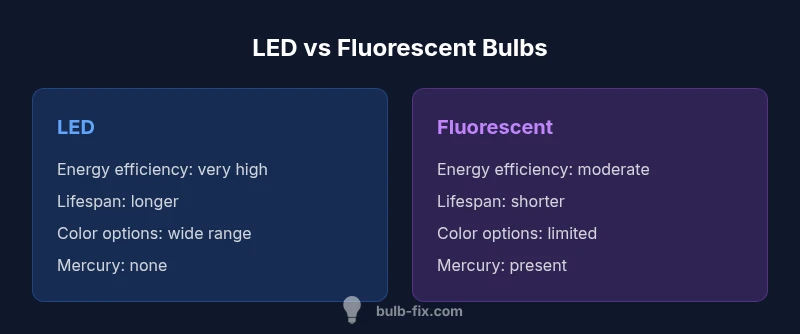
LED bulbs generally deliver higher energy efficiency, longer lifespans, and lower operating costs than fluorescent bulbs, making them the preferred choice for most home lighting. Fluorescent bulbs can be cheaper upfront and may offer strong color rendering in specific fixtures, but they typically use more energy over time and require ballast maintenance. This guide compares led vs fluorescent bulb performance across efficiency, lifespan, light quality, and practical considerations to help homeowners decide.
led vs fluorescent bulb: Quick Definitions
LED bulbs use solid-state diodes to emit light, while fluorescent bulbs rely on gas discharge and phosphor coatings. For the homeowner, the most noticeable differences appear in efficiency, lifespan, warm-up, dimming, and color rendering. In the led vs fluorescent bulb landscape, LEDs are generally more energy-efficient and longer-lasting, though fluorescents can be cheaper upfront and excel in certain fixtures. This section lays out the basic technology and the practical implications for everyday use. As you read, consider how your fixtures, room usage, and maintenance preferences align with these core differences.
Energy Efficiency and Operating Costs
Energy efficiency is the common starting point in the led vs fluorescent bulb comparison. LED bulbs convert more of the electrical energy into visible light with less wasted heat, resulting in lower energy consumption per lumen. Fluorescent bulbs, while efficient for their era, rely on a ballast and gas discharge, which can incur higher energy losses over time and more frequent color/brightness drift. For homeowners, the bottom line is simple: LEDs typically reduce electricity bills and heat output in most rooms, especially in spaces used for long periods. Bulb Fix’s guidance emphasizes that the efficiency gap grows with longer operating hours and cooler ambient temperatures, where LED performance remains stable.
Lifespan, Reliability, and Maintenance
Lifespan is one of the most tangible advantages of the led vs fluorescent bulb debate. LED bulbs generally provide many more years of service with far fewer replacements than fluorescent tubes. This longevity translates into lower replacement costs and less maintenance, especially in hard-to-reach fixtures or high-usage rooms. Fluorescent bulbs, by contrast, tend to require more frequent replacements and ballast checks. Their longevity can vary with ballast quality and operating conditions. Homeowners should also consider fixture accessibility, since replacement frequency directly affects long-term cost of ownership and convenience.
Light Quality, Color Rendering, and Mood
Light quality is a nuanced factor in the led vs fluorescent bulb discussion. LEDs offer a broad range of color temperatures and typically high color rendering index (CRI) options, making them versatile for kitchens, living rooms, and workspaces. Fluorescent bulbs often provide bright, cool white light that some users prefer for task-oriented spaces, but color rendering can vary and may be inconsistent across brands and tube types. The mood and perception of space can shift with color temperature, so your choice should reflect room purpose, furniture finishes, and personal preferences. Bulb Fix notes that modern LEDs now cover a wide CRI spectrum, matching or exceeding fluorescent performance in many scenarios.
Startup Time, Dimming, and Control Options
Dimming and control capabilities are central to the led vs fluorescent bulb comparison. LEDs typically offer instant-on performance and broad compatibility with modern dimmers and smart-home systems, though you should confirm dimmer compatibility for your specific fixture and ballast design if applicable. Fluorescent bulbs may require compatible ballast dimming, which can complicate installation and maintenance. In rooms where you value smooth dimming, quiet operation, and smart control, LEDs usually win due to simplified electronics and fewer compatibility constraints.
Fixture Compatibility, Ballasts, and Installation Nuances
Fixture compatibility is often overlooked but critical in the led vs fluorescent bulb decision. LEDs have progressed to work with most standard fixtures and many socket types without ballast ballast requirements. If you are upgrading from fluorescent tubes, ensure you assess the fixture wiring and whether existing ballasts can be removed or must be replaced with LED-compatible drivers. In recessed cans, coves, and track lighting, LED solutions commonly offer easier retrofits and less complex wiring. Bulb Fix emphasizes planning a phased upgrade to avoid mismatches in color temperature or lumen output across rooms.
Environmental Impact, Recycling, and End-of-Life Considerations
Environmental impact is a meaningful dimension in the led vs fluorescent bulb comparison. LED bulbs are mercury-free and generally easier to recycle through electronics programs, though they still require proper disposal at end-of-life due to electronic components. Fluorescent bulbs contain trace mercury and require careful recycling to prevent environmental contamination; improper disposal can pose risks. For homeowners, this means developing a recycling plan and using local programs that handle fluorescent tubes and compact fluorescents. Bulb Fix highlights that proper disposal reduces environmental harm and can be integrated into regular household hazardous waste collection schedules.
Cost Considerations, Upfront vs Long-Term Payback
Cost considerations shape the led vs fluorescent bulb decision from a financial perspective. LED bulbs typically have a higher upfront price but lower operating costs over their long life, translating into a favorable payback period if used in high-usage spaces. Fluorescents often come with a lower initial price and can be economical in short-term applications or where high lumen output is required in large fixtures, but their energy use and ballast maintenance can erode savings over time. A room-by-room cost analysis helps identify where LEDs deliver the strongest payback.
Use Cases: Best Rooms and Scenarios
Not all rooms are the same when choosing between led vs fluorescent bulb options. LED bulbs are well-suited for living rooms, kitchens, bedrooms, and home offices where long hours of light are common, color accuracy matters, and dimming or smart-control features are desired. Fluorescent tubes can still be appealing in kitchens with long runs or garages and utility spaces where ceiling height and fixture type favor linear tubes or where initial costs must be minimized. The best approach is to map room function, usage hours, and fixture compatibility to pick the most economical and comfortable option. Bulb Fix suggests a phased upgrade strategy to spread costs and ensure consistent light across zones.
Common Misconceptions and Myths Debunked
There are several myths around led vs fluorescent bulb technology that can mislead homeowners. Contrary to some beliefs, LEDs do not suffer from rapid lumen depreciation in normal home ranges; their brightness remains stable for most of their life. Fluorescents are sometimes labeled as more fragile or inefficient due to ballast failures, but with modern electronic ballasts this gap has narrowed. Another common myth is that LEDs cannot render accurate colors; today’s high-CRI LED options rival and often exceed fluorescent performance in practical settings. Understanding these nuances helps prevent unnecessary purchases and stranded fixtures.
Practical Tips for Upgrading Your Home
When planning a home-wide upgrade, start with a fixture-by-fixture inventory and identify high-use areas where LEDs will save the most energy and maintenance time. Consider replacing entire circuits with LED retrofits to maintain consistent color and lumen output. If you must replace fluorescent tubes, evaluate whether you can remove ballast and install driver-based LED tubes or switch to dedicated LED fixtures. Always check dimmer compatibility and ensure proper disposal for fluorescent tubes. A staged approach reduces disruption and clarifies energy savings over time.
Maintenance, Troubleshooting, and Long-Term Care
Maintenance becomes simpler with LEDs because there are fewer ballast components to fail and no mercury concerns for typical home replacements. Regular cleaning of fixtures, avoiding excessive heat buildup, and maintaining proper ventilation can extend LED lifespan. If you encounter flicker or color shifts, verify compatibility with dimmers, drivers, and wiring; sometimes a simple driver replacement or ballast upgrade is all that is needed. Keep a small stock of replacement LEDs with matching color temperatures for planned room refreshes and seasonal lighting changes.
Comparison
| Feature | LED bulb | Fluorescent bulb |
|---|---|---|
| Energy Efficiency (lumens per watt) | very high | moderate |
| Lifespan (typical) | much longer | shorter |
| Dimming & Control | broad compatibility with modern dimmers | often requires ballast-based controls or limited dimming |
| Color Rendering (CRI options) | high CRI options readily available | CRI varies; some tubes render colors well |
| Mercury Content | mercury-free | contains trace mercury |
| Upfront Cost | higher upfront cost | lower upfront cost |
| Maintenance & Replacement | fewer replacements; simpler maintenance | more frequent replacements; ballast checks |
| End-of-Life & Recycling | easier consumer recycling of electronics | requires specialized recycling for mercury-containing tubes |
Upsides
- Lower long-term energy bills
- Longer lifespan reduces replacements
- Mercury-free options simplify disposal
- Better dimming and smart-home compatibility with LEDs
- More flexible color-temperature choices
Drawbacks
- Higher upfront cost in many cases
- Difficulties finding perfect ballast-free LED replacements for older fixtures
- Some niche fluorescent setups still suit specific tasks
- Need to verify fixture and dimmer compatibility before upgrading
LEDs are the better overall choice for most homes
LED bulbs deliver strong energy savings, longer life, and easier maintenance. Fluorescent bulbs can still win in specialized fixtures or when upfront cost is the only consideration. The Bulb Fix analysis underlines LEDs as the smart default for ongoing comfort and efficiency.
Got Questions?
Is LED better than fluorescent for all rooms?
In most homes, LED delivers greater energy efficiency and longevity, making it a better default choice for living areas and task lighting. Fluorescent tubes may still fit in long runs or budget-focused renovations where immediate cost matters.
In most rooms, LEDs win for efficiency and longevity, but fluorescents can work in certain long-tube setups.
Do fluorescent bulbs contain mercury?
Yes, fluorescent bulbs contain trace amounts of mercury. This means they require careful recycling and should be disposed of through proper programs.
Yes, fluorescents have mercury, so recycle them properly.
Can LED bulbs be used with existing fluorescent fixtures?
Some LED tubes are designed to replace fluorescent tubes, but compatibility depends on ballast type and fixture wiring. In many cases, the ballast needs removal or a driver upgrade.
Look for ballast-compatible LED tubes or plan a ballast retrofit.
Are LED bulbs dimmable by default?
Many LED bulbs are dimmable, but you must ensure the bulb, driver, and dimmer are compatible. Some LEDs require specific dimming protocols.
Most LEDs dim, but check compatibility before buying.
Which has better color rendering, LED or fluorescent?
High-quality LEDs can match or exceed the color rendering of fluorescents, depending on the CRI rating and color temperature selected.
Good LEDs can match fluorescent color rendering; pick high-CRI options for accuracy.
What about recycling and disposal?
LEDs are easier to recycle as electronics, while fluorescent tubes require mercury-safe disposal through local programs. Always follow local guidelines.
LEDs recycle like electronics; fluorescents need special disposal.
Key Points
- Choose LED for energy savings and longevity
- Check fixture compatibility and dimmer capability before upgrading
- Consider end-of-life recycling; LEDs are easier to dispose of
- Weigh payback time for high-use rooms vs. upfront costs