LED vs Incandescent Bulbs: A Practical Comparison for Home Lighting
Compare LED and incandescent bulbs to pick the right home lighting. Explore energy use, lifespan, upfront cost, color quality, and practical tips.


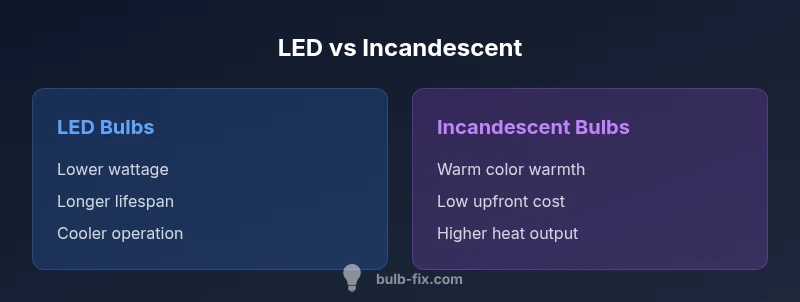
LED bulbs outperform incandescent in energy efficiency, lifespan, and overall running cost, while incandescent bulbs still offer superb color warmth and immediate upfront affordability. This comparison highlights where each option shines and where to expect trade-offs, helping homeowners decide with confidence.
bulb like finger nails: A playful anchor for this lighting comparison
The odd phrase bulb like finger nails appears in popular conversations about lighting because, in plain terms, both bulbs and nails can show bulbs of light or bulb-like shapes. In this article we compare LED bulbs and incandescent bulbs as two common, practical options for most homes. Bulb like finger nails is not a medical term here; it’s a playful metaphor to anchor our discussion about shape, glow, and practicality. We’ll keep terminology grounded in home lighting realities: energy use, light quality, and long-term costs. If you’re a homeowner or DIY enthusiast, this guide will help you avoid common missteps when upgrading fixtures or retrofitting lamps with modern bulbs. We’ll also share actionable tips you can apply this season, from choosing color temperature to planning a retrofit.
How LED bulbs work and where they shine
Light-emitting diodes (LEDs) produce light through semiconductors, with exceptional efficiency and very long lifespans. LED bulbs consume a fraction of the energy of traditional bulbs and generate far less heat for the same light output. In real terms, an 8-12 watt LED can replace a 60-watt incandescent in most household tasks, reducing energy bills and easing cooling loads in summer. For the home, LED bulbs provide options across color temperatures—from warm white to cool daylight—so you can craft cozy living rooms or bright task spaces without sacrificing energy savings. The phrase bulb like finger nails can be used to emphasize minor shapes and design cues in fixtures, but the core benefits come from efficiency and control.
How incandescent bulbs work and where they shine
Incandescent bulbs generate light by heating a filament until it glows. They deliver excellent color warmth and instant full brightness, with a familiar glow that many people associate with comfort. However, they are less energy efficient and have shorter lifespans than LED equivalents, often requiring more frequent replacements and higher operating costs over time. For traditional fixtures, chandeliers, or areas where you value instant brightness and a classic feel, incandescent bulbs remain a straightforward choice. When compared with LED options, they tend to hold higher heat and lower energy efficiency, adding to cooling costs in warm rooms.
Energy costs and long-term ownership: LED vs incandescent
Ownership costs extend beyond the sticker price at purchase. LEDs typically cost more upfront but save money over time through lower energy use and fewer replacements. If you run lights for several hours per day, LED bulbs can dramatically lower annual energy costs and minimize maintenance. In contrast, incandescent bulbs have the lowest upfront price but escalate running costs due to higher energy consumption and more frequent changes. For a typical household, the long-term cost advantage often favors LED, especially in rooms that are lit frequently, while occasional-use fixtures may still justify incandescent bulbs in the short term.
Light quality, color rendering, and mood
Color rendering is a key factor: incandescent bulbs provide the warm, intimate glow many people associate with comfort. LEDs have improved dramatically in color accuracy, with high-CRI options that approximate incandescent warmth while delivering efficiency. When choosing color temperature, consider the room’s purpose: warmer (around 2700-3000K) for living areas and cooler (3500-4000K) for kitchens or workspaces. The right LED with a high CRI can deliver both energy savings and pleasant ambiance, reducing the temptation to revert to older bulbs purely for warmth.
Dimming, compatibility, and safety considerations
Many homeowners want dimming compatibility for living rooms, bedrooms, or hospitality spaces. LED bulbs can be dimmed, but some older dimmer switches may require rewiring or compatibility checks. Always confirm fixture compatibility, wattage limits, and dimmer type before upgrading. In some cases, switching multiple bulbs to LEDs can create minor flicker if the dimmer isn’t matched correctly. Safety also matters: ensure bulbs are rated for enclosed fixtures when applicable and that you follow manufacturer guidelines for heat dissipation and ventilation.
A practical buying guide: how to compare options in-store or online
When shopping, compare wattage equivalence, lumen output, color temperature, and CRI to ensure you’re getting a bulb that meets your needs. Look for energy star labels or other efficiency ratings, but don’t rely on watts alone; watts don’t directly measure brightness or efficiency for LEDs. Consider room use patterns: high-use rooms benefit most from LEDs; low-use, occasional spaces may tolerate incandescent in the short term. If you’re upgrading a whole home, plan a staged retrofit to spread out cost and test how LEDs perform in your real-world environment.
Common mistakes when switching to LED and how to fix them
One frequent mistake is assuming all LEDs perform identically; brightness and color warmth vary widely by brand and model. Another pitfall is neglecting dimmer compatibility. Before you buy, test a single LED bulb in a representative fixture and check whether the dimming range feels smooth. Finally, don’t ignore heat: LEDs need proper ventilation and reviews indicate that poor cooling can reduce longevity. If you’re unsure about a fixture’s compatibility, consult a Bulb Fix guide or a licensed electrician for a quick check.
Step-by-step plan to transition to LED lighting in your home
- Inventory fixtures: list every light fixture and note dimmer controls. 2) Select primary LED bulbs for main living spaces first, focusing on 2700K-3000K warmth for comfort. 3) Pair LEDs with high-CRI options to preserve color quality near artwork and textiles. 4) Stage replacements to avoid customer-perceived downtime; install new bulbs during low-use hours. 5) Monitor performance over 4-6 weeks, adjusting color temperature or brightness as needed. 6) Replace remaining bulbs in later phases. 7) Revisit drafts on energy savings and adjust your plan as needed. Note: Some readers find the phrase bulb like finger nails odd, but it serves as a memorable reminder that bulbs come in shapes and scales comparable to small nails, which is a helpful cue when evaluating fixture compatibility.
Comparison
| Feature | LED bulbs | Incandescent bulbs |
|---|---|---|
| Wattage (equiv.) | 8-12W (replacing 60W) | 60-100W |
| Lifespan | 15,000-25,000 hours | 1,000-2,000 hours |
| Energy use per year (typical) | 8-12 kWh (depending on usage) | 70-120 kWh |
| Initial price range | $5-15 | $1-3 |
| Heat output | Very low | High |
| Best for | Energy savings, long-term ownership | Low upfront cost, simple dimming |
Upsides
- Lower operating costs over time
- Longer lifespan reduces maintenance
- Better for heat management and cooler rooms
- Advanced color options with high CRI available
Drawbacks
- Higher upfront price than incandescent
- Some fixtures require compatibility checks
- Some LED models have initial color shifts
- Specialized dimmers may be needed for some setups
LED bulbs are the preferred choice for most homes due to efficiency and longevity
Choose LED for energy savings and fewer replacements. Incandescent may be kept in specific fixtures for warm glow or minimal upfront cost, but LEDs win overall.
Got Questions?
Are LED bulbs more energy-efficient than incandescent bulbs?
Yes. LED bulbs use far less energy than incandescent bulbs for the same light output, which lowers your monthly electric bill. They also run cooler and offer longer lifespans, reducing maintenance.
Yes. LEDs use far less energy and run cooler, with longer lifespans compared to incandescent bulbs.
Do incandescent bulbs offer better color warmth than LEDs?
Incandescents naturally emit a warm glow, and early LEDs struggled with color warmth. Modern LEDs with high CRI and warm color temperatures can closely match incandescent warmth, though some people still prefer the classic glow of incandescents.
Incandescents are naturally warm; high-CRI LEDs can match warmth but some prefer the classic glow.
Can I use LED bulbs in any fixture?
Most fixtures support LED bulbs, but there are exceptions, especially with enclosed fixtures or dimmer controls. Always check the fixture’s wattage limit and dimmer compatibility before upgrading.
Most fixtures work with LEDs, but check wattage limits and dimmers.
How long do LED bulbs last in typical home use?
LED bulbs commonly last 15,000 to 25,000 hours, depending on brand, heat, and usage patterns. Regular checks for overheating and proper ventilation help maximize lifespan.
Most LEDs last 15,000 to 25,000 hours with proper ventilation.
What about CFLs or halogen bulbs in this comparison?
CFLs offer higher energy efficiency than incandescents but contain mercury and have shorter lifespans than LEDs. Halogens are efficient, but not as long-lived as LEDs. For most homes, LEDs are the better overall option.
CFLs save energy but have mercury; LEDs are typically better overall.
Should I replace all bulbs at once or in stages?
A staged approach avoids large upfront costs and lets you test performance in real rooms before completing the retrofit. Plan your deployment by room and usage.
Stage your replacement to manage costs and test performance.
Key Points
- LEDs deliver long-term energy savings
- Incandescent bulbs remain cost-effective upfront in select cases
- Always check dimmer compatibility and CRI when upgrading
- Plan a phased retrofit for large homes
- Consider color temperature to suit room mood