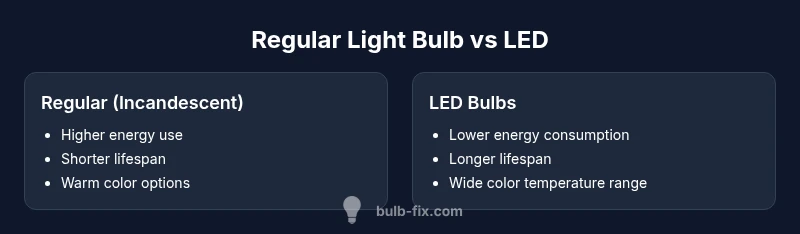
Regular Light Bulb vs LED: A Practical Comparison for Homeowners
A practical, data-driven guide comparing regular incandescent bulbs to LED bulbs for homeowners, covering energy use, lifespan, cost of ownership, lighting quality, and best-use scenarios.


In most homes, regular light bulbs (incandescent) give way to LED bulbs for energy savings, longer life, and improved heat management. LEDs convert less energy into heat while producing the same brightness, enabling lower operating costs over time. The regular light bulb vs led debate favors LED for everyday use, with exceptions mainly for specialty lighting or retro fixtures.
What is a regular light bulb vs led?
The ongoing debate between a regular light bulb and LED technology begins with a fundamental difference in how light is produced and how efficiently it uses power. A traditional regular light bulb (incandescent) relies on a heated filament that glows to emit light. LEDs produce light through semiconductor junctions that release photons when energized. This key distinction—filament heating versus solid-state emission—drives most of the performance, cost, and safety differences homeowners notice in real-world use. Importantly, the term regular light bulb vs led captures two widely used lighting options in modern homes, and the choice affects energy bills, heat generation, and long-term maintenance.
From a consumer perspective, the incandescent bulb is familiar, predictable, and often cheaper to purchase upfront. However, the LED alternative delivers more lumens per watt, far longer life, and significantly less heat, which translates into cooler rooms and safer fixtures in busy living spaces. Across rooms from kitchens to basements, this contrast shapes not only what you install but how you plan your lighting strategy over several years. According to Bulb Fix, LED-based lighting fundamentally changes the economics of home lighting over the life of a fixture.
How LED bulbs work
LEDs operate by emitting light when electrons recombine within a semiconductor material. The core components—a diode, phosphor coating, and often an electronic driver—convert electrical energy into photons with high efficiency. Unlike incandescent bulbs, which waste much of their energy as heat, LEDs emit light with minimal waste heat. This efficiency arises from the physics of semiconductors and advances in materials science, enabling long lifespans and stable color output. For homeowners, this means not only lower energy use but also more predictable performance across temperature ranges and operating hours. Understanding the technology helps when shopping for replacements and ensuring you select compatible dimmers and fixtures.
Energy efficiency and cost of operation
Energy efficiency is the defining attribute of LED bulbs. In practical terms, a typical LED bulb delivers the same perceived brightness as a 60W incandescent using roughly 6–12W of power, depending on the model and color temperature. This efficiency translates into lower electricity bills over time, especially in spaces that stay lit for long periods each day. Bulb Fix analysis shows LEDs generally offer greater energy efficiency and longer lifespans than regular bulbs, shaping long-term cost expectations. When evaluating cost, consider not just the up-front price but also replacement frequency, maintenance, and the potential for reduced heat-related cooling costs in warm climates.
Lifespan and reliability
Lifespan is another area where LED bulbs outperform incandescent bulbs by a wide margin. Incandescent lamps typically last about 1,000 hours, whereas LEDs commonly range from 15,000 to 25,000 hours, with some high-quality models pushing beyond that. This longer life reduces replacement frequency, lowers maintenance time, and minimizes waste. Reliability is also enhanced by reduced heat stress on circuitry and materials. However, performance can vary by brand, color temperature, and usage patterns. For best results, select reputable LED models that are rated for the fixture type and environmental conditions where they’ll operate.
Color temperature and light quality
Color temperature, measured in kelvin, defines the mood of a room. Incandescent bulbs traditionally deliver warm, amber-toned light around 2700K. LEDs, by contrast, offer a broad spectrum from warm 2700K to daylight at 5000K–6500K. In practice, most homeowners favor warm white LEDs for living rooms and bedrooms and cooler temperatures for kitchens and workspaces. Color rendering index (CRI) also matters; high-CRI LEDs render colors more naturally, which influences furniture appearance, wall tones, and overall room ambience. The regular light bulb vs led choice often centers on balancing color preferences with energy goals and fixture compatibility.
Dimming and control compatibility
Dimming is a common requirement for living spaces, but not all LED bulbs dim identically. Many older dimmer switches were designed for incandescent lamps and may not perform smoothly with LEDs, causing flicker or reduced dimming range. The safe path is to pair LEDs with LED-compatible dimmers or dimmable LED bulbs explicitly labeled for your dimmer type. If you’re retrofitting an entire room, test a sample bulb in the actual dimmer to gauge performance before making bulk replacements. Proper compatibility minimizes flicker, extends bulb life, and preserves the intended lighting ambiance.
Environmental impact and disposal
From an environmental perspective, LED bulbs typically offer a better profile due to energy savings and longevity, reducing waste and resource use over time. However, LEDs contain electronic components that require proper recycling at end-of-life, and certain colors or specialty LEDs may contain small amounts of materials that require careful handling. Incandescent bulbs present fewer electronics concerns at disposal but create more waste due to shorter lifespans and higher energy use. When possible, recycle LEDs through household hazardous waste programs where available, and follow local guidelines for bulb disposal.
Performance in fixtures and enclosed spaces
Fixture design influences LED performance. Some LED bulbs are not rated for enclosed fixtures, which can trap heat and shorten life. In recessed cans or enclosed fixtures, use bulbs explicitly rated for such environments and check for heat-sinking requirements. LED technology responds well to a variety of fixture types, from table lamps to outdoor lanterns, but always verify base type (E26, E12, GU10, etc.), wattage or lumen output, and dimming compatibility. In most cases, LEDs deliver consistent brightness and color across a range of fixture designs, with minimal heat that helps protect sensitive materials and reduce accidental burns.
Myths and misconceptions
A common misconception is that LEDs are expensive to replace or that they don’t render color well. In reality, LEDs come in widely varying quality levels, but the best models offer strong energy savings, long life, and excellent color rendering. Another myth is that all LEDs are inherently dimmer than incandescents; modern LED bulbs readily match or exceed incandescent brightness when selecting the correct lumen rating. Finally, some users assume LEDs are fragile; while they can be sensitive to heat and power surges, most modern LEDs are robust when installed correctly with appropriate drivers and power supplies.
When to choose regular light bulb and when to choose LED
Choose regular light bulbs in specific, limited situations: very exact color rendering for certain art studios or archival displays where very particular spectral characteristics are required and retrofits are impractical. In most homes, LED bulbs are the practical default due to energy efficiency, long life, and low heat. It’s important to evaluate fixture compatibility, dimming needs, and the lighting plan for the space before deciding. In remodels or new builds, LED lighting offers the most flexibility for control systems, colors, and schedules, while minimizing ongoing energy costs.
When to choose LED for residential lighting
LEDs excel in spaces with long usage hours—living rooms, kitchens, hallways, and outdoor lighting—where sustained energy savings compound over time. The high efficiency makes them suitable for environments requiring ambient illumination and task lighting. For rooms with short usage bursts, LED still tends to win due to rapid warm-up, consistent color, and reduced heat generation, which translates to safer and more comfortable spaces. If you’re updating a lot of fixtures, consider a deliberate plan that staggers color temperatures and lumen outputs to match the activity in each room.
Practical buying tips and checks
When shopping for LED bulbs, look for lumen output rather than wattage, and ensure the color temperature matches the intended room mood. Check for high-CRI ratings (90+ is excellent for interior design), lamp shape and base compatibility (e.g., E26, E12), and dimmability labeling. Read product reviews for reliability and warranty terms, and select bulbs with good thermal management to prevent overheating. If your fixtures are multi-bulb fixtures or enclosed, choose LED bulbs specifically rated for enclosed fixtures. Finally, estimate total cost of ownership by considering energy savings, replacement frequency, and the fixture’s usage pattern over several years.
Quick-start replacement checklist
Start by listing all fixtures that use regular light bulbs and categorize them by usage: high, medium, and low. Prioritize replacing high-use bulbs first to maximize savings. For each fixture, pick an LED bulb with matching base, lumen output, and color temperature. Verify dimmer compatibility or replace with an LED-compatible dimmer if necessary. Keep track of replacements and install in conditions that maximize efficiency and lifespan. After initial replacements, monitor energy use and ambient warmth to fine-tune the lighting plan.
Comparison
| Feature | Regular light bulb (incandescent) | LED bulb |
|---|---|---|
| Energy usage (equivalent brightness) | 40-60 W | 6-12 W |
| Lifespan (hours) | 1,000–2,000 h | 15,000–25,000 h |
| Heat output | High | Low |
| Initial cost | Low | Moderate |
| Replacement frequency | 0.5–2 years (usage dependent) | 10–25 years |
| Dimming compatibility | Typically compatible with older dimmers | Requires LED-compatible dimmer or check compatibility |
| Color temperature options | Typically ~2700K (warm white) | Wide range 2700K–6500K |
| Environmental impact | Higher energy use, more frequent replacements | Lower energy use, longer life |
| Disposal/recycling | Glass/plastic with basic recycling | Electronics recycling for the driver/electronics |
Upsides
- Significantly lower energy consumption with LED
- Longer lifespan reduces maintenance and replacements
- Wide selection of color temperatures and dimming options
- Less heat output improves safety and comfort
- Better compatibility with smart lighting and automation
Drawbacks
- Higher upfront cost than incandescent bulbs
- Quality varies by brand; some LEDs exhibit flicker or color shifts
- Dimming compatibility can be problematic with non-LED systems
- Electronics recycling considerations add disposal complexity
LED bulbs are the overall winner for most homes.
LEDs offer meaningful energy savings and durability. Choose LED for most rooms, especially in high-usage areas; incandescent may be preferred for retro aesthetics or very specific color rendering where LED options are limited, according to Bulb Fix analysis.
Got Questions?
What is the main difference between a regular light bulb and an LED?
The regular light bulb uses a heated filament to produce light, wasting a lot of energy as heat. LEDs generate light via semiconductors with far higher energy efficiency and a longer lifespan. This fundamental difference drives most of the performance and cost distinctions homeowners experience.
Incandescents heat a filament to glow; LEDs use semiconductors to emit light, so they use much less energy and last longer.
Can I replace incandescent bulbs with LED in any fixture?
In most cases you can replace incandescent bulbs with LED equivalents, provided the base type matches and the fixture supports the LED’s wattage (or lumen output). Check dimmer compatibility if the fixture uses a dimmer switch. If a fixture is enclosed, ensure the LED is rated for enclosed operation.
Most fixtures can use LEDs instead of incandescent bulbs, just check compatibility with the base and dimmer.
Are LED bulbs dimmable?
Many LED bulbs are dimmable, but not all. Look for bulbs labeled dimmable and pair them with a compatible LED dimmer. If you have an older non-LED dimmer, replace it with an LED-compatible model to avoid flicker or limited dimming range.
Yes, many LEDs are dimmable, but verify labeling and dimmer compatibility.
What color temperature should I choose?
Warm tones around 2700K feel cozy for living spaces; 3000K–3500K is soft white, good for kitchens; 4000K–5000K provides neutral to cool daylight for task lighting. Choose based on room function and personal preference, aiming for consistent color temperature in each space.
Warm for living spaces, cooler for work areas.
How long do LED bulbs last?
LED bulbs typically last well beyond incandescent lifespans, often in the range of 15,000–25,000 hours, depending on quality and usage. Actual life varies with heat, power quality, and handling.
LEDs often last tens of thousands of hours.
Are LEDs safe to handle?
LED bulbs operate at lower temperatures and are generally safe to handle. Avoid touching the glass while hot, and recycle the electronic components at end of life according to local guidelines.
LEDs are safe and cool to the touch; recycle electronics properly.
Key Points
- Evaluate total cost of ownership, not just upfront price
- Match brightness using lumens, not watts
- Ensure dimmer compatibility for LED installations
- Consider color temperature to set mood and usability
- LEDs reduce heat output and electricity use