Difference Between Bulb and Lamp: A Practical Guide
Explore the practical differences between bulbs and lamps, covering definitions, compatibility, energy use, and maintenance. Learn when to choose bulbs or lamps for your home lighting needs.


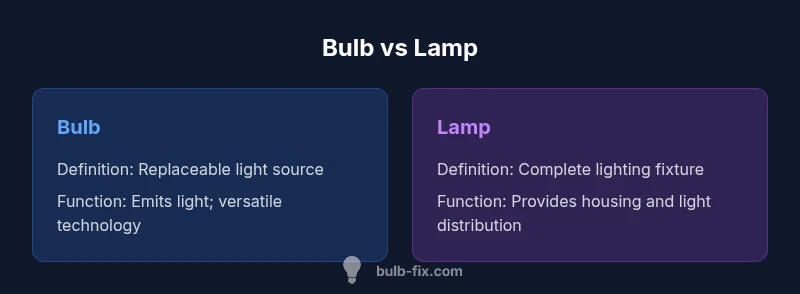
Looking to understand the difference between bulb and lamp? In brief, a bulb is the replaceable light source, while a lamp is the complete fixture that holds the bulb. The two terms are often used interchangeably in casual speech, but their roles in lighting design are distinct: one is a consumable light source, the other a fixed assembly that houses it.
What the terms mean and why the distinction matters
In everyday language, people talk about bulbs and lamps interchangeably, but in lighting design the difference is foundational. A bulb is the actual light-emitting element—an incandescent filament, a compact fluorescent tube, or an LED chip. A lamp, by contrast, is the complete unit that holds the bulb, includes electrical connections, and provides the physical housing that shapes light. The distinction matters for compatibility, safety, and performance: you don't just buy a bulb for a lamp; you buy a bulb that fits the lamp's base and voltage, and you select a lamp that suits the room, style, and shade you want. The difference between bulb and lamp also guides maintenance decisions, such as whether a fixture uses replaceable bulbs or an integrated light source. Understanding this helps homeowners plan lighting layouts more efficiently, reduce waste, and choose easy upgrades for energy savings. In this article, we compare the two terms across common scenarios, from task lighting in kitchens to ambient setups in living rooms.
Core distinctions: physical form, function, and lifecycle
The bulb and the lamp occupy different roles in a lighting system. The bulb is the consumable element that emits light when energized, available in multiple technologies, shapes, and color temperatures. The lamp is the fixture that houses the bulb, provides the mechanical support, and defines how light is distributed by means of shading, reflectors, and enclosure. Because lamps can be paired with different bulbs, users gain or lose flexibility depending on the fixture design. Lifecycle considerations also differ: bulbs are replaced periodically, while a lamp may be replaced as a unit or upgraded as a whole when better lighting technology becomes available. This separation matters for maintenance planning and long-term costs, because upgrading bulbs often costs less upfront and permits gradual lighting improvements, whereas replacing an entire fixture can be a bigger initial investment.
Types of bulbs and how they relate to lamps
Bulbs come in a spectrum of technologies, including traditional incandescent, compact fluorescent, halogen, and modern LEDs. Each technology has unique characteristics such as brightness, color rendering, and heat output. Lamps, meanwhile, come in a wide range of form factors from compact desk lamps to large ceiling fixtures, and some lamps include integrated LEDs that do not accept replaceable bulbs. When shopping, focus on two compatibility questions: will the bulb base fit the lamp socket, and does the lamp support the desired technology and brightness level? This alignment ensures safety, consistent light quality, and predictable energy use while maintaining design intent.
How to choose between a bulb and a lamp in different rooms
Room-by-room decision making often favors either the bulb or the lamp approach. In kitchens and work areas, choosing a replaceable bulb approach allows you to tailor brightness and color temperature for tasks and food preparation, while reaping energy savings from LED bulbs. In living rooms or bedrooms, a lamp with a shade can offer warm, directed lighting and decorative appeal without changing the overall fixture. For entryways or outdoor spaces, consider weather-rated lamps or fixtures with replaceable bulbs to balance safety with convenience. The key is to align lighting goals with base compatibility, be mindful of heat and ventilation for enclosed fixtures, and not forget to match dimming capabilities to the lamp type and space function.
Compatibility: sockets, bases, and fittings
Compatibility is the most practical constraint when deciding between bulbs and lamps. Bulbs rely on a socket and base that match both the fixture and the electrical system. Common bases include screw-in types and pin-based formats, and while many bulbs can fit a given base, the lamp might have rating limits on brightness or technology. Lamps with integrated LED modules remove one layer of complexity but lock you into a single technology and color temperature. Always check the lamp's label or instruction manual for base type, wattage limits, and accepted bulb types before purchasing.
Energy efficiency and cost of ownership
Energy efficiency is a major driver in modern bulb and lamp choices. LED bulbs are popular due to high efficiency and long life, which reduces energy use and replacement frequency. In contrast, older incandescent bulbs consume more energy and generate more heat, which can influence both comfort and cooling costs. Lamps that are designed for LEDs can offer significant savings, especially in rooms that stay lit for long periods. When evaluating cost of ownership, balance upfront cost with expected life, energy savings, and the ease of replacing a component versus a whole fixture. For home systems with smart controls, LED bulbs often pair best with dimmers and automation to maximize efficiency.
Safety, installation, and disposal considerations
Safety begins with correct installation. Always choose fixtures rated for the intended location, whether indoor or outdoor, and ensure voltage and base compatibility. When dealing with heat-producing bulbs, provide adequate clearance and ventilation, and avoid enclosed fixtures that trap heat for high-temperature bulb types. Disposal matters too: bulbs contain materials that require proper recycling or disposal streams, especially fluorescent and LED bulbs. Follow local guidelines and manufacturer recommendations to minimize environmental impact and avoid electrical hazards during replacements.
Practical examples: ceiling fixtures, lamps, and decorative setups
In ceiling-mounted contexts, recessed cans and surface-mount fixtures can accept specific bulb types, with the lamp shaping light distribution via reflectors. Table lamps and floor lamps illustrate the decorative side of lighting: swapping bulbs changes color temperature and brightness to alter mood and function. Fancy lamps with fabric or glass shades rely on the bulb's warmth and diffusion to achieve the intended ambiance. Decorative setups may benefit from smart bulbs or tunable LED products that pair with home automation. Always plan wiring, mounting height, and shade choice together to achieve the desired effect.
Common myths and misperceptions
A frequent myth is that lamps and bulbs are interchangeable without regard to base or fixture. In reality, mismatch can cause safety hazards or suboptimal light quality. Another misconception is that all LED bulbs fit any lamp; compatibility depends on the base, socket, and ballast or driver requirements. Some think that integrated LED fixtures never need maintenance; while they last longer, they still require disposal and occasional upgrades. Lastly, people often assume that replacing a bulb always reduces energy use; the reality depends on the bulb's technology and the lamp's efficiency and usage pattern.
How to replace and maintain for longevity
Regular maintenance starts with gentle handling and proper power-off procedures. When a bulb fails, twist out the old bulb following the fixture's guidelines and replace with a bulb that matches base, wattage, and dimming compatibility. For lamps with shades, clean the shade to reflect light more effectively. If the lamp is part of an LED module, plan for module replacement or fixture upgrade as the technology evolves. Finally, track usage patterns and keep fixtures clean to maximize light output and energy efficiency over time.
Comparison
| Feature | Bulb | Lamp |
|---|---|---|
| Definition | Replaceable light source (various technologies such as incandescent, LED, CFL) | Complete lighting unit that houses the bulb, includes socket, housing, and often shade |
| Primary function | Emit light when energized; user can swap technology or color-temperature by changing bulbs | Provide a ready-to-use fixture with built-in support for light distribution and styling |
| Physical form | Glass envelope or LED module that emits light | Fixture housing with socket, wiring, and often shade |
| Base/socket compatibility | Requires a compatible bulb base and voltage; multiple base standards exist (e.g., screw or pin) | Fixed or modular fixture designed to accept specified bulb types or built-in LEDs |
| Replacement/maintenance | Bulbs are replaced when they age or fail; easy to swap in most fixtures | May require replacement of the entire fixture or the LED module if integrated |
| Energy efficiency | Depends on bulb technology; LEDs highly efficient and long-lasting | Efficiency depends on the fixture design and whether the lamp uses integrated LED or replaceable bulbs |
| Cost/Value | Lower upfront cost per bulb with potential long-term energy savings | Higher upfront cost for the fixture and potential maintenance costs |
| Best for | Flexibility to mix and upgrade bulbs; ideal for changing lighting needs and color temperatures | Convenience, aesthetics, and consistent design; suitable for turnkey lighting |
Upsides
- Offers flexibility to upgrade bulbs without changing fixtures
- Allows optimization of brightness, color, and efficiency
- Lower upfront cost for bulbs and easy replacements
- Wide availability of bulb types and bases
Drawbacks
- Bulb replacements can be inconvenient in hard-to-reach fixtures
- Fixtures with integrated LEDs limit future upgrades
- Some bulbs may be incompatible with dimmers or smart controls unless specified
- Lamps may have higher upfront cost and limited future bulb choices
Bulbs offer flexibility and efficiency; lamps offer convenience and style
For most homes, bulbs win on long-term cost and customization, while lamps win on ease of use and aesthetic control. Choose bulbs when you want energy savings and upgrade paths; choose lamps for a simple, ready-made lighting solution.
Got Questions?
What is the fundamental difference between a bulb and a lamp?
The bulb is the light source; the lamp is the fixture that holds it. The two terms describe separate roles in lighting systems: one is replaceable, the other is a complete assembly.
The bulb is the light source, while the lamp is the fixture that holds the bulb.
Can I install any bulb in any lamp?
Not always; you must match base type and voltage. Always check the lamp’s manual or label for compatible bulb types before purchasing.
Make sure the base and voltage match the lamp’s specifications.
Are there integrated LED lamps that don’t require bulb replacements?
Yes, some lamps come with built-in LEDs. They reduce maintenance but limit future bulb upgrades and may have higher upfront costs.
Yes, many fixtures come with LEDs built in, so you don’t replace bulbs separately.
What bulb bases are common?
Common bases include screw-in types and pin configurations. Always check the base designation on the lamp and ensure it supports the chosen bulb technology.
Look for the base type on the socket and match it to the bulb you plan to use.
How do bulbs affect energy use and heat?
Bulbs vary by technology. LED bulbs are generally more energy-efficient and produce less heat than incandescent options, affecting comfort and cooling costs.
LED bulbs save energy and stay cooler than traditional bulbs.
Is the term lamp used to refer to both fixture and bulb?
In many contexts lamp refers to the fixture, while bulb refers to the replaceable light source. In casual speech, people may use them interchangeably.
Usually lamp means the fixture and bulb means the replaceable light source.
Key Points
- Define your goal: flexibility vs convenience
- Check socket compatibility before buying
- Prioritize LED bulbs for energy efficiency
- Consider shade and fixture design
- Plan for maintenance and disposal