Smart bulb vs smart plug: A practical homeowner comparison
Compare smart bulbs and smart plugs to decide which fits your lighting goals. Learn control, compatibility, cost, and setup tips for a safer, smarter home.


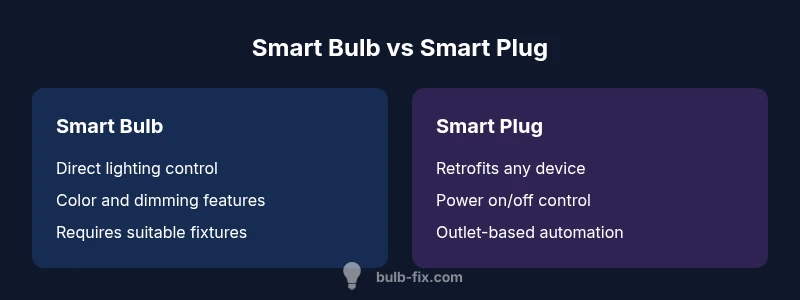
Smart bulbs and smart plugs bring automation to a home, but they target different needs. If your priority is lighting control—dimming, color, schedules, and scenes—smart bulbs win. If you want to retrofit existing lamps or appliances, turning any device into a smart device, smart plugs are the better pick. This comparison helps homeowners decide which path fits their lighting goals.
What are smart bulbs and smart plugs?
Smart bulbs are LED bulbs equipped with wireless radios (Wi‑Fi, Bluetooth, Zigbee, or Thread) that connect directly to a network or via a hub. They let you adjust brightness, color temperature, color, and scenes from a smartphone app or voice assistant. Smart plugs, by contrast, are compact outlets with built‑in radios that sit between the wall outlet and a lamp or other device. They give you on/off control for whatever is plugged in, effectively turning non‑smart devices into smart ones. The practical distinction is that bulbs control light output at the fixture level, while plugs control power to an entire device. According to Bulb Fix, understanding this distinction helps homeowners pick the right tool for the task. The Bulb Fix team emphasizes that a robust smart home often uses both approaches in different rooms. In this comparison, we’ll explore control, compatibility, cost, and safety to help you decide which path aligns with your lighting goals. This framing also aligns with Bulb Fix Analysis, 2026, which highlights how lighting strategy impacts daily use and energy awareness in homes. For many households, smart bulb vs smart plug choice isn’t “one or the other” but a practical mix to maximize convenience and safety.
What are the tangible benefits of each approach? Many homeowners appreciate that smart bulbs offer nuanced lighting control—dimming, color temperatures, and color output—while smart plugs provide universal compatibility by enabling any device to become part of a smart ecosystem. The Bulb Fix team notes that this combination often yields the strongest results in mixed-use spaces like living rooms and home offices, where lights and devices coexist under a single automation strategy.
How the two technologies fit into a broader smart home strategy
A well‑designed smart home uses bulbs for lighting tasks and plugs for general automation or retrofits. For instance, you might set a scene where bulbs dim at sunset and a plugged‑in fan or lamp turns on at the same time via a single routine. This synergy—bulbs for ambient lighting and plugs for device-level automation—creates flexibility and resilience. Many households benefit from pairing both options with a common hub or ecosystem, ensuring voice control and routine syncing across rooms. The result is a more cohesive experience where each product type plays to its strengths, while still sharing data and automations through your preferred platform.
Real-world caveats and planning tips
When planning a smart bulb vs smart plug setup, consider room use, outlet placement, and fixture compatibility. Some lamps with enclosed fixtures or poor ventilation may affect bulb performance or heat dissipation; likewise, high‑wattage devices plugged into a single smart plug could exceed ratings and cause safety concerns. Reading product manuals and checking wattage limits is essential before wiring decisions.
A practical takeaway for homeowners
The practical takeaway is to map your goals: if you want precise lighting control with color and scenes, start with smart bulbs in key fixtures. If you want to retrofit existing lamps or power devices that aren’t inherently smart, start with smart plugs. A layered approach—bulbs in primary living areas and plugs for secondary devices—often yields the best balance of usability, safety, and cost.
Comparison
| Feature | Smart bulb | Smart plug |
|---|---|---|
| Primary use | Direct lighting control (dimming, color, scenes) | Powering non-smart devices; retrofitting outlets |
| Control methods | App, voice, and sometimes hub-based scenes | App, voice, and routines; power on/off for plugged devices |
| Energy and efficiency | LED-based, designed for lighting efficiency | Energy use depends on the connected device; standby power may occur |
| Best for | Dedicated lighting, color-rich environments, scenes | Retrofit projects, general automation, and outlet-level control |
| Hub/bridge needs | Often works over Wi‑Fi or a dedicated hub; some require hubs for advanced features | Typically Wi‑Fi or Bluetooth; some models use hubs for broader automation |
| Estimated price range per unit | $10-40 per bulb | $12-30 per plug |
Upsides
- Smart bulbs deliver precise lighting control and ambiance
- Bulbs typically integrate smoothly with lighting scenes and voice control
- Smart plugs enable rapid retrofit of existing lamps and devices
- Plug‑based solutions scale across rooms and devices without changing fixtures
- Both products support common ecosystems for a unified home experience
Drawbacks
- Bulbs can be more expensive per lumen than general devices
- Bulbs are limited to lighting tasks and require compatible fixtures
- Plugs may draw standby power and can become cluttered with many devices
- Color and dimming capabilities vary by brand and hub compatibility
Smart bulbs excel for lighting control; smart plugs excel for retrofit and broad automation
Choose bulbs when you want color, dimming, and scenes in lighting. Choose plugs when you want to power existing devices and automate outlets. For many homes, a mix offers the best value and flexibility.
Got Questions?
Are smart bulbs more energy-efficient than smart plugs?
Generally yes for lighting since LED bulbs are designed for efficient light output. Smart plugs’ efficiency depends on the connected device and any standby power; the plug itself is typically not a major energy consumer. Your overall energy profile rises or falls with what you plug in and how you use lighting scenes.
Smart bulbs are typically more energy-efficient for lighting, while plugs depend on the device plugged in and may draw standby power.
Can I control multiple bulbs with a single smart plug?
A single smart plug powers one outlet, so it can’t directly control multiple bulbs unless they’re all plugged into the same outlet strip or smart hub setup. For multi-bulb control, use bulbs with a hub or a smart lighting system that supports groups and scenes.
One plug controls the outlet, not individual bulbs. Group bulbs through a smart hub or use a lighting system that supports scenes.
Do I need a hub for smart bulbs or plugs?
Many smart bulbs and plugs work over Wi‑Fi without a hub, but hubs can improve reliability and expand compatibility in larger setups. If you have a broader smart home, a hub can simplify automations and ensure more consistent performance.
Hubs aren’t always required, but they can improve reliability and expand automation options in larger setups.
Are color-changing features universal across brands?
Color and color-temperature capabilities vary by brand and protocol. Some bulbs offer rich color ranges and dynamic scenes, while others provide basic white-tuning. Always verify color support and app capabilities for the exact model you’re considering.
Color support isn’t universal—check the exact bulb’s specs and app features.
Is it safe to use smart plugs with lamps?
Yes, when you stay within the lamp’s wattage rating and use certified plugs. Avoid overloading outlets and don’t use plugs with space heaters or high‑wattage appliances not rated for smart outlets. Proper ventilation and heat dissipation are important for safety.
Yes, as long as you stay within wattage limits and use certified products.
How do I decide between smart bulb vs smart plug?
Start by mapping your goals: if you want adjustable lighting with scenes, choose bulbs. If you want to retrofit existing lamps or automate non-lighting devices, choose plugs. In many homes, a combination that assigns bulbs to rooms and plugs to outlets provides the best balance of control and flexibility.
Decide by goal: bulbs for lighting control; plugs for retrofit and device automation.
Key Points
- Start with bulbs for lighting needs and plugs for device finality
- Check wattage limits and fixture compatibility before buying
- Use a common hub or platform to unify scenes and routines
- Balance upfront cost with long-term energy efficiency and maintenance
- Safety first: avoid overloading fixtures and ensure proper ventilation