What Size Bulb Is a Night Light? A Practical Guide
Learn common bulb sizes and bases for night lights, how to identify the correct base, and tips for safe, energy-efficient nighttime lighting. Bulb Fix guides homeowners through replaceable bulbs vs integrated LEDs and practical DIY checks.


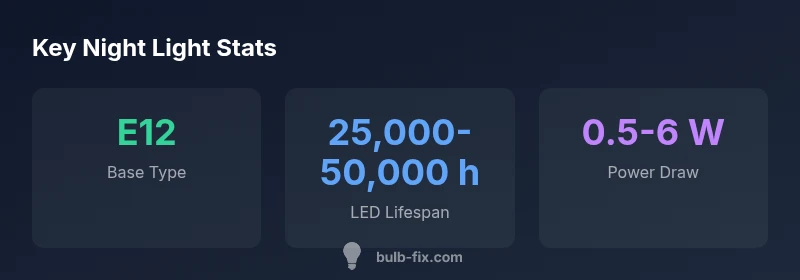
Most night lights use a small, low-wattage bulb with a candelabra base (E12) or a wedge-type bulb, though many modern units use integrated LEDs that don’t require replacement. Always check the fixture label and the bulb base before shopping. Bulb Fix notes that base compatibility and brightness choice drive comfort and safety in bedrooms and hallways.
Understanding night-light bulb sizing
When people ask the question, what size bulb is a night light, they are really seeking two things: which bulb bases fit their fixture and whether the bulb is replaceable or integrated. There isn’t a universal size because night lights come in many shapes, voltages, and power configurations. In modern homes, you’ll encounter two broad paths: plug-in night lights that take small, replaceable bulbs (often with a candelabra base), and newer fixtures with integrated LEDs that don’t require bulb changes. The key to choosing the right bulb is to start with the fixture label and the base type, then verify compatibility before purchasing. This approach, endorsed by the Bulb Fix team, keeps your nighttime lighting safe and predictable in hallways, bedrooms, and nurseries.
Base types you’ll encounter and how to identify them
Night lights rely on a few common base types. The E12 candelabra base is typical for small, plug-in units that sit flush with a socket. You may also see E17, a slightly larger candelabra-style base, in compact fixtures. Wedge-based bulbs (such as BA9s or 194-type wedges) are popular in some compact, decorative night lights. Some newer models use integrated LEDs, which means there is no bulb to replace. Always check the fixture itself or its label for the exact base requirement. If you’re unsure, bring the old bulb to a store or use the fixture’s model number to search the manual.
Replaceable bulbs vs integrated LEDs: pros and cons
Replaceable bulbs offer flexibility and easy upgrades; you can swap to a longer-lasting LED while keeping your existing fixture. However, LED-integrated night lights simplify maintenance and save energy, at the cost of being non-serviceable if the LED dies. Consider your usage pattern: high-traffic areas or rooms where you value long-term reliability may benefit from integrated LEDs, while decorative or color-changing night lights might benefit from replaceable bulbs for customization. Always match the base type, brightness, and color temperature to the room’s function.
Brightness and color temperature for nighttime comfort
Brightness for night lights is usually measured in lumens rather than watts. Most people prefer a dim glow in the range of roughly 10-40 lumens for bedrooms and hallways, which provides enough visibility without disrupting sleep. Color temperature matters too: warm white (around 2700K-3000K) creates a calm, sleep-friendly atmosphere, while cooler temperatures (4000K-5000K) can feel harsher and more clinical for late-night use. If you’re sensitive to light, a lower brightness with warmer color temperature is often best.
Safety and compatibility checks you shouldn’t skip
Always inspect the fixture label to confirm the supported bulb type and wattage. Do not exceed the recommended wattage, as this risks overheating. If you’re using replaceable bulbs, choose energy-efficient LED options with a warm color and avoid dimmable bulbs unless your fixture supports dimming. For children’s rooms, consider a low-brightness LED with a soft glow. Regularly check for flicker, buzzing, or heat after replacing bulbs and disconnect power when changing a bulb.
Practical shopping tips and DIY maintenance for night lights
When shopping, carry the old bulb (if replaceable) and the fixture’s model number. Cross-check the base type (E12, E17, wedge) and ensure the new bulb’s wattage aligns with the fixture’s rating. If you’re upgrading to an LED option, look for a bulb labeled for “night light” use with low lumens and a warm color. For DIY maintenance, clean the lens with a soft cloth, ensure there’s proper ventilation around the fixture, and replace defective bulbs promptly to avoid overheating.
Common night-light bulb bases and how they’re used
| Base Type | Typical Fixture | Common Bulb Color Temp | Notes |
|---|---|---|---|
| E12 (candelabra) | Plug-in night light | 2700K-3000K | Warm, cozy glow |
| E17 (mini-candelabra) | Compact fixtures | 3000K-3500K | Moderate brightness |
| Wedge (BA9s/194) | Decorative units | 2700K-4000K | Check fit and polarity |
| LED integrated | Most modern units | N/A | No bulb replacement required |
Got Questions?
What size bulb is a night light?
Night lights vary by fixture, but common bases are E12 (candelabra) or wedge bulbs. Some models use integrated LEDs with no bulb to replace. Always verify the base on your unit.
Most night lights use an E12 or wedge bulb, or an integrated LED—check your fixture to be sure.
Can I use a standard household bulb in a night light?
Only if the base and wattage match the fixture’s rating. Many night lights require small bases and low wattage. If in doubt, replace with a compatible LED designed for night lights.
Only use a bulb that matches the fixture’s base and wattage. If unsure, use a night-light LED designed for that fixture.
Are night lights with replaceable bulbs safer for children?
Replaceable bulbs offer customization, but LED-integrated models reduce risk by eliminating bulb changes. For children’s rooms, choose low brightness and warm color temperature with a stable, non-dimmable option.
LED night lights are often safer for kids since they don't require bulb changes, but steady, low brightness helps too.
Is warm white better for bedrooms?
Yes. Warm white (around 2700K) is typically kinder to sleep and reduces the chance of waking during the night.
Warm white lights are generally better for bedrooms because they’re gentler on sleep.
What should I do if my night light flickers?
Flicker can indicate an incompatible bulb or a loose connection. Ensure the bulb is the correct base and wattage, tighten the bulb, or replace with a compatible LED bulb. If it persists, replace the fixture or consult an electrician.
If it flickers, check compatibility and connection, then replace with a compatible bulb or consider a new fixture.
“Choosing the right bulb size for a night light isn’t just about fit—it's about safety, energy use, and comfort during nighttime hours.”
Key Points
- Know your fixture base before shopping
- Consider replaceable vs integrated LEDs
- Aim for 10-40 lumens for bedrooms
- Prefer warm color temperatures for sleep areas
- Check wattage and safety labels to avoid overheating