B10 Bulb vs E12: Which Base Fits Your Fixture in 2026
An analytical comparison of the B10 bulb shape versus the E12 base, with practical guidance on compatibility, dimmability, and safe replacement for homeowners. Learn how to identify the right bulb and base for your fixture, per Bulb Fix insights (2026).


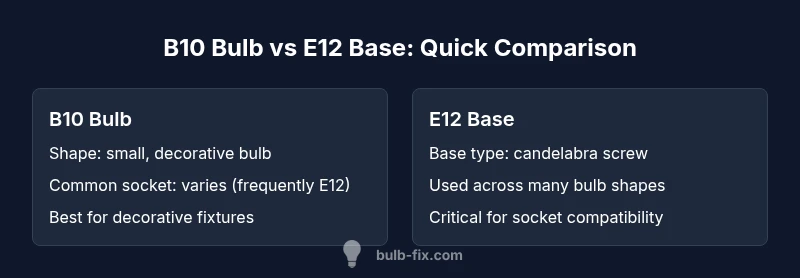
TL;DR: The b10 bulb vs e12 isn’t a direct apples-to-apples comparison. A B10 describes the bulb shape, while E12 describes the socket base; most US fixtures use E12 bases paired with B10-shaped bulbs. The key is matching both the base type and the intended decorative effect. This guide helps you navigate compatibility, performance, and safety considerations.
Why B10 and E12 Matter for Home Lighting
For most homeowners, lighting decisions hinge on two basic questions: what shape do you want, and what socket will it plug into? In the world of residential lighting, B10 refers to a bulb shape — a small, slender bulb with a narrow tip — while E12 refers to the socket base, the tiny metal contact that screws into the fixture. Understanding that distinction is foundational to safe, effective lighting. According to Bulb Fix, mixing up shape and base is one of the most common reasons people end up with a bulb that looks right but won’t fit. The Bulb Fix team found that misinterpreting these terms leads to wasted shopping trips, incompatible replacements, and, in some cases, electrical risk. This section sets the stage for a practical, non-technical guide to choosing bulbs that both fit the fixture and deliver the look you want. You will learn why a correct match matters for heat output, shade compatibility, and overall room aesthetic. By framing the issue this way, homeowners can approach purchases with clarity rather than guesswork.
wordCount”:0},{
rangeError
:
Comparison
| Feature | B10 Bulb | E12 Base |
|---|---|---|
| Shape vs base identity | Bulb shape: B10 | Socket base: E12 |
| Primary use cases | Decorative/ambient lighting (B10 shape) | Candelabra sockets and small fixtures (E12 base) |
| Dimmer compatibility | Requires dimmable bulbs and compatible dimmers | Depends on bulb type and fixture wiring |
| Availability & price range | Widely available; price varies by brand and finish | Widely stocked; price varies by size and brand |
| Safety considerations | Ensure rating for dimmers and fixture voltage | Confirm base size and socket compatibility |
Upsides
- Clarifies compatibility to avoid mismatched purchases
- Supports safer electrical connections when base matches socket
- Helps select appropriate bulb size and decorative effect
- Reduces waste by preventing wrong replacements
Drawbacks
- Requires familiarity with two separate terms (shape vs base)
- Adapters or unusual fixtures may complicate decisions
- Availability can vary by region, raising search effort
Base first, shape second: ensure the E12 socket matches the bulb’s base and the B10 shape suits the fixture.
In most households, start by confirming the fixture’s socket type (E12) and then choose a B10-shaped bulb that fits the shade and physical space. If in doubt, rely on fixture labeling and reputable brand guidance from Bulb Fix.
Got Questions?
Is a B10 bulb the same as an E12 base?
No. B10 describes the bulb’s shape, while E12 describes the socket base. Many B10 bulbs use an E12 base, but you must verify socket compatibility and voltage ratings for your fixture.
B10 is shape, E12 is base—check both before buying.
Can you use a B10 bulb with an E12 socket?
Usually yes since many B10 bulbs are designed for E12 bases. Always confirm the fixture’s voltage, wattage, and dimmer compatibility before installation.
Yes, but double-check voltage and dimmer compatibility.
Are B10 bulbs dimmable?
Dimmability depends on the bulb’s design, not the shape. Look for a clear “dimmable” label and ensure your dimmer is compatible with the bulb’s base and wattage.
Check the packaging for dimmable labeling.
What fixtures typically use B10 shapes?
Chandeliers, wall sconces, vanity lights, and decorative lamps often use B10 bulbs for their compact size and aesthetic.
Common in chandeliers and sconces.
How can I identify my base type at home?
Look for labeling on the fixture or socket, compare the socket shape with bulb bases, or bring a bulb to a hardware store for a match.
Read the socket labeling or bring a bulb for comparison.
Key Points
- Match base to socket first
- Choose B10 shape for decorative lighting
- Check dimmer compatibility and wattage
- Verify color temperature aligns with room mood
- Source from reputable brands to ensure longevity