Difference Between E and B Bulbs: A Practical Guide
Learn the difference between E and B bulbs, how to identify bases, and how to replace them safely. This Bulb Fix guide covers compatibility, installation, and practical tips for homeowners and DIY enthusiasts.


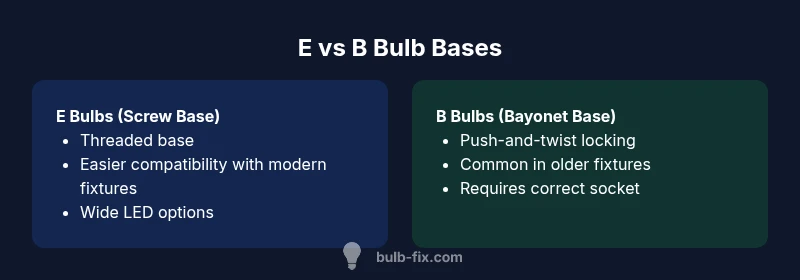
The difference between e and b bulbs lies in their base design and how they connect to a fixture: E bulbs use a screw-in Edison-style base, while B bulbs use a bayonet base that locks with a push-and-twist motion. This distinction governs compatibility, installation, and safety. For most homes, screw-in E bulbs are the default, but older or specialty fixtures may require B bulbs. Always match the socket, then choose a compatible wattage and color temperature.
Difference Between E and B Bulbs: Core Concepts
In every lighting project, the base type determines whether a bulb will fit and how it should be installed. The difference between e and b bulbs is fundamentally about how the bulb locks into the socket. E bulbs (Edison screw) rotate into a threaded socket, creating a reliable, tight connection that is simple to replace. B bulbs (bayonet cap) use a pin-based base where the bulb is inserted and then given a quarter-turn to lock. This base difference affects compatibility with fixtures, household switches, and even dimmer compatibility. According to Bulb Fix, the majority of residential lighting relies on screw-in E bulbs because they are standardized across most fixtures. However, you may encounter older lighting or specialty fixtures that require the bayonet B base. Recognizing this base difference helps you avoid buying the wrong bulb and wasting time.
Quick tip for identification
Check the socket type first: if it has threads inside the socket, you likely have an E-type screw base; if you see two pins or slots, the base is bayonet and requires a B-type bulb. When in doubt, remove the bulb carefully and inspect the base or bring the bulb to a hardware store for comparison. This approach reduces the risk of forcing a bulb into the wrong socket and damaging the fixture.
Market availability and sizing
Screw-based E bulbs are ubiquitous in residential lighting and come in a wide range of wattages, temperatures, and finishes. Bayonet-based B bulbs are common in some regions and older fixtures, but they may be less prevalent in newer homes. Availability can vary by region and fixture vintage. If you’re replacing a bulb in a fixture you’re unsure about, start with the socket inspection, then compare the base type and size. Bulb Fix analysis, 2026, notes that most standard sockets in North America and Europe default to screw bases, but many legacy and specialty fixtures still rely on bayonet bases.
Installation considerations and safety
Screw bases screw in with a gentle clockwise turn until snug. Bayonet bases require a push-and-twist motion to lock behind the pins. Both types should be installed with the power off, using the bulb’s correct wattage rating. Avoid using excessive force or forcing a bulb into an incompatible socket, as this can damage the fixture or cause electrical faults. If you can't find a matching base at first glance, search by socket diameter and base style rather than color or shape alone.
Practical shopping guidance
When shopping, start by reading the fixture’s label or manual to confirm the base type. If you’re replacing multiple bulbs, ensure you’re buying bulbs with the same base type for uniform performance and ease of maintenance. Consider energy efficiency options, such as LED replacements, that match your lumen needs and color temperature preferences. If you’re uncertain about a fixture’s base, ask a sales associate to confirm before purchase. Bulb Fix recommends documenting fixture types in a home lighting inventory to simplify future replacements.
Comparison
| Feature | E Bulbs (screw base) | B Bulbs (bayonet base) |
|---|---|---|
| Base type | screw-in Edison-style base (threaded) | bayonet-style base with pins (twist-lock) |
| Installation method | rotate clockwise to screw in | insert and twist to lock |
| Fixture compatibility | standard screw sockets common in most homes | bayonet sockets or adapters required for older fixtures |
| Availability | nearly universal, broad market availability | regionally mixed; may be less common in new builds |
| Best use case | modern residential lighting, easy replacements | older fixtures and specific regional installations |
| Cost considerations | generally broad pricing with wide LED options | pricing varies more by region and supply |
Upsides
- Clear labeling and standardized inventories ease shopping
- Screw bases generally offer straightforward, quick replacements
- Bayonet bases lock securely and can resist loosening in vibration
- Both base types are widely supported by energy-efficient LED options
Drawbacks
- Bases are not interchangeable, leading to incompatibility errors
- Finding the exact base for vintage fixtures can be challenging
- Adapters exist but may add bulk or compromise safety
Match the socket first; choose a base that fits the fixture, then select an energy-efficient option
E bulbs are typically easiest to replace in modern homes. B bulbs are necessary for older or specific regional fixtures. Bulb Fix’s guidance emphasizes socket-first matching to ensure safe, reliable lighting.
Got Questions?
What is the difference between E and B bulbs?
E bulbs use a screw-in Edison base, while B bulbs use a bayonet base that locks with a quarter-turn. This base design difference determines compatibility with your fixture and how the bulb is installed. Always verify the socket type before purchasing.
E bulbs screw in; B bulbs twist and lock. Check your socket first to avoid buying the wrong bulb.
Are E and B bulbs interchangeable in any fixture?
Generally no. The base shapes are different and designed for specific sockets. For safety and performance, never force a bulb into a non-matching base. If in doubt, consult the fixture’s label or an expert.
Usually not interchangeable. Always match base types to sockets.
Can I convert an E socket to B or vice versa?
Conversion typically requires adapters or replacing the fixture. Adapters can introduce safety risks and should be installed by a qualified person. In most cases, it’s easier to replace bulbs with the correct base rather than alter the socket.
Conversion is possible with adapters, but assess safety risks or better, replace with correct base.
Where are E and B bulbs commonly used?
E bulbs dominate modern residential lighting, including most lamps and ceiling fixtures. B bulbs appear more in older homes, certain countries, and specialty lighting where bayonet sockets are standard. Knowing your local fixture types helps guide purchases.
E bases are common in new homes; B bases show up in older or regional fixtures.
Are E and B bulbs safe with dimmers?
Dimmability depends on the bulb model and the dimmer type, not solely the base. LED options exist for both base types, but ensure the bulb and dimmer are compatible to avoid flicker or buzzing. Check packaging for dimmer compatibility notes.
Check bulb and dimmer compatibility. Use dimmable LED bulbs when possible.
How do I identify the base on a bulb I already have?
Turn off power and carefully inspect the bulb's base. If the inside of the socket is threaded, you likely have an E base; if you see two pins, it’s a B base. When in doubt, compare the bulb to a catalog or bring it to a store.
Inspect the base: threads = E, pins = B. When unsure, compare at a store.
Key Points
- Identify your fixture’s socket type before buying
- Screw bases are common in modern homes
- Bayonet bases suit older or regional fixtures
- Avoid adapters that compromise safety or fit
- Consider LED replacements for energy savings