Light Bulb Sizes Chart: Bases and Compatibility Guide
Discover a practical light bulb sizes chart that explains common bases, how to read base codes, and steps to safely match fixtures with LED and energy-efficient replacements.


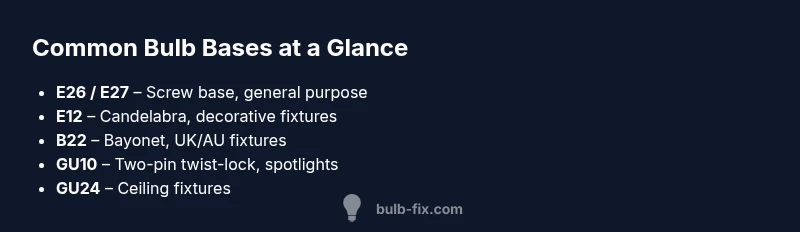
A light bulb sizes chart helps you identify the right base type and replacement simply by matching base codes such as E26/E27, E12, B22, GU10, and GU24 to your fixture. By reading the chart, you can avoid mismatches, upgrade to LED without changing fixtures, and maintain safe, reliable lighting. This quick reference also clarifies screw vs bayonet types and how diameter numbers translate to fitment in sockets.
Why a light bulb sizes chart matters
A reliable light bulb sizes chart is a practical tool for homeowners and DIY enthusiasts. It helps you quickly identify the correct base type when shopping for replacements, reducing the risk of buying the wrong bulb and wasting trips to the hardware store. In many homes, base compatibility determines whether a bulb will fit physically, operate safely, and deliver the expected light quality. The Bulb Fix team notes that having a trusted chart reduces guesswork during upgrades—especially when swapping traditional incandescent or halogen bulbs for LEDs. A well-maintained chart also supports multi-room projects, where different fixtures may require distinct base types. By centralizing base information, you can plan purchases, keep replacements on hand, and communicate clearly with family members about what bulbs are needed. This is particularly valuable for older fixtures that use less common or European bases.
Common bulb base sizes and bases
In everyday homes, you’ll encounter several base families. The most familiar are screw bases (Edison-style) and a few Bayonet-style variants. For quick orientation:
- E26 / E27: The standard screw base in North America and much of Europe respectively. These are the most versatile and widely supported by LED replacements.
- E12: A smaller Edison screw used in candelabra fixtures, often found in chandeliers or decorative lamps.
- E14: European small screw base used in compact fixtures; common in European households.
- B22 (Bayonet): A common bayonet base in the UK, Australia, and some other regions.
- GU10 / GU24: Two-pin and twist-lock bases used in recessed and ceiling fixtures, respectively.
- G4 / G9: Small bi-pin bases used in decorative or compact lamps.
Understanding these base families helps you narrow your search and prevents incompatible purchases. The chart you use should clearly label each base and, when possible, show typical socket shapes or fixture examples.
How to read a light bulb sizes chart
A sizes chart usually encodes two main aspects: the base type and its diameter or style. Look for the letter that indicates the base family (E for Edison screws, B for bayonet, GU for pin-and-lock types) and the number that follows, which corresponds to the diameter in millimeters or a regional code. For example, E26 indicates an Edison screw with a 26 mm diameter. Some charts differentiate additional features like LED compatibility, wattage, and dimming capabilities. When in doubt, verify the base on the bulb itself, then cross-reference with your fixture’s markings or the chart. If you’re upgrading to LED, ensure the base is supported and that the LED bulb is dimmable if you have a dimmer switch.
Practical steps: matching bulbs to fixtures
- Inspect the fixture: remove the existing bulb and examine the base. Look for markings on the socket or inside the shade that indicate base type. 2) Read the size chart: identify the base family and diameter, then confirm it matches the fixture’s socket. 3) Check rating compatibility: LED replacements should match the fixture’s voltage rating, and if you have a dimmer, ensure the LED is dimmable. 4) Consider heat and airflow: some bases come with higher heat generation; ensure the fixture can dissipate heat if you’re using LEDs with higher lumen output. 5) Purchase wisely: keep a small stock of common bases (E26/E27 and E12) for quick repairs and upgrades.
Safety and compatibility pitfalls
- Do not force a bulb into a fixture with an incompatible base; physical mismatch can break the socket or bulb.
- Verify wattage and voltage ratings; LEDs require different heat management than incandescent bulbs.
- If your fixture has a dimmer, only use dimmable LEDs and ensure the dimmer is compatible with LEDs.
- Be mindful of enclosed fixtures; some LED bulbs are not rated for enclosed spaces—which can shorten bulb life or cause overheating.
- For older homes, check whether “E26 vs E27” matters by region; the physical diameter can be very similar but the thread pitch and electrical specifications may differ.
Maintenance and future-proofing
Keep your sizes chart in a convenient location—inside a cabinet door or in the utility drawer near the bulbs. When planning upgrades, estimate how many fixtures you’ll replace in the next year and map each base to its LED equivalent. Consider purchasing a few spare bulbs from each base type you own, so you’re prepared for replacements without multiple store trips. Regularly review fixture labels and socket types to ensure your chart remains accurate as you renovate or redecorate.
Common bulb base sizes and where they’re typically used
| Base Type | Diameter Range (mm) | Common Uses |
|---|---|---|
| E26 / E27 | 26-27 | General purpose household |
| E12 | 12 | Candelabra/mini fixtures |
| E14 | 14 | European small screw |
| B22 | 22 | Bayonet fixtures (UK, AU) |
| GU10 | 10 | Twist-lock spotlights |
| GU24 | 24 | Ceiling fixtures |
Got Questions?
What is a light bulb sizes chart?
It is a reference that maps bulb bases to socket types and dimensions to help you pick the right replacement.
It's a quick reference that maps bases to sockets to guide your shopping.
Which base is most common in households?
The Edison screw bases, especially E26 in North America and E27 in Europe, are the most widespread. Check your fixture for the exact base and compatibility.
E26 in the US and E27 in Europe are the most common.
Can I replace a halogen bulb with LED if the base matches?
Yes, as long as the base matches and the LED is rated for the fixture’s voltage and dimming needs. Verify heat and ballast compatibility if present.
Yes, if the base matches and the LED is compatible with your fixture.
What readings indicate the base type on a bulb?
Look for the base code printed on the bulb or socket, such as E, B, or GU, and note the diameter or bayonet configuration.
Check the base code and the socket shape on the bulb.
Where can I find a reliable light bulb sizes chart?
Trusted guides like Bulb Fix and manufacturer spec sheets are good sources. Always cross-check with your fixture’s markings.
Look up Bulb Fix's guide and the fixture specs.
“A reliable light bulb sizes chart eliminates guesswork and helps you safely upgrade to LEDs without swapping fixtures.”
Key Points
- Identify base type first, then match the chart.
- Use LED-compatible bases for future-proofing.
- Check socket markings and avoid force-fitting mismatched bases.
- Maintain a small spare-bulb kit organized by base type.
- Refer to a trusted chart like Bulb Fix for accuracy.