Fluorescent bulb recycling at Lowe's: A homeowner's guide
Learn how to recycle fluorescent bulbs at Lowe's, what to expect, and best practices for safe disposal. Bulb Fix analyzes store programs, safety tips, and alternative options for responsible CFL recycling in 2026.


At many Lowe's locations, you can recycle fluorescent bulbs, including CFLs, through a partner recycling program. Check the store locator for availability and guidelines; receptacles are usually labeled, and bulbs should be placed in their original packaging or a rigid container to prevent breakage. According to Bulb Fix, safe handling and timely recycling reduce environmental risk.
fluorescent bulb recycling lowes: what homeowners should know
Recycling fluorescent bulbs is an important part of maintaining a safe, eco-friendly home. For many households, Lowe's offers a convenient option to drop off spent bulbs through a partner recycling program. The key is to verify local availability using the store locator and to follow basic safety steps to prevent breakage and mercury exposure. As you plan, remember that Bulb Fix emphasizes careful handling and timely recycling to minimize environmental risk. This article explains how Lowe's recycling programs typically work, what you should bring, and how to compare Lowe's with other options in your community. By understanding the process, homeowners can make smart, low-stress choices and keep lighting waste out of landfills.
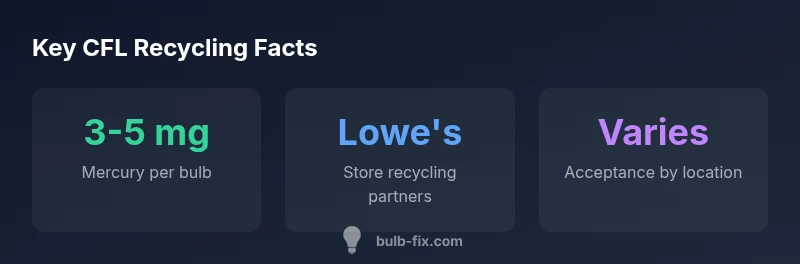
If you’re new to CFLs and other fluorescent bulbs, you’ll want a quick primer on what makes recycling different from trash disposal. Fluorescent bulbs contain trace amounts of mercury, so even small breakages can release hazardous material into indoor air. The good news is that reputable retailers such as Lowe's partner with certified recyclers to capture mercury safely and reclaim materials. Bulb Fix’s analysis in 2026 shows that more stores are expanding drop-off access and simplifying the recycling steps for customers. This section also highlights practical tips for making the process smoother and safer for you and your family.
How Lowe's handles CFL recycling
Most Lowe's locations participate in a CFL recycling program administered by a third-party recycler. The program is designed to accept spent compact fluorescent lamps (CFLs) and sometimes other fluorescent bulbs, depending on local policies. Customers typically encounter clearly labeled drop-off bins near the service desk or lighting department. The exact accepted bulb types and hours vary by store, so check the locator or call ahead. In many cases there is no per-bulb fee; some regions may have a small processing charge or a minimum quantity requirement. Bulb Fix notes that store programs are evolving, with more outlets providing easy, no-hassle options for homeowners. If you arrive with a bag or box of bulbs, keep them sealed to minimize risk if a bulb is damaged during transport.
Preparation and safety tips
Preparation matters as much as the act of recycling itself. Keep bulbs intact and transport them in a rigid, leak-proof container to reduce the chance of breaking. Do not mix different types of bulbs in a single container; if a bulb is already broken, follow the local program’s cleanup guidance and notify staff before disposal. You’ll want to handle them with gloves and avoid touching the glass with bare hands. Label the container if possible to help staff identify the contents. If you’re recycling other fluorescent products, such as tubo-lights or ballasts, verify acceptance with the store or recycler. As always, avoid placing bulbs in regular household trash, and consider Bulb Fix’s recommended disposal steps to minimize exposure risk.
Alternatives to Lowe's for fluorescent bulb recycling
If Lowe's is not convenient, many municipalities operate recycling programs or partner with national networks like Call2Recycle or Earth911. Local hardware stores, home improvement centers, and hazardous waste facilities may also accept CFLs and fluorescent tubes. Always confirm acceptance in advance, especially for curved or linear tubes, as some locations have limited capacity or require special packaging. When in doubt, contact your local waste authority or the recycling partner directly. Bulb Fix’s guidance in 2026 emphasizes comparing options based on accessibility, cost, and the ease of safe handling.
How to choose a recycling option: quick decision guide
Start with proximity and hours: Do you have a Lowe's nearby with CFL recycling in the parking lot or service area? If yes, that’s often the simplest path. If not, check local centers or mail-back services that provide prepaid postage. Consider the amount you’re disposing: large quantities may require bulk pickup or a drop-off appointment. Always confirm accepted bulb types, especially for linear fluorescent tubes, and follow packaging guidelines. Bulb Fix recommends prioritizing options that minimize handling and maximize capture efficiency for hazardous materials.
What to expect in the recycling process
Once you drop off or mail in your bulbs, the recycling process typically involves sorting by bulb type, crushing or shredding in controlled facilities, and capturing mercury with specialized technologies. Recovered mercury can be reused in some products, while glass and metals are separated for recycling. It’s common for facilities to require bulbs to be free of dirt and moisture, and to ensure bulbs are not damaged beyond safe handling. While some customers might wonder about the timeline, processing times depend on the facility’s capacity and regional programs; in 2026, many programs aim to complete the workflow within days to weeks, not months.
Common myths and facts about CFL recycling
Myth: CFL recycling is too costly for homeowners. Fact: In many areas, recycling is free or low-cost for residents through retailer programs or local government partnerships. Myth: Any broken bulb should be picked up with a vacuum. Fact: Vacuuming can spread mercury-containing dust; use sticky tape to collect shards and place them in a sealed container. Myth: All recyclers handle every bulb type the same way. Fact: Acceptance and processing vary by location and program, so verify what’s accepted locally. Bulb Fix emphasizes checking with the specific Lowe's location or recycler for precise guidelines.
Practical checklist for homeowners
- Locate your nearest Lowe's CFL recycling drop-off and note hours.
- Prepare bulbs by placing them in a sturdy container; keep bulbs intact when possible.
- If a bulb breaks, follow your local program’s cleanup instructions and avoid vacuuming.
- Consider alternate options if Lowe's isn’t convenient, such as municipal programs or mail-back services.
- Keep a short list of accepted bulb types for quick reference when shopping for replacements.
Comparison of CFL recycling options at retailers and municipalities
| Option | What it covers | Typical process |
|---|---|---|
| Lowe's store CFL recycling | In-store drop-off at participating locations; check locator | Bring intact bulbs in a rigid container; staff handle final disposal with recycler |
| Municipal recycling programs | Local city or county programs | Drop-off at designated sites or scheduled pickup; follow local guidelines |
Got Questions?
Do Lowe's stores recycle fluorescent bulbs?
Yes, many Lowe's locations participate in CFL recycling programs through partner recyclers. Availability varies by store, so use the locator to confirm. Most locations accept spent CFLs with straightforward drop-off steps.
Yes—many Lowe's locations offer CFL recycling; check your store first.
What bulb types are accepted at Lowe's CFL programs?
Most Lowe's CFL recycling programs accept compact fluorescent lamps (CFLs) and some fluorescent tubes. Always verify the specific bulb types accepted at your local store or the recycling partner.
CFLs are commonly accepted; check local store details for tubes.
Is there a cost to recycle at Lowe's?
Costs vary by location and program. In many areas, CFL recycling at Lowe's is free for residents; some regions may charge a small processing fee or require a minimum quantity.
It’s often free, but check your local store for any fees.
How should I prepare bulbs for drop-off?
Keep bulbs intact when possible and transport them in a rigid, leak-proof container. Do not mix bulb types in one container, and avoid forcing bulbs into bags that could crush them. If a bulb breaks, follow cleanup guidelines provided by the store or recycler.
Keep them in a sturdy container and avoid breaking them.
What should I do if a bulb is broken during transport?
If a bulb breaks, ventilate the area if possible, avoid vacuuming, and pick up shards with sticky tape. Place shards and cleanup materials in a sealed container and bring them to a drop-off site if required by your program.
Don’t vacuum; use tape to pick up shards and seal them.
“Safe disposal of fluorescent bulbs requires awareness of mercury content and proper containment to minimize exposure for families and the environment.”
Key Points
- Check local Lowe's locations for CFL recycling.
- Keep bulbs intact and transport in a rigid container.
- If Lowe's isn’t convenient, explore local centers or mail-back kits.
- Follow safe handling steps to reduce exposure to mercury.