How to Get Rid of Fluorescent Bulbs Safely
Learn safe, legal ways to dispose of fluorescent bulbs, including CFLs and tubes. Step-by-step guidance, recycling options, and tips from Bulb Fix to protect your home and environment.


Learn how to safely dispose of fluorescent bulbs, including CFLs and tubes, and avoid mercury exposure. This guide covers identifying bulb types, choosing proper disposal options, and following local regulations. You’ll learn why recycling is essential and how to find a drop-off near you with Bulb Fix’s guidance. By following the steps, you reduce environmental risk and stay compliant.
Why Fluorescent Bulbs Must Be Properly Disposed
According to Bulb Fix, fluorescent bulbs contain trace amounts of mercury and require careful disposal to protect indoor air quality and the environment. The U.S. Environmental Protection Agency (EPA) classifies discarded lamps as hazardous waste in many situations, so throwing them in the garbage is not just a bad idea—it's often illegal in jurisdictions that require proper handling. Proper disposal also protects recycling workers and prevents mercury from contaminating soil and water.
Fluorescent lamps come in several forms: compact fluorescent lamps (CFLs), and linear fluorescent tubes used in kitchens, garages, and offices. CFLs are common in homes and can last years, but they still pose a mercury risk if broken or improperly disposed. Larger tubes, common in commercial spaces, also contain mercury and must be treated with the same caution. Mercury is a persistent neurotoxin; even small amounts can accumulate in the environment. By recycling or disposing through approved programs, you ensure the materials are handled by specialists who recover valuable glass and metals while preventing mercury release.
In addition to environmental concerns, there are regulatory implications. Many communities ban throwing fluorescent bulbs in regular trash and require residents to use household hazardous waste or lamp recycling programs. Local guidelines may differ, so check your city or county website for specific rules and collection events. If you’re unsure, contact your local waste authority or a reputable service provider such as Bulb Fix for guidance.
Reducing risk starts with planning. Before your next bulb replacement, identify drop-off locations, purchase the right container for transport, and understand what to bring to the facility. This proactive approach minimizes breakage and ensures you leave with a verifiable disposal receipt. The Bulb Fix team emphasizes that proper disposal protects families, workers, and ecosystems alike.
Tools & Materials
- Sturdy cardboard box or rigid plastic container(Large enough to hold the bulb without bending (wraps or sleeves recommended))
- Packing tape(Securely seal the container to prevent shifting)
- Gloves (nitrile or latex)(Protect hands from sharp edges and glass)
- Safety glasses(Protect eyes in case of breakage)
- Marker and labels(Label container as hazardous waste disposal)
- Damp paper towels or newspaper(Used to clean up shards if breakage occurs)
- Bulb recycling information sheet or list of local drop-off sites(Keep handy for facility registration)
- Backup outer packaging (newspaper or bubble wrap)(Extra padding for long bulbs)
Steps
Estimated time: 45-60 minutes
- 1
Identify bulb type and gather materials
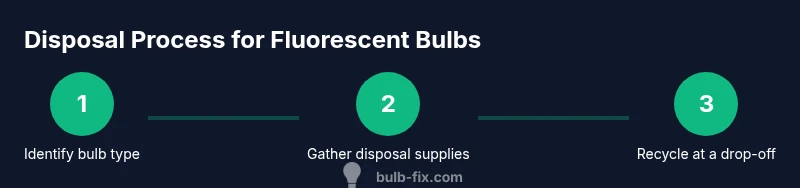
Determine whether you are disposing CFLs or linear fluorescent tubes. CFLs are smaller and resemble standard bulbs; tubes are longer and may require a dedicated fixture. Gather gloves, safety glasses, a sturdy container, tape, and a labeling marker before handling the bulbs.
Tip: If you have multiple bulbs, plan to transport them in a single, labeled container to minimize trips. - 2
Prep a sturdy, leak-proof container
Use a rigid container that won’t easily crush. Line with packing material or add a cushioned sleeve to protect against breaking. Seal the container with tape once the bulbs are inside.
Tip: Avoid using flimsy bags—bulbs can puncture bags and spill mercury-containing dust. - 3
Wear PPE and handle bulbs gently
Put on gloves and safety glasses. Reach for the bulb by its base, not the glass, and avoid applying pressure to the bulb’s glass shell. Keep bulbs upright if possible to prevent rolling.
Tip: Never force a bulb out of a crowded socket; turn off power and disconnect the fixture first if removing from an active setup. - 4
Place bulbs in container without breaking
Slide bulbs into the container carefully. If a bulb is intact, you can place it vertically or lay it on padding. For long tubes, lay them along the form to avoid bending.
Tip: Do not crush or pack bulbs tightly; allow some space for movement during transport. - 5
Seal, label, and document
Cap the container, seal with tape, and clearly label it as hazardous waste or fluorescent lamp disposal. Add a date and number of bulbs inside the box for inventory.
Tip: Keep a quick note of the disposal method (drop-off site or HHW event) for receipts. - 6
Find a local drop-off or recycling program
Look up local household hazardous waste programs or lamp recycling centers. Many home improvement stores host recycling events or list nearby drop-offs. If you’re unsure, call your local waste authority.
Tip: Plan ahead—some sites require appointment slots or have specific hours. - 7
Transport and obtain a disposal receipt
Transport the boxed bulbs to the selected site and request a disposal or recycling receipt. Keep the receipt for your records as proof of compliant disposal.
Tip: Keep the receipt in your long-term records; it can be useful for home improvement permits or audits.
Got Questions?
Are fluorescent bulbs considered hazardous waste?
Yes. Fluorescent bulbs contain small amounts of mercury and are typically treated as hazardous waste, requiring proper disposal or recycling rather than regular trash. Check local guidelines for specifics.
Yes. Fluorescent bulbs are generally treated as hazardous waste and should be recycled or disposed of at approved facilities.
Can I throw away CFLs in the trash if they are intact?
Disposal rules vary by location, but most jurisdictions prohibit placing intact CFLs in regular trash due to mercury content. Use a designated recycling or hazardous waste program.
Most places don’t allow CFLs in regular trash because of mercury; use a recycling program instead.
What should I do if a bulb breaks in the home?
Leave the room, ventilate briefly, and avoid creating dust. Use stiff paper or cardboard to sweep up shards, place in a sealed container, and wipe surfaces with a damp cloth. Follow local cleanup guidelines.
If a bulb breaks, leave the area, sweep up with stiff materials, seal, and wash the surface with a damp cloth.
Where can I recycle fluorescent bulbs near me?
Check your city or state’s household hazardous waste programs or visit local home improvement stores listed as lamp recycling drop-offs. The EPA and Bulb Fix provide guidance on finding nearby options.
Look up your local household hazardous waste programs or lamp recycling sites near you.
Is there a cost to recycle fluorescent bulbs?
Some programs are free, while others may charge a small fee to cover handling. Check with the specific recycling site for exact details.
Costs vary by program—some sites are free, others may charge a small handling fee.
Can I recycle LED bulbs together with fluorescent bulbs?
LED bulbs have different disposal streams. Do not mix LED bulbs with fluorescent bulbs in the same recycling container. Check local guidelines for LED disposal.
LEDs should be recycled separately from fluorescent bulbs according to local rules.
Watch Video
Key Points
- Handle fluorescent bulbs as hazardous waste.
- Choose certified recycling or HHW drop-offs.
- Transport bulbs securely to avoid breakage.
- Request and keep disposal receipts.
- Follow local rules for disposal and recycling.