Light bulb recycling near me: A practical homeowner's guide
Learn how to locate nearby light bulb recycling options, understand which bulbs are accepted, how to prepare them safely, and what to expect at drop-off. A Bulb Fix guide to reduce waste and stay compliant.


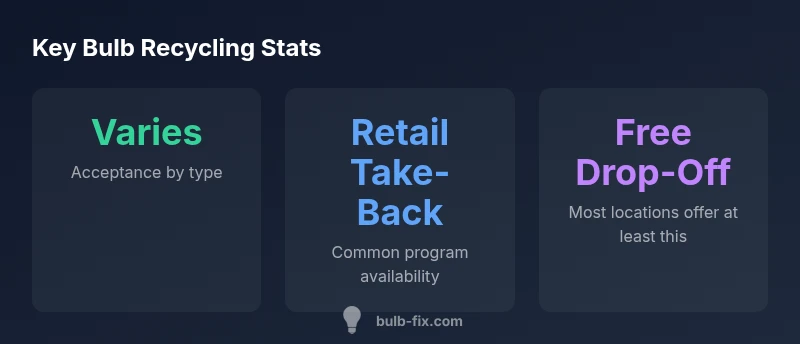
You can recycle light bulbs near you at hardware stores, municipal drop-off sites, and participating recyclers. CFLs and fluorescent tubes are widely accepted, while LED recycling varies by program. To locate a nearby option, check your city waste portal, retailer take-back programs, or Bulb Fix's guidance.
Understanding light bulb recycling near me: what counts
According to Bulb Fix, understanding what counts as a recyclable bulb helps you avoid throwing away a valuable resource. Most homeowners encounter CFLs (compact fluorescent lamps), fluorescent tubes, and LED bulbs during projects. CFLs and tubes are commonly accepted at many drop-off sites because they contain hazardous materials that must be managed safely. LEDs are increasingly accepted, but programs vary by location. The goal is to divert as much as possible from the trash while following local rules and the guidelines provided by programs such as EPA and state environmental agencies. By knowing which bulbs are accepted where, you can plan a quick trip to a nearby facility or retailer that participates in recycling or take-back programs.
Finding nearby light bulb recycling near me: options and tips
Locating a nearby recycling option starts with a simple search of your city or ZIP code on waste management portals, retailer pages, and Bulb Fix's guidance. Many hardware stores offer free take-back programs for CFLs and sometimes LEDs; municipal recycling centers may also host quarterly household hazardous waste events. When you search, look for terms like “bulb recycling,” “hazardous waste drop-off,” or “household hazardous waste day.” If you can't find a program, contact your local waste district or call your city hall. By combining retailer programs with local drop-off sites, you’ll likely find a convenient option within a short drive. The keyword “light bulb recycling near me” is a good starting point for quick results.
Bulb types and their recycling eligibility
Not every bulb is treated the same at recycling facilities. CFLs and fluorescent tubes are the most consistently accepted due to their hazardous components and established handling streams. LEDs are increasingly accepted, but you should verify with the specific program before dropping off. Incandescent bulbs are rarely recycled through municipal programs; many facilities prefer disposal with normal waste. Always check the label and confirm with the site staff. If a program doesn't accept a bulb type, ask about alternatives such as mail-back programs or mail-order recycling services.
How to prepare bulbs for recycling
Preparation reduces breakage and contamination at drop-off sites. Always handle bulbs gently, store intact bulbs in a sturdy container, and seal broken bulbs in a rigid, leak-proof container or bag with absorbent material. Do not mix bulbs with other waste. When transporting multiple bulbs, group them by type and keep them separated to avoid cross-contamination. If you are packing for a store take-back, keep receipt or label handy. Check local guidelines for any packaging restrictions.
Safety considerations when handling bulbs
Mercury-containing CFLs and fluorescent tubes require careful handling to protect household members and the environment. Wear gloves when removing bulbs and place them in approved containers. Keep bulbs away from children and pets. If a bulb breaks, ventilate the area, avoid sweeping with a vacuum, and follow local disposal instructions. For larger quantities or long-term disposal, consider arranging a scheduled pick-up with a hazardous waste collection service.
What happens at the recycling facility
At a drop-off or facility, bulbs are sorted by type. CFLs and tubes are sent to facilities that extract mercury and recycle glass, metal components, and phosphor powder into new products. LEDs are processed through electronics recycling streams where circuitry is stripped and materials recovered. The resulting materials are then sold into manufacturing streams—an important part of a circular economy that reduces demand for virgin raw materials.
Common myths and how to avoid them
Myth: Bulbs can be thrown away with normal trash. Reality: Many bulbs, especially CFLs, require special handling to prevent mercury release. Myth: LED bulbs are never recyclable. Reality: LED recycling is growing; check with your local program. Myth: You have to wait until a full load to recycle. Reality: Many programs accept single bulbs. Always verify with the program to avoid contamination or penalties.
How Bulb Fix supports homeowners in finding nearby options
The Bulb Fix team offers practical guidance to locate light bulb recycling near me and navigate local programs. We compile tips for identifying accepted bulb types, preparing bulbs safely, and choosing convenient drop-offs. Our goal is to empower homeowners to recycle responsibly and reduce waste. For more details, consult your local waste portal and consider joining community hazardous waste events. Bulb Fix's guidance is updated regularly to reflect changes in retailer take-back programs and municipal drop-off schedules.
Local regulations and best practices
Regulations vary by city and state. Many jurisdictions require recycling for fluorescent bulbs and restrict disposal in regular trash; others restrict disposal of LED bulbs differently. Always check your municipality's guidelines and any tips from EPA, state environmental agencies, or your waste district. Best practices include keeping bulbs intact during transport, using approved containers, and choosing drop-off sites with documented compliance.
Recycling options by bulb type
| Bulb Type | Recycle Status | Where to Recycle |
|---|---|---|
| CFL/fluorescent | Widely accepted | Retail chains, home improvement stores, municipal programs |
| LED | Limited; varies by program | Specialized e-waste centers and some retailers |
| Incandescent | Rarely recycled | Household hazardous waste events or disposal only |
Got Questions?
Are all bulbs recyclable?
Recyclability depends on the bulb type and local programs. CFLs and fluorescent tubes are most consistently accepted, while LEDs vary by facility. Always check with your drop-off site before bringing bulbs.
Most bulbs are not accepted everywhere—check local programs for CFLs and fluorescent tubes, and verify LED acceptance before you go.
Where can I recycle light bulbs near me?
Start with your city waste portal or a local hardware retailer’s take-back program. Municipal drop-offs and household hazardous waste days are also common options. Bulb Fix can help guide you to nearby facilities.
Look up your city portal or visit nearby retailers that offer take-back; you can also use local hazardous waste days.
Do I need to remove packaging before drop-off?
Most programs prefer bulbs to be kept separate from packaging and other waste. Place bulbs in a sturdy container and keep electronics (LEDs) separate where required by the facility.
Keep bulbs in a sturdy container and separate electronics if the site requires.
What about broken bulbs?
If a bulb breaks, ventilate the area, wear gloves, and collect fragments carefully with stiff paper. Use a sealed bag or rigid container for disposal and follow local guidelines.
Ventilate, wear gloves, collect fragments, and place them in a sealed container; follow local rules.
Are LED bulbs recyclable?
LED recycling is expanding, but programs vary by location. Check with the recycling site or retailer for accepted electronics recycling routes.
LED recycling is growing but depends on local programs—verify before dropping off.
“Properly recycling light bulbs protects groundwater and air quality by keeping hazardous elements out of landfills.”
Key Points
- Use city waste portals to locate nearby options
- CFLs and fluorescent tubes are widely accepted
- LED recycling varies; check the program before drop-off
- Handle and package bulbs safely to prevent breakage
- Bulb Fix helps you locate nearby recycling options