What to Do with Old Light Bulbs: A Practical Guide
Learn safe disposal options, recycling programs, and practical steps for old light bulbs. This Bulb Fix guide covers CFL, LED, and incandescent bulbs, hazardous materials, and how to find local drop-off sites.


You can safely dispose of old bulbs by identifying bulb type, using local recycling or hazardous waste programs, and avoiding home disposal in regular trash for CFLs. If unsure, start by checking your city’s recycling guide and aim to bring bulbs to a designated drop-off. This quick approach protects health and the environment.
Why proper disposal matters
If you are asking what to do with old light bulbs, proper disposal matters for health and the environment. Bulbs can contain hazardous materials or electronics that should not go into regular trash. By disposing correctly, you reduce mercury exposure risks, prevent soil and water contamination, and support recycling streams. Choosing the right path also helps retailers and municipalities manage programs more efficiently and reduces illegal dumping. According to Bulb Fix, households that follow local guidelines report fewer disposal issues and a clearer path to recycling. The Bulb Fix team found that many people underestimate the complexity of waste streams for bulbs, especially CFLs and some LEDs. This section explains why disposal choices matter and how they align with broader sustainability goals.
What qualifies as a recyclable bulb and what does not
Not every old bulb is treated the same at the recycling center. CFLs and some LEDs may contain small amounts of mercury or electronic components that require special handling. Incandescent bulbs are usually nonhazardous but typically do not have the same recycling channels as CFLs or LEDs. The goal is to keep hazardous materials out of the regular trash and to place bulbs into programs that can safely process them. This section also clarifies common misconceptions, such as assuming all bulbs can be thrown away in curbside trash. Understanding these distinctions makes it easier to plan a safe disposal path and protects family members from unnecessary exposure.
How to find local disposal options and what to ask
Start by visiting your city’s waste management website or calling the information line. Look for sections labeled recycling, hazardous waste, or bulb disposal. Many retailers offer take-back programs or partner with local recycling centers. If you cannot locate a program online, ask at major home improvement stores or municipal offices. In some areas, you may be able to combine bulb disposal with household hazardous waste events. The key is to gather the addresses, hours of operation, and any material preparation requirements before you go. Bulb Fix’s guidance emphasizes verifying acceptance criteria and any fees.
Preparing bulbs for transport: packaging and labeling
Carefully wrap bulbs to prevent breakage, using paper, bubble wrap, or the original packaging. Place wrapped bulbs in a rigid container such as a sturdy box or tote to minimize movement. Do not loosely place bulbs in bags where they can roll and collide. Label the container with the date and bulb type to help the facility route it to the correct recycling stream. If bulbs are broken, use gloves and place debris in a sealed, rigid container to prevent exposure during transport.
Handling broken bulbs and cleanup safety
Broken bulbs require extra care to prevent exposure to mercury or glass. Ventilate the room briefly, avoid sweeping dry dust, and collect shards with stiff paper or card. Place all fragments and cleanup materials into a sealed container before disposal. Do not use a vacuum cleaner, which can spread particles. After disposal, wash hands and surfaces that may have contacted the bulb. This step is crucial for minimizing risk and ensuring you follow best practices.
Safe reuse and when to avoid it
If a bulb is intact and safe for your fixture, reuse can be appropriate and reduces waste. However, never reuse damaged bulbs or those with compromised filaments or bases. If you are unsure about the filament integrity or the fixture compatibility, it is safer to dispose of the bulb through the proper program instead of risking further exposure or fixture damage. Reuse should be limited to bulbs that are clearly labeled as compatible and undamaged.
A practical disposal checklist for busy households
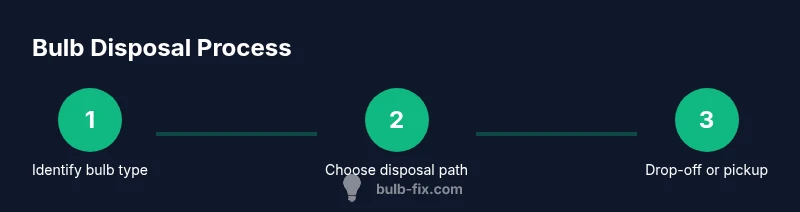
Create a simple checklist: (1) identify bulb type, (2) locate disposal options, (3) gather protective gear, (4) wrap and transport bulbs, (5) drop off or schedule pickup, (6) document the disposal for household records. Keeping a record helps you stay compliant with local guidelines and ensures you follow through on your disposal plan. Bulb Fix notes that having a plan reduces the chance of accidentally discarding bulbs improperly.
What to do if no local option exists
If your area lacks a formal bulb recycling program, ask local retailers about take-back options or temporary events where bulbs can be collected. Alternatively, you can consolidate bulbs until you can travel to the nearest program and ensure they are properly stored in a protective container to avoid breakage. Always prioritize safety and environmental impact over convenience when no disposal channel is immediately available.
Tools & Materials
- Gloves(Disposable nitrile recommended)
- Safety glasses(Protect eyes from breakage)
- Cardboard box or rigid plastic bin(For transporting bulbs safely)
- Seal-able bag or tape(Wrap bulbs individually or pair in bags)
- Marker or label(Label with disposal date and bulb type)
- Recycle/hazard waste information sheet(If available from local program)
Steps
Estimated time: 15-25 minutes
- 1
Identify bulb type and hazard level
Start by looking for labels on the base or exterior. CFLs and some LEDs can contain hazardous materials and must be handled with care. Incandescent bulbs are usually nonhazardous but still should not be thrown in regular trash.
Tip: Double-check if the packaging indicates recycle or hazardous waste. - 2
Gather necessary safety gear and containers
Put on gloves and safety glasses before handling bulbs. Use a sturdy transport container to prevent breakage during transit.
Tip: Keep bulbs upright to reduce stress on the glass. - 3
Find a local disposal option
Consult your city’s waste management site or call local retailers that offer bulb recycling. Some programs accept all bulb types; others are specific.
Tip: Note collection hours and whether you must pre-register. - 4
Wrap and store bulbs for transport
Wrap bulbs individually with paper or bubble wrap and place them in a rigid container. Do not mix different types in a single bag.
Tip: Use duct tape to secure loose ends and prevent rollaway movement. - 5
Drop off or schedule pickup
Take bulbs to the designated site or arrange a curbside pickup if your program offers it. Do not leave bulbs in shared spaces where others might handle them.
Tip: If you break a bulb, follow cleanup steps immediately. - 6
Handle broken bulbs safely
For shattered bulbs, put on gloves, wipe up with damp paper towels, and seal debris in a rigid container before disposal.
Tip: Ventilate room for a few minutes but avoid creating drafts across open windows.
Got Questions?
Are all old bulbs recyclable?
No. CFLs and LEDs often require special recycling programs due to hazardous materials or electronics. Incandescent disposal varies by area, but many places treat them as waste.
Not all bulbs are recyclable. Check local programs for CFLs and LEDs; incandescent disposal varies by area.
What should I do if a bulb breaks?
Vacate the area, ventilate briefly, wear gloves, and collect shards with stiff paper. Place broken pieces and cleanup materials in a sealed container and dispose of through the proper program.
If a bulb breaks, wear gloves and seal all debris in a rigid container before disposal.
How do I find local disposal programs?
Visit your city waste management website or ask local retailers about bulb recycling programs. Some regions have curbside options; others require drop-off.
Check your city’s waste management site or ask retailers for disposal options.
Can I reuse bulbs to save resources?
Only reuse intact bulbs in safe, compatible fixtures. If a bulb is damaged or questionable, dispose of it properly instead of risking reuse.
Reuse only undamaged bulbs in compatible fixtures; if unsure, dispose of them.
Is there a cost to disposal programs?
Many programs are free, but some retailers or municipalities charge a small fee. Always confirm before drop-off.
Most programs are free or low-cost, but check ahead.
Key Points
- Identify disposal path by bulb type
- Use proper protective gear and containers
- Find a local disposal/drop-off site
- Handle broken bulbs with care
- Always recycle when possible and avoid landfill disposal