Bulb and Socket: A Practical Side-by-Side Comparison
An objective, detailed comparison of bulb and socket configurations for home lighting. Learn base types, safety tips, LED compatibility, and practical upgrade guidance from Bulb Fix.


Bulb and socket compatibility starts with matching base size and wattage rating. For most homes, stick with standard screw bases and verify LED or smart compatibility before upgrading. See our detailed comparison chart to pick the safest, most reliable pairing.
Understanding bulb and socket compatibility
Choosing a bulb and socket pairing hinges on compatibility, safety, and future upgrades. The phrase bulb and socket covers both the light source and its connection, and getting this pairing right reduces flicker, heat, and premature failure. According to Bulb Fix, many homeowner calls stem from mismatches between a bulb base and the socket type, especially when upgrading to LEDs or smart bulbs. In this section you’ll learn to identify base types, read socket markings, and verify electrical ratings before you install. The goal is a safe, reliable connection that delivers steady light without frequent replacements.
To begin, identify the base by inspecting the bulb and the fixture. Common residential bases include Edison screw (E26/E27) and smaller pin or bayonet types. Read the socket markings for voltage and wattage limits, and always ensure the socket can handle the bulb’s current draw. This foundational step reduces safety risks and prepares you for a smoother upgrade journey.
As you plan, remember that upgrading to LEDs or smart bulbs can introduce driver and dimmer considerations. Bulb Fix emphasizes verifying compatibility with any smart controls and ensuring the base type matches the socket opening. When in doubt, bring a sample bulb or a photo of the socket to a hardware store for confirmation. This method saves time and avoids costly returns.
For homeowners, the practical takeaway is straightforward: a correct bulb-and-socket pairing is a proactive safeguard that pays off through longer fixture life and fewer outages.
Comparison
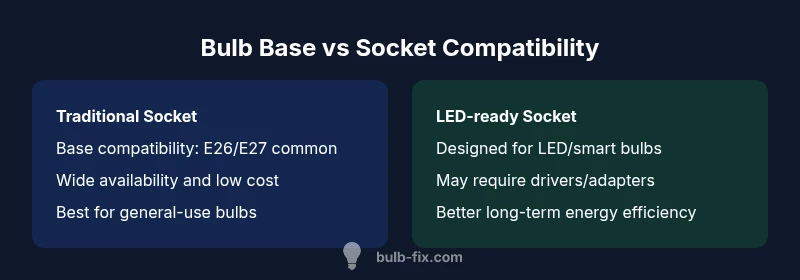
| Feature | Traditional Edison Screw Socket (E26/E27) | LED-ready / Smart-ready Socket |
|---|---|---|
| Base compatibility | Wide support for E26/E27 screw-in bulbs; minimal adapters needed | Designed for LED/smart bulbs; may require adapters or drivers |
| Voltage and wattage capacity | Typically 120V; supports common incandescent loads | Often supports LED with lower current; verify driver limits |
| Availability and price | Widely available; affordable | Less common; higher price in some regions |
| Best for | General purpose residential use | LED/smart upgrades and automation |
| Ease of installation | Very straightforward for standard fixtures | May require adapters or rewiring in older fixtures |
Upsides
- Broad compatibility with a wide range of bulbs
- Easy to find replacements
- Low up-front cost for traditional setups
- Simple DIY maintenance
Drawbacks
- Risk of compatibility issues with modern LED/smart bulbs
- Some older sockets require adapters
- Potential hazards if upgrading beyond rating or mismatching dimmers
Standard Edison screw sockets win on versatility; LED-ready sockets excel when upgrading and automating
For general use, choose traditional screw bases for reliability and broad bulb availability. If you’re upgrading to LEDs or smart lighting, select an LED-ready socket and confirm driver/dimmer compatibility to maximize efficiency and future-readiness. The Bulb Fix team recommends validating base compatibility before purchasing bulbs or adapters to minimize issues.
Got Questions?
What is the difference between bulb types and their sockets?
Bulbs come with different base shapes and sizes, and sockets are built to fit those bases. Compatibility means the base must physically fit the socket and the electrical ratings must match the circuit. When unsure, compare the bulb base code (like E26 or GU10) with the socket marking.
Bulb bases and sockets must match in size and electrical rating; if unsure, compare the base type to the socket marking.
Can I use an adapter to fit a bulb into a socket?
Adapters can bridge mismatches but are not a cure-all. They may introduce poor contact, heat buildup, or dimming issues. Whenever possible, use a socket that matches the bulb’s base type and electrical rating.
Adapters can help, but they can cause contact and heat problems; aim for a direct match when possible.
Are there safety risks with mismatched bulbs and sockets?
Yes. Mismatches can create overheating, arcing, or fire hazards, especially with high-wattage bulbs in undersized sockets. Always verify temperature ratings, ensure a secure connection, and avoid forcing bases into incompatible sockets.
Mismatches can cause overheating or arcing; never force a bulb into a socket that doesn’t fit.
How do I upgrade a socket to support LEDs?
Start by confirming the socket type and its rating, then choose LED bulbs that match the base. If needed, replace the socket with one rated for LED use or consult an electrician for complex upgrades.
Check the base and rating, pick matching LEDs, and upgrade the socket if required. Consider professional help for complex setups.
Do smart bulbs require special sockets?
Smart bulbs work with most standard sockets, but you should verify that the fixture’s dimmer and switch setup won’t interfere with smart controls. In some cases, a smart-compatible dimmer or direct-wired connection is required.
Smart bulbs usually fit standard sockets, but check dimmers and switches to ensure compatibility.
What should I do if a socket is warm to the touch?
A warm socket can indicate overload or a failing connector. Turn off power immediately, inspect for scorch marks or loose connections, and replace the socket or bulb as needed. If unsure, consult an electrician.
If a socket feels warm, switch off power and inspect for damage before using it again.
Key Points
- Assess base size first
- Check wattage and driver compatibility
- Prefer screw-based sockets for broad compatibility
- Choose LED-ready sockets when upgrading to LEDs or smart bulbs
- Avoid mismatches with dimmers and smart controls