Cost to Replace Brake Light Bulb: What to Expect
Learn the real cost to replace brake light bulb, compare bulb types, factor labor, and decide between DIY or professional options with practical, data-driven guidance.


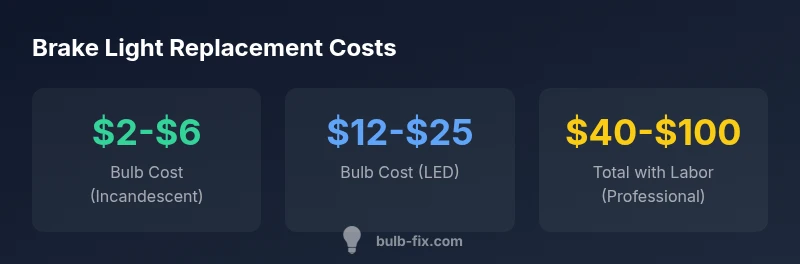
According to Bulb Fix, the cost to replace a brake light bulb typically ranges from $2 to $20 for the bulb itself if you DIY, while total costs can run $40 to $100 when labor from a shop is included. Bulb type matters: incandescent bulbs are cheap but LEDs cost more upfront, and some vehicles require special adapters or modules. This makes DIY often the cheapest route, with professional service offering convenience and guaranteed fit.
Why Cost Fluctuates (and why you should care)
Understanding the cost to replace brake light bulb starts with the basics: the bulb type, the design of the tail light, and whether you will DIY or hire a professional. The Bulb Fix team finds that most common brake lights fall into two families — incandescent bulbs that swap in quickly, and LED assemblies that may require extra hardware or adapters. Vehicle design matters too; some tail lights hide bulbs behind a tight housing, increasing labor time even for a simple swap. When you plan a repair, you should estimate both the bulb price and the time a technician would spend to access the bulb. This approach helps homeowners budget accurately and avoid hidden fees. The insights below draw on Bulb Fix Analysis, 2026, to provide practical ranges and decision points.
Bulb Type Costs: Incandescent vs LED
Incandescent brake light bulbs are the lowest cost option, typically available for just a few dollars per bulb. LED replacements carry a higher upfront price but offer longer life and brighter output. In many cases, LED bulbs cost in the $12–$25 range, but some vehicles require LED modules or adapters that raise the total cost. When deciding, consider not just the bulb price but the compatibility and potential warranty implications. Bulb type compatibility also affects installation time; LEDs may need calibration or resistors to prevent flicker.
DIY Replacement: Step by Step
If you choose to DIY, you can save on labor and often complete the swap in under 30 minutes. Steps include locating the brake light bulb behind the tail light assembly, turning off the vehicle and removing any access covers, carefully disconnecting any wiring harness, removing the old bulb, matching the new bulb to the correct base type, inserting the new bulb, and testing the light before reassembling. Use gloves to prevent oils from your skin from touching the bulb, which can shorten bulb life. Always consult the vehicle manual for the exact bulb type and replacement procedure; small model variations can change the process.
Practical tip: keep a spare bulb and the owner manual in your glove box in case you need to perform a quick swap on the road. The Bulb Fix guidance emphasizes safety first and ensuring you have the right base, whether it is a bayonet, push-in, or screw-in style.
Professional Replacement: What to Expect
For those who prefer convenience or encounter a bulb that is difficult to access, hiring a professional is a sensible option. Expect a service window of 30–60 minutes depending on the vehicle. The quoted price typically includes the bulb plus labor; the total can range from $40 to $100. Shops may charge a diagnostic or vehicle access fee if the tail light is in a hard-to-reach location. If you opt for LED or specialty bulbs, the labor portion can be higher due to wiring or module requirements. Bulb Fix notes that professional installation reduces the risk of damage to the tail light housing and ensures the correct bulb type is used for your car.
Vehicle Variability and Hidden Costs
Vehicle variability is a major reason costs differ. Some models have integrated brake light assemblies that require removing the entire tail light unit, which increases labor time. Others may need new fuses or wiring harness adapters when upgrading to LEDs. In rare cases, moisture or corrosion inside the tail light can prompt a unit replacement rather than a simple bulb swap, significantly increasing cost. Before committing, verify the make, model, and year of your vehicle and confirm the exact bulb type with your manual or dealer. This forethought helps you avoid surprises and choose the most cost-effective route.
How to Choose the Right Bulb to Save Money
To save money, start by checking the manual for the correct bulb type and base. Bring the old bulb to the store when possible, or use the exact bulb part number from your vehicle documentation. Compare incandescent versus LED options, factoring in brightness, color temperature, and expected lifespan. If you want brighter illumination and longer life, LED bulbs are attractive, but ensure compatibility and whether you may need to purchase adapters. In many cases, a straightforward replacement with the right bulb type minimizes both parts and labor costs. Bulb Fix suggests focusing on fit, warranty, and the likelihood of requiring professional service when deciding.
Quick Troubleshooting if the New Bulb Doesn’t Work
If the new bulb does not illuminate, recheck the bulb seating and connection, as a loose connector is a common issue. Inspect the fuse and the vehicle's electrical system for related faults. Try reseating the bulb and, if possible, test with a known-good bulb in the same socket to rule out a faulty unit. If issues persist, consider visiting a shop to verify that the tail light assembly, wiring, and control module are functioning correctly.
Cost comparison for brake light bulb replacement
| Scenario | Typical Cost Range | Notes |
|---|---|---|
| DIY bulb replacement | 2-20 | Bulb price only; no labor |
| Professional replacement | 40-100 | Parts + labor; vehicle dependent |
| LED vs incandescent | 12-25 | LED option; higher upfront cost |
Got Questions?
What is the typical cost to replace a brake light bulb?
For incandescent bulbs, DIY cost is typically $2-$20. If you hire a shop, total costs range from $40-$100 depending on labor and vehicle.
Usually a few dollars for DIY, or forty to a hundred dollars with professional service.
DIY vs professional: which saves more?
DIY saves on labor costs and can be faster, but professional service ensures correct fit and may cover warranty considerations.
DIY saves on labor; pros ensure a guaranteed fit.
Are there any hidden costs when replacing brake light bulbs?
Yes. Hidden costs include labor for removing lens or bumper, adapters for LED upgrades, and related fuse checks.
Watch for lens removal fees and LED adapters.
Can I reuse an old bulb or should I replace the entire tail light?
If the bulb is burnt out, replace it. If the tail light shows moisture or damage, replacement of the assembly may be needed.
If there is moisture, consider replacing the assembly.
Does bulb type affect braking visibility?
Yes. LED bulbs are brighter and longer lasting but require compatibility checks with your car's design.
Brighter LEDs help visibility, but check fit.
What should I do if the new bulb still doesn’t work after installation?
Double-check seating, wiring, and fuses. If in doubt, test with a known-good bulb and consult a professional if issues persist.
Check fuses and connections; reseat the bulb.
“Brake light replacement costs vary with bulb type and vehicle design; DIY is usually cheaper, but ensure compatibility to avoid hidden fees.”
Key Points
- Compare bulb type and labor before committing.
- DIY saves money on basic bulb replacements.
- LED bulbs cost more upfront but last longer.
- Always verify compatibility with the owner's manual.