How to Tell When HID Bulb Is Bad: A Troubleshooting Guide
Learn the urgent steps to identify a failing HID bulb, test the ballast and wiring, and replace safely. Bulb Fix walks homeowners through signs, diagnostic flow, and prevention to keep headlights reliable.


Most HID bulb failures present as dim light, flicker, or failure to ignite. Start with the ballast, wiring, and lamp seating, using a known-good bulb for testing. If symptoms persist after swapping the bulb and inspecting connections, the ballast is the likely culprit and may need replacement. For safety, consult a professional if unsure.
Signs your HID bulb is failing
If you’re wondering how to tell when hid bulb is bad, start with the signs that show the light is fading or unstable. In many installations, dimming output, color shift, and longer warm-up times are early indicators that the bulb or the ballast is nearing the end of life. At first, you may notice a slight drop in brightness or a blue-white tint that wasn't there before. If the issue progresses, flicker, buzzing, or intermittent ignition can occur, often signaling a failing bulb, degraded ballast, or loose electrical connections. According to Bulb Fix, the most common sign is not the bulb alone but a failing ballast or compromised wiring manifesting as reduced light quality. Communicate these signs to plan a safe fix rather than chasing a mystery component.
- Dimming light intensity that worsens with use.
- Flicker or color shift between cool and warm tones.
- Slow start or complete failure to ignite.
- Obvious buzzing noise from the ballast area.
- Heat buildup around the ballast or housing.
If you observe any of these, move to a careful inspection rather than forcing the system to run longer. Early action reduces the risk of a sudden ballast failure or electrical short. Bulb Fix emphasizes safety first, especially around high-voltage lighting systems.
Common causes of HID bulb problems
There are several frequent culprits behind HID bulb problems. The most common is a failing ballast, which regulates the voltage to the lamp; a weak ballast can cause dim output, flicker, or failure to ignite even when the bulb is healthy. The bulb itself can reach end-of-life sooner than the ballast, especially with frequent on/off cycles or prolonged operation in hot environments. Loose or corroded electrical connectors create intermittent contact that looks like a dying bulb, while improper seating of the bulb or ballast can produce misalignment and erratic ignition. Overheating due to poor ventilation or blocked cooling fins accelerates wear on both bulb and ballast. Moisture ingress in outdoor housings or damaged seals is another frequent, often overlooked, cause. Bulb Fix analysis shows these issues are typically a combination of a degraded ballast and compromised connections rather than a single faulty component. Regular inspection of the ballast venting and connectors can prevent many failures before they happen.
- Ballast fatigue or failure from heat and aging.
- Bulb nearing end-of-life due to usage patterns.
- Loose or corroded connectors affecting contact.
- Inadequate cooling or venting causing overheating.
- Moisture or condensation inside the housing.
- Incorrect ballast for the bulb type or wattage.
Tip: Keep a simple log of each headlamp's startup behavior and symptoms to spot trends over time.
How to test HID system safely
Safety first when testing HID systems. Always power down the circuit and let bulbs cool before touching any components. Wear protective gloves and eye protection, and never touch the glass portion of a used HID bulb with bare fingers, as oils can reduce bulb life. Start by verifying the obvious: check the bulb seating in the socket and reseat it firmly. Swap in a known-good ballast or a known-good bulb to isolate the fault; if the symptoms persist with a new bulb but the ballast is unchanged, the ballast is likely the problem both in startup and runtime behavior. Inspect connectors for corrosion or loose pins, and ensure the wiring harness is intact and properly routed away from hot surfaces. If outdoor or vehicle-mounted, verify the ground connection and the power supply. Finally, perform a controlled ignition test in a dry environment to avoid humidity-related issues. If you feel uncertain at any point, pause and consult a professional.
Diagnostic flow: symptoms to diagnosis to solutions
This section walks you through a practical decision tree so you don’t guess at the bedside. If the lamp flickers but eventually lights, start by testing seating and ballast. If it fails to ignite consistently, swap in a known-good ballast to determine whether the ballast is failing. If a new ballast fixes the problem but the lamp still dims or shifts color, the bulb is likely at end-of-life or internally compromised. If swapping the ballast makes no difference, recheck the electrical supply and ground. In outdoor installations, moisture ingress or bad seals can mimic ballast symptoms; address seals and ventilation. Finally, if none of these steps resolve the issue, plan a full replacement or engage a licensed technician to avoid electrical hazards. Remember: safety overrides quick fixes—water and electricity do not mix.
Replacement and maintenance tips
When a HID bulb is confirmed bad, replacement is often the most reliable option. Always replace with the same wattage and base type to avoid ballast mismatch or mounting issues. Ensure correct seating, clean contacts, and that the bulb is installed with clean hands or gloves to prevent oils from contacting the quartz. After installation, test the system in a controlled environment. If you are upgrading to a different technology (for example, LED) to meet regulatory requirements or efficiency goals, consult your vehicle or fixture manufacturer guidelines. Regular maintenance includes inspecting seals, checking connectors for corrosion, and keeping the ballast vents unobstructed. Keeping a monthly check schedule in moderate climates can catch warning signs early. Bulb Fix advocates documenting installation dates, bulb type, and any observed symptoms to track aging and plan replacements before failure.
Safety reminders and when to call a pro
High-voltage HID systems pose significant risks if mishandled. Always disconnect power before inspecting and avoid working alone on ladders or elevated fixtures. If you see exposed wiring, a burnt smell, or melted insulation, stop immediately and call a licensed professional. Do not operate equipment with a damaged ballast, cracked bulb, or signs of moisture inside the housing. For those who prefer DIY, pursue only the simplest maintenance tasks such as reseating bulbs and cleaning terminals in a dry environment. Pro guidance: if you’re unsure about compatibility or wiring integrity, a professional inspection can prevent fires or electrical shocks. Prevention includes clean, dry housings, proper sealing, and using ballast bulbs that meet manufacturer specifications.
Steps
Estimated time: 30-60 minutes
- 1
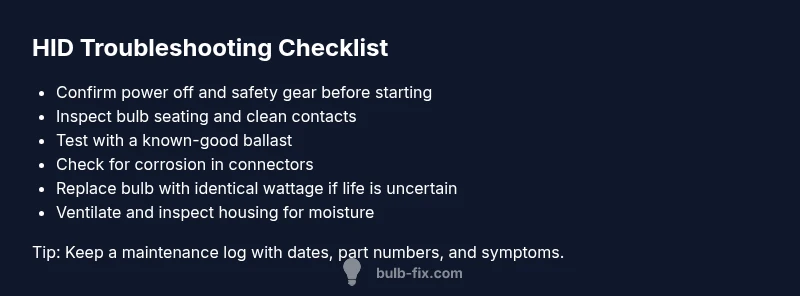
Power down and protect yourself
Turn off power to the circuit and allow the HID system to cool completely. Remove any protective covers with care and wear safety glasses and gloves to avoid sharp glass and hot components.
Tip: Always work in a dry environment and keep a clear workspace. - 2
Inspect seating and connectors
Check that the bulb is seated correctly in the socket and that all connectors are firmly attached. Look for any signs of corrosion, bent pins, or loose wiring that could cause intermittent contact.
Tip: Do not force a bulb into a misaligned socket; reseat gently. - 3
Test with a known-good ballast
If possible, swap the ballast with a known-good unit to see if the issue resolves. If the light starts reliably, the original ballast is likely failing.
Tip: Label cables to ensure you reconnect them correctly. - 4
Evaluate the bulb’s life and condition
Inspect the bulb for cracks, hazing, or discoloration. If the bulb is aged or shows signs of damage, replace it with an exact match.
Tip: Never touch the bulb glass with bare fingers; residue oils reduce bulb life. - 5
Check electrical supply and ground
Measure voltage at the ballast input where safe; verify ground connections are clean and secure. An improper supply can cause misfiring and flicker.
Tip: Use a multimeter and follow the manufacturer’s safety guidelines. - 6
Re-seat and re-test
After replacements, re-seat everything, reassemble the housing, and perform a controlled test in a dry environment. Observe for smooth ignition and stable brightness.
Tip: Run the system for several minutes to ensure stability. - 7
Document changes
Record bulb type, ballast model, installation date, and any symptoms observed. Documentation helps track aging and plan future maintenance.
Tip: Keep parallel notes for both sides if a dual-head setup exists. - 8
If unresolved, seek professional help
If symptoms persist after swapping ballast and bulbs, the issue may involve high-voltage circuits or sealing problems that require a licensed technician.
Tip: Professional help reduces risk of shock and fire.
Diagnosis: HID lighting system shows flicker, dim output, or fails to ignite
Possible Causes
- highFaulty ballast
- highWorn HID bulb nearing end of life
- mediumElectrical connection loose or corroded
- lowOverheating or inadequate cooling
Fixes
- mediumTest with a known-good ballast and bulb to isolate the defective component; replace ballast if output remains unstable
- easyReplace HID bulb with the same wattage and type; reseat securely and clean contacts
- easyInspect wiring and connectors; repair or replace damaged portions and ensure secure connections
- easyImprove cooling and ventilation; ensure vents are clear and the housing is not blocked
- hardIf symptoms persist after ballast and bulb replacement, consult a licensed electrician or technician
Got Questions?
What are the most common signs that an HID bulb is bad?
Common signs include flickering, sudden dimming, color shift, and a failure to ignite. If you notice any of these, inspect seating, ballast, and wiring before replacing parts. If the problem persists, seek professional help.
Common signs are flicker, dimming, color changes, and ignition failure. Check seating, ballast, and wiring, and replace parts as needed.
Can a bad ballast cause a good HID bulb to fail?
Yes. A defective ballast can prevent proper startup and cause unstable light even with a good bulb. Testing with a known-good ballast helps confirm the root cause.
Yes. A bad ballast can stop a good bulb from starting properly.
Is it safe to replace an HID bulb myself?
Replacing an HID bulb can be safe if you disconnect power, wear protective gear, and follow the manufacturer’s instructions. If you’re unsure about the ballast or wiring, hire a professional.
It can be safe if you disconnect power and follow safety steps; if unsure, get a pro.
How long do HID bulbs last on average?
HID bulbs vary by type and usage; end-of-life is indicated by persistent dimming and color shift. Use manufacturer specs and maintenance logs to plan replacements.
Bulbs vary; look for dimming and color changes to decide replacement.
When should I call a professional?
Call a professional if you observe persistent ignition issues, signs of moisture in the housing, or electrical smells. High-voltage systems require trained handling.
Call a professional if it won’t spark, moisture appears, or you smell burning.
Can I upgrade to LED instead of HID?
Upgrading to LED is possible where allowed by local regulations and vehicle specifications. Check compatibility with the fixture, housing clearance, and beam pattern.
Upgrading to LED is possible in some cases—check compatibility and regulations.
What safety steps reduce risk during inspection?
Always disconnect power, wear gloves and eye protection, and work in a dry environment. Avoid touching hot components and never probe energized circuits.
Power off, wear protection, work dry, avoid energized circuits.
Watch Video
Key Points
- Identify signs early: dimming, flicker, and ignition issues.
- Ballast and connections are common failure points; test accordingly.
- Replace with matching wattage and reseat securely for best results.
- Safety first: power off, protect yourself, and seek pro help if unsure.