How to Fix a Light Bulb Won t Unscrew: Safe Troubleshooting for Homeowners
Facing a light bulb that won t unscrew? This Bulb Fix guide helps homeowners diagnose why bulbs get stuck and how to remove them safely, with practical steps, safety tips, and prevention to avoid future sticking.


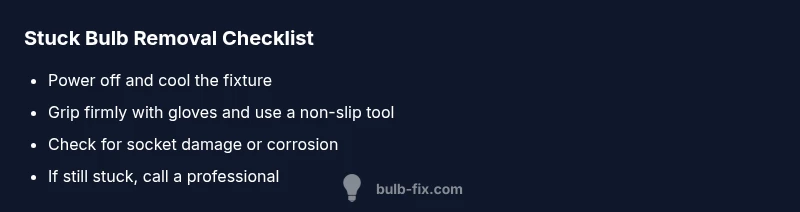
The most common cause is base corrosion or over-tightening, which locks the bulb in place. Power off the fixture, let it cool, and with thick gloves or a rubber grip, gently twist counterclockwise in small increments. If it still won’t budge, stop and call a professional to avoid socket damage or glass breakage.
Quick Safety and First Checks
When a light bulb won t unscrew, safety comes first. Always switch off the power at the wall switch or circuit breaker, and unplug lamps when possible. Allow the fixture to cool for at least 10–15 minutes to avoid burns and glass breakage from sudden temperature changes. Bulb Fix emphasizes that a firm grip is essential, but never apply force with wet hands or while the fixture is live. If you notice corrosion on the metal base, a melted plastic socket, or bent threads, stop and plan to inspect the socket more thoroughly or contact a professional. This problem is common and solvable with careful steps, especially in ceilings or hard-to-reach fixtures where accidents can happen without proper preparation.
brandNoteAddedTickspaceAchievedBulbFixIntroduction
Why a Bulb Can Get Stuck in the Socket
A bulb may refuse to unscrew for several reasons that are frequently encountered by homeowners. Heat cycling over years can cause metal bases to seize inside the socket due to oxidation. Over-tightening during installation can also grip the base so tightly that normal hand torque no longer moves it. Debris, paint, or plaster in the threads can increase friction and prevent turning. A damaged socket or bent threads on the base may bind the bulb. Recognize these signs: a warm-to-hot socket after power-off, discoloration around the base, or uneven resistance that changes as you turn. Understanding these cues helps you choose safe, incremental solutions and avoids irreparable socket damage.
BulbFixtipscollab
Diagnosing Without Hazard: What to Look For
Before you attempt removal, visualize the base and socket: is the glass clean and intact, or is there charring or melted insulation around the base? Do you feel uniform resistance or sudden “catch” as you turn? Check the bulb type (LED, incandescent, compact fluorescent) since some designs use locking bases or support rings that can bind differently. If the glass becomes loose or you hear crackling noises, stop immediately; there is a risk of breaking glass or exposing live conductors. In many cases, simply ensuring the fixture is cool and dry will solve the issue. If you suspect moisture or water from a leak, do not touch the bulb and consult a professional promptly.
BulbFixdiagnostics
Safe, Non-Destructive Troubleshooting (Part 1)
- Wear thick insulated gloves or use a rubber jar opener to improve grip.
- Stabilize the glass by supporting the bulb with your hand while you turn the base, not the glass.
- Apply small, steady counterclockwise pressure in 5–10 degree increments. Watch for any give in the threads.
- If the bulb begins to loosen, continue slowly until it is just free enough to remove by hand.
Steps
Estimated time: 30-60 minutes
- 1
Power down and cool the fixture
Turn off the power at the switch and, if possible, at the circuit breaker. Wait 10–15 minutes to ensure the glass and metal parts have cooled. This reduces burn risk and prevents thermal expansion from creating further binding.
Tip: Always unplug if you can access the plug-in lamp to remove risk. - 2
Prepare your grip and workspace
Put on thick gloves or use a rubber jar opener. Stand on a stable surface and place a towel or pad under the fixture to catch the bulb if it slips.
Tip: Keep your other hand on the bulb housing, not the glass, to avoid shattering the bulb. - 3
Attempt a gentle release
With a gradual counterclockwise motion, apply small torque in 5–10 degree increments. Hold the base steady while you twist and avoid sudden jerks.
Tip: If you feel a ‘catch,’ pause and reassess before continuing. - 4
Use an auxiliary grip if needed
If grip is the issue, slip a rubber band or jar opener around the base and retry with a firmer grip. Keep pressure even to avoid breaking the glass.
Tip: Do not twist sideways aggressively; misalignment can damage threads. - 5
Assess the results
If the bulb starts to loosen, finish removing by hand and inspect the base and socket for damage. If it’s still stuck, do not force it further.
Tip: Document any visible damage with a photo for your repair records. - 6
Decide on the next step
If removal succeeded, replace the bulb and test the fixture. If not, plan socket inspection or replacement with a professional.
Tip: In fixtures on ceilings or hard-to-reach places, a professional may be safer.
Diagnosis: Light bulb won t unscrew
Possible Causes
- highCorrosion/oxidation at the base threads
- highOver-tightening during installation
- mediumDebris or plaster in the threads
- mediumDamaged socket or bent base threads
- lowIncompatible bulb with a locking base
Fixes
- easyGently rock and twist with a thick glove or rubber grip in small increments (5–10 degrees).
- easyUse a rubber jar opener or wide-band grip around the base to improve leverage and try again.
- mediumIf still stuck, stop to prevent thread damage and call a professional to inspect the socket and wiring.
- hardInspect for visible damage—if threads are bent or the socket looks compromised, replace the socket or fixture.
Got Questions?
Why won t my bulb unscrew even after cooling down?
Common causes include corrosion at the base, over-tightening, or a damaged socket. Inspect the base, ensure power is off, and try safe removal techniques. If resistance remains, consult a professional.
Common causes are corrosion, over-tightening, or a damaged socket. Make sure power is off and try safe removal techniques, and call a professional if it still won t budge.
Is it safe to use oil or lubricant on the bulb threads?
No. Lubricants near electrical contacts can attract dust and promote breakdown. If the base is seized, use non-conductive grip aids or consult a professional.
No. Don’t use oil near electrical parts. If it’s stuck, try grip aids or call a pro.
What should I do if the glass bulb breaks while unscrewing?
Turn off power, wait for the area to cool, and carefully isolate the broken pieces with gloves and a thick cloth. Avoid handling glass fragments with bare hands and replace the socket or fixture if needed.
If the glass breaks, turn off power and carefully manage the shards; replace the bulb and inspect the fixture before reuse.
When should I replace the socket instead of the bulb?
If the socket shows signs of corrosion, melted insulation, or bent contacts and a stubborn bulb keeps sticking, replacing the socket or entire fixture is usually safer than forcing a removal.
If you see socket damage, it’s safer to replace the socket or fixture rather than force removal.
Can a high ceiling make bulb removal dangerous?
Yes. Reaching a high ceiling fixture adds risk of falls and dropped bulbs. Use a stable ladder and have a helper to assist. If the fixture is hard to reach, call a pro.
Yes, high ceilings increase risk. Use a steady ladder and a helper, or call a professional.
How can I prevent future bulbs from sticking?
Use clean bases and sockets, avoid over-tightening, and periodically inspect fixtures for corrosion. Replace worn components promptly and consider upgrading to newer LED designs that are easier to service.
Keep bases clean, don’t over-tighten, and inspect fixtures regularly to prevent sticking.
Watch Video
Key Points
- Power off before touching bulbs
- Gently twist with a firm grip, avoiding force
- Inspect the socket for corrosion or damage
- Know when to escalate to a professional
- Prevent sticking with proper maintenance