Repair Light Bulb: Safe Troubleshooting Guide
Learn safe, practical steps to diagnose and replace bulbs without risky repairs. This Bulb Fix guide covers safety, common issues, tools, and when to call a professional.


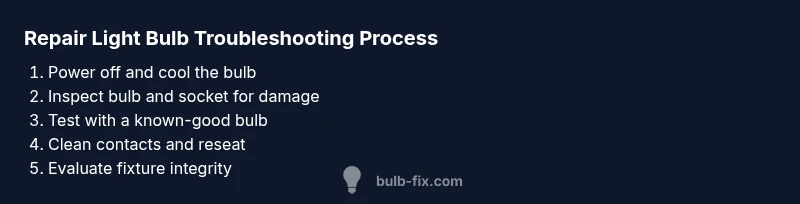
According to Bulb Fix, you can safely diagnose bulb issues by unplugging the fixture, letting the bulb cool, and inspecting the bulb and socket for damage. If flickering or dim, swap with a known-good bulb. Clean contact points, reseat the bulb, and replace worn components. Never perform live electrical repairs; replace the fixture or bulb if damage is suspected. For persistent issues, contact a licensed electrician.
Understanding risks and legalities of repairing light bulbs
Repairing a light bulb is rarely about repairing the bulb itself; most fixes involve the fixture, socket, or connections. The term a homeowner encounters is often “troubleshooting” rather than “repairing” a broken bulb. The Bulb Fix team emphasizes safety first: if you see visible cracks, scorch marks, melted bases, or a strong odor near the fixture, do not continue. In many jurisdictions, DIY work on wiring beyond simple bulb replacement can void warranties or violate electrical codes. When in doubt, treat the situation as potentially dangerous and seek professional help. This approach aligns with general safety guidance from Bulb Fix Analysis, 2026, which stresses conservative steps when electrical components appear compromised.
Safety-first basics for any bulb-related task
Before touching any lighting fixture, ensure the power is off at the switch and circuit breaker. Wear safety goggles and non-slip gloves to protect against shards and hot components. Allow bulbs to cool completely; a recently lit bulb can burn skin or ignite flammable materials if touched.
Diagnostic checklist: symptoms and likely causes
- Flickering without pattern: could be loose connections, a worn socket, or a faulty ballast in older fixtures. Check all contacts and reseat the bulb.
- Dim light or orange tint: the bulb may be near end-of-life or underpowered for the fixture. Swap in a bulb with the correct wattage and type.
- Frequent burnout: check for vibration in a ceiling fixture or a loose socket that shakes the filament. Inspect wires for damage.
- No light at all after replacement: verify the switch, circuit, and fuse; test the new bulb in a different socket to rule out a bad bulb.
Tools, materials, and replacement parts
Collect a few basics before you start: safety goggles, non-slip gloves, a known-good replacement bulb matching the base type, a non-conductive cleaning cloth, and a small non-metallic probing tool. If you see a damaged socket or frayed wiring, you should not attempt a repair on the live circuit—replace the fixture or call an electrician. Bulb Fix guidance suggests preparing replacement components in advance to minimize the risk of working near live electricity.
Step-by-step troubleshooting overview
This section provides an overview of the safe troubleshooting path. You will do not perform live electrical repairs; instead, you systematically check power, bulb compatibility, contacts, and fixture integrity. If the fixture shows any signs of overheating or cracking, discontinue attempts and consult a professional.
Maintenance tips to prevent future bulb problems
Regularly inspect sockets for corrosion and loose connections. Replace aging fixtures that show signs of overheating. Use bulbs that match the fixture’s specified wattage and base type. Keeping fixtures clean and dust-free can improve contact reliability and extend bulb life. Bulb Fix recommends a gentle cleaning routine and periodic checks, especially in high-use rooms like kitchens and living areas.
Real-world scenarios and common mistakes
Many homeowners mistake a faulty socket for a bad bulb. Always test with a known-good bulb in multiple sockets to differentiate bulb vs. fixture issues. Avoid over-tightening bulbs, which can crack bases or bend contacts. Never attempt to repair live wiring or disassemble a fixture with power connected; replace components when damage is detected.
Tools & Materials
- Safety goggles(Protect eyes from broken glass or sparks)
- Non-slip gloves(Keep hands safe when handling hot or broken bulbs)
- Known-good replacement bulb(Match base type and wattage to fixture specs)
- Non-conductive cleaning cloth(Use on contact points; avoid metal fibers)
- Non-conductive probing tool(Plastic or wooden; never use metal near live contacts)
- Step ladder or stable chair(Use only if fixture is out of reach safely)
Steps
Estimated time: 30-45 minutes
- 1
Unplug and cool
Switch off the fixture at the wall and, if possible, at the breaker. Allow the bulb to cool completely before handling. This prevents burns and minimizes electrical risk.
Tip: If you can't access the switch easily, use a flashlight to locate the breaker and flip it off safely. - 2
Inspect bulb and socket
Gently remove the bulb and check for cracks, discoloration, or chipped bases. Look inside the socket for corrosion or melted plastic. If any damage is visible, do not reuse parts.
Tip: Use a non-conductive tool to test contacts without touching exposed metal. - 3
Test with known-good bulb
Install a fresh bulb that matches the fixture’s type. If the bulb lights normally, the issue was the old bulb. If it still fails, proceed to inspect the socket or wiring.
Tip: Always handle bulbs by the base, not the glass, to avoid oils on the glass that shorten life. - 4
Clean and reseat contacts
Wipe the socket contacts with a soft cloth. Reinsert the bulb firmly but not overly tight. Ensure the bulb aligns with the socket and sits flush.
Tip: If contact corrosion remains, consider a socket replacement instead of forcing a poor connection. - 5
Evaluate fixture integrity
Check for loosened screws, frayed wires, or signs of overheating near the base. If you notice damaged insulation or exposed conductors, stop and replace the fixture or call a professional.
Tip: Document signs of wear with photos before procurement of parts. - 6
Test and plan next steps
Restore power and verify light operation. If the new bulb works but intermittently flickers, the issue could be the fixture's ballast or wiring. Plan to replace or inspect further with professional help.
Tip: Keep spare bulbs on hand to verify whether the issue is the bulb or the fixture.
Got Questions?
Can I repair a broken or flickering bulb myself?
Most bulb issues stem from sockets or wiring rather than the bulb itself. You can troubleshoot safely by unplugging and using a known-good bulb, but avoid attempting any wiring repairs. If damage is suspected, replace the fixture or seek a licensed electrician.
Most bulb issues come from sockets or wiring. Unplug, test with a good bulb, and avoid wiring repairs. If damage is suspected, call a professional.
Is it safe to work on a fixture while it’s powered on?
No. Always switch off at the breaker and ensure power is off before handling any fixture. Even with a switch off, some fixtures retain residual power; verify power at the breaker when in doubt.
No. Turn off at the breaker and verify power before handling any fixture.
What should I do if the flicker persists after replacing the bulb?
If flickering persists, the issue likely lies with the socket, wiring, or ballast (in older fixtures). Inspect contacts, replace damaged parts, or consult an electrician for a safe, thorough assessment.
If it still flickers after replacement, check the socket and wiring or contact an electrician.
When should I replace the entire fixture?
If there are signs of damage, overheating, or consistent electrical issues beyond bulb life, replacing the fixture is safer and more cost-effective than repeated repairs. Always consider a professional assessment for complex wiring.
If the fixture shows damage or persistent electrical issues, replacement is safer.
Are smart bulbs repairable like traditional bulbs?
Smart bulbs have integrated electronics and are generally not repairable. If a smart bulb fails, replace it and check the controlling hub or app settings. For persistent issues, ensure firmware and controller compatibility.
Smart bulbs aren’t usually repairable; replace and check the hub or app settings.
What tools are essential for safe bulb troubleshooting?
Essential tools include safety goggles, gloves, a known-good bulb, a non-conductive cleaning cloth, and a non-conductive probing tool. Avoid metal tools near live contacts.
Goggles, gloves, a good bulb, non-conductive cloth, and a plastic probe are enough for safe checks.
Watch Video
Key Points
- Unplug and cool before inspection.
- Differentiate bulb vs. fixture problems with a known-good bulb.
- Do not repair live wiring; replace damaged components.
- Consult a professional for dangerous or persistent issues.