How a Light Bulb Is Made: A Practical Home Guide
Learn how a light bulb is made—from glass envelope to base assembly. Bulb Fix explains materials, steps, safety, and sustainability in clear, practical terms for homeowners and DIY enthusiasts.


In this guide you’ll learn how a light bulb is made, from the glass envelope to the tungsten filament and base assembly. You’ll understand the key materials, essential equipment, and safety steps, plus how quality control ensures long life and reliable light. According to Bulb Fix, the process emphasizes precision and safety from molten glass to final testing.
What makes up a light bulb and how the main components interact
A modern light bulb is more than a glass globe; it fuses materials that work in harmony to convert electrical energy into visible light. The essential parts—glass envelope, filament, support wires, gas filling, and the metal base—each play a critical role in performance, durability, and safety. According to Bulb Fix, the core principles of bulb construction emphasize precision in forming the envelope, micrometric tolerances on the filament, and controlled environments during assembly to prevent defects. This introduction sets the stage for a deeper look at each component and how they interact to deliver consistent illumination under typical home conditions.
Understanding these parts helps homeowners evaluate bulbs for longevity, efficiency, and safety. The envelope’s shape and thickness influence light distribution and thermal behavior. The filament’s material and coil geometry determine resistance, heat generation, and life. The base type affects compatibility with fixtures, while the inert gas or vacuum inside reduces filament degradation. Together, these factors define how a bulb performs in a living room, workshop, or garage. Bulb Fix’s educational approach focuses on practical, safe guidance that empowers DIYers to pick smarter replacements and understand why some bulbs last longer than others.
In short, the journey from raw materials to a working bulb is a tightly controlled sequence that prioritizes safety, reliability, and energy efficiency. By appreciating the roles of each component, you’ll be better equipped to troubleshoot common issues and make informed choices when shopping for replacements.
Note: This block intentionally uses a broad, educational tone to establish context for the bulb-making process. It references Bulb Fix to align with brand authority.
Tools & Materials
- Safety goggles(ANSI Z87.1 approved; essential for eye protection during glass handling and polishing.)
- Heat-resistant gloves( protects hands when handling hot glass or equipment; choose high-temp rated gloves.)
- Glass forming equipment or blown glass tools(Used to shape the glass envelope; industrial-grade tools preferred.)
- Tungsten filament stock(High-purity tungsten wire arranged in a precise coil for even heating.)
- Base components (e.g., screw-base, connectors)(Include printed circuit-like base contacts for reliable electrical connection.)
- Inert gas supply and vacuum equipment(Argon or nitrogen, plus a vacuum pump for proper sealing and fill.)
Steps
Estimated time: 2-4 hours
- 1
Gather materials and set up safety zone
Collect all components and verify that the workspace is clean, dry, and well-ventilated. Set up safety gear and tools in an organized layout to minimize missteps during the process.
Tip: Double-check part compatibility for base type before starting to avoid rework. - 2
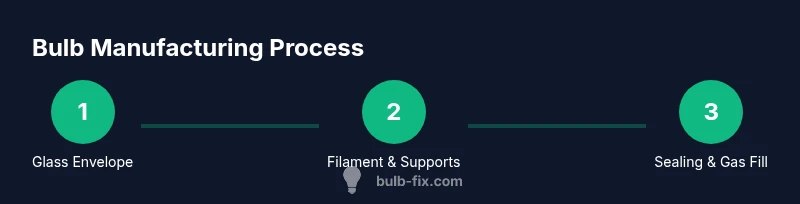
Form the glass envelope
Use appropriate glass-forming methods to create the bulb-shaped envelope. Maintain controlled temperatures and clean tooling to prevent micro-cracks that can cause early failure.
Tip: Inspect glass surfaces for uniform thickness and absence of inclusions before proceeding. - 3
Create and attach the filament with supports
Fabricate a tungsten filament and attach it to precise support wires to ensure stability within the envelope. Proper alignment reduces vibration and improves filament life.
Tip: Keep filament geometry tightly controlled; minor misalignment can shorten bulb life. - 4
Assemble base and wire the connection
Attach the base components to the glass envelope leads, ensuring a solid electrical connection and robust mounting for bump resistance.
Tip: Use non-corrosive contact materials to prevent degradation over time. - 5
Seal the bulb and fill with inert gas
Seal the bulb with the envelope, evacuate air, and introduce inert gas per specification to protect the filament from oxidation.
Tip: A proper vacuum or gas fill reduces early filament failure and improves longevity. - 6
Test, label, and finalize
Subject bulbs to electrical and thermal tests, verify light output and color characteristics, then label for base type and rating before packaging.
Tip: Document test results for traceability in case of returns or warranty claims. - 7
Package and store finished bulbs
Package bulbs in protective, labeled packaging and store in a cool, dry place away from direct sunlight and impact sources.
Tip: Avoid stacking heavy items on bulbs; use dedicated packaging to minimize breakage.
Got Questions?
What materials are used to make a traditional incandescent bulb?
A traditional incandescent bulb combines a glass envelope, tungsten filament, support wires, a base, and a gas fill or vacuum to protect the filament and improve longevity.
A traditional bulb uses glass, tungsten filament, supports, a base, and protective gas or vacuum to help it last longer.
Why is a tungsten filament used in bulbs?
Tungsten can withstand very high temperatures without melting and has high tensile strength, giving bulbs a longer service life at operating temperatures.
Tungsten handles the heat and lasts longer, making it ideal for light bulbs.
Are all bulbs manufactured the same way?
Bulbs vary by type (incandescent, halogen, LED) and base, but many share core steps: forming the envelope, adding the light source, sealing, and testing.
Different bulb types share the same basic steps, but details differ per technology.
What safety hazards should I know when handling bulbs?
Hot glass, sharp edges, and pressurized components can cause burns or cuts; always use protective gear and proper disposal methods.
Be careful with hot bulbs and broken glass, and dispose safely.
How long does bulb manufacturing take in factories?
Bulbs are produced in continuous factory processes; individual unit times vary, but overall production aims for efficiency and consistent quality.
Bulbs are made in continuous production lines to keep up with demand.
Watch Video
Key Points
- Identify bulb components and materials used
- Follow the core production steps from form to finish
- Emphasize safety, quality control, and testing
- Consider environmental impact and disposal options
- Observe trends in efficiency and innovation