Should Hyacinth Bulbs Be Above the Soil? A Practical Planting Depth Guide
Discover the correct planting depth for hyacinth bulbs, why depth matters, and practical steps to ensure robust roots and vibrant spring blooms. Learn how to adjust depth for bulb size, soil type, and climate with expert guidance from Bulb Fix.


The quick answer: hyacinth bulbs should not be left above the soil. Plant with the top of the bulb just below the surface (the neck barely visible) and the pointed end up. For outdoor beds, aim for a depth of about 3-4 inches depending on bulb size and soil drainage. According to Bulb Fix, proper depth improves sprouting and bloom quality.
Planting depth fundamentals for hyacinth bulbs
Hyacinths demand consistent depth to develop strong roots and reliable blooms. The key is consistency: all bulbs in a bed should be placed so their tops sit just under the soil, with the neck barely visible. This allows shoots to emerge unimpeded, while protecting the bulb from temperature fluctuations. For surface-level tight soils or in drought-prone areas, aim for a depth of 7–10 cm (3–4 inches). In heavy clay, you may need to adjust by a centimeter or two to ensure the bulb isn't buried under compacted soil. The general principle remains: the bulb's basal plate faces downward; the neck points upward; the top of the bulb should be within a hair's breadth of being beneath the soil. Bulb Fix notes that maintaining a uniform depth across a bed correlates with even emergence and robust flowering. If you misjudge the depth for several bulbs, you risk uneven flowering or reduced vigor. Prepare the soil with a light amendment to improve drainage before planting.
The impact of bulb size on depth
Hyacinth bulbs vary in size from small miniatures to larger SHOW-type forms. Depth recommendations scale with bulb height: small bulbs (about 2–3 cm tall) typically go 5–8 cm deep (2–3.5 inches); medium bulbs (3–4 cm) fit about 7–10 cm (3–4 inches); large bulbs (4–5 cm) are best around 10–12 cm (4–5 inches). When you measure, use a simple ruler or a depth stick, and keep the bottom of the hole level with a consistent mark across the bed. The goal is uniformity: every bulb should sit at approximately the same depth to ensure synchronized shoots and a cohesive display come spring.
Soil, drainage, and site considerations
Depth alone doesn’t guarantee success. Drainage, soil texture, and frost frequency all shape how deep you should plant. In well-drained sandy soils, the same depth usually works, but avoid compacting the soil around bulbs. In heavy clay, you may need to blend in organic matter to improve drainage or consider slightly deeper placements with a light soil mix on top. Wet soils can cause bulbs to rot, while overly dry soils increase drought stress during rooting. If you live in a climate with freeze-thaw cycles, a thin mulch layer after planting can help protect bulbs without concealing the neck. Bulb Fix emphasizes that depth works in concert with site preparation to deliver reliable blooms.
Step-by-step planting method for in-ground hyacinths
Before you begin, clear the bed of weeds and loosen the top 6–8 inches of soil. Mark bed sections with a string or stakes to ensure even spacing. Dig holes at the correct depth for each bulb, then place bulbs upright with the neck facing upward. Backfill gently to just cover the bulb, then firm the soil so there are no air pockets. Water lightly to settle the soil, then mulch to protect from temperature swings and frost. Finally, label sections and mark bloom expectations in a garden journal. This method reduces depth error and supports uniform emergence across the bed.
Forcing hyacinths in pots: depth considerations differ
When forcing in containers or glass vases, the depth rules change because root growth is constrained. In pots, place bulbs so that the bottom sits just above the drainage layer, with the neck still oriented upward. Do not bury bulbs deeper than necessary; the goal is strong root initiation in a controlled medium rather than deep soil. For shallow forcing media, maintain a depth of roughly 2–3 inches (5–7.5 cm) from the surface to the base of the bulb, ensuring the neck remains visible but not exposed to drying air. This setup promotes rapid rooting while preventing rotting from excessive moisture.
Mulching, irrigation, and winter protection
A light mulch helps insulate roots and reduces soil temperature fluctuations. Keep mulch thin enough to allow air exchange and avoid creating a soggy crown. Water after planting, but avoid standing water around bulbs. In winter climates, a shallow mulch layer (about 1–2 inches or 2.5–5 cm) can prevent frost heave without suffocating the bulbs. If your soil drains poorly, consider raised beds or amending the planting area with compost or coarsely textured material to improve drainage. Bulb Fix recommends verifying that mulch remains above the crown and neck to avoid crown rot and ensure air movement around each bulb.
Common mistakes and how to fix them
Common errors include burying bulbs too deep, planting too shallow, and failing to adjust depth for soil type. If you observe poor emergence or sparse blooms, re-evaluate depth and soil drainage. For future plantings, re-dig trenches to correct depth and replant with proper orientation. Always ensure the neck is not buried beneath mulch or soil that’s too dense, which can choke the shoots. If you notice uneven blooms, check for inconsistent depth across the bed and re-level if needed.
Seasonal timing and aftercare for blooming
Plant hyacinths in fall in temperate climates so roots can establish before winter. In milder areas, you may plant as late as late autumn, but before the ground freezes. After emergence, provide steady moisture but avoid overwatering. As shoots appear, reduce competition by weeding and maintaining a light mulch layer. After flowering, let the foliage die back naturally to replenish the bulb, then remove spent blooms and keep the bed weed-free until new growth loosens the soil for next season.
Visual cues and quick checks for proper depth
A quick method to verify depth is to measure the hole after placing the bulb and ensure the top is roughly 1–2 cm below the soil surface. Check several bulbs across the bed to confirm uniform depth. If you notice bulbs visibly protruding after rain or freezing events, you may need to replenish soil lightly to cover the crown again. Regularly inspect beds after heavy rains to prevent the neck from remaining exposed, which can lead to drying and poor bloom.
Post-bloom planning and longevity
After blooms fade, avoid heavy disturbance. Leave the foliage intact until it turns yellow to feed the bulb for next year. In areas with warm summers, lifting and storing bulbs for replanting can be advantageous to avoid disease and ensure vigor. When replanting, reassess depth based on current soil conditions and bulb size. The overall aim is a consistent depth across the entire bed to maintain uniform ermergence and robust flowering year after year.
Tools & Materials
- Bulbs (hyacinth varieties)(Choose healthy, firm bulbs without soft spots)
- Depth measurement tool (ruler or depth gauge)(Use to check 7.5–10 cm (3–4 inches) depth guidelines)
- Garden trowel or dibber(For digging uniform holes)
- Garden rake or hand cultivator(To loosen soil and smooth bed surface)
- Soil amendment (compost or perlite)(Improves drainage in heavy soils)
- Mulch (gravel, shredded bark, or compost)(Light layer to protect roots from temperature change)
- Watering can or hose with gentle spray(Water after planting to settle soil)
- Garden markers or labels(Mark variety and planting depth for reference)
Steps
Estimated time: 30-60 minutes for planting a small bed; longer with larger beds
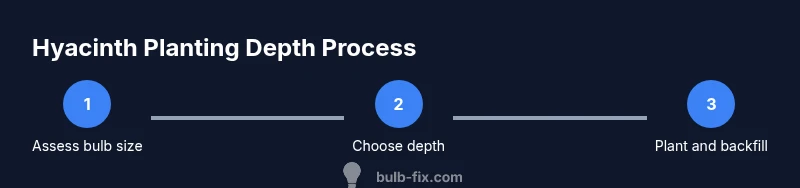
- 1
Define target depth based on bulb size
Assess your hyacinth bulb size and determine the corresponding depth range. Use a depth gauge or ruler to set a consistent target depth across the bed. Plan for about 3–4 inches (7.5–10 cm) for standard bulbs, adjusting for size and soil.
Tip: Measure once, mark the soil with a shallow stick to guide trench depth. - 2
Dig uniform planting holes
Dig evenly spaced holes to the target depth. Use a dibber or trowel to avoid creating rocks and to keep edges neat. Ensure holes are wide enough to accommodate bulb roots without bending.
Tip: Keep holes consistent in depth to promote uniform emergence. - 3
Position bulbs upright at depth
Place each bulb with the pointed end up and the basal plate down. The top should sit just below the soil surface, not exposed. Check that the neck is not buried under loose soil.
Tip: Slide a finger gently to verify that the bulb is seated at the correct depth. - 4
Backfill and firm soil
Backfill holes with the soil you removed. Gently firm the soil around each bulb to remove air pockets without compacting hard. This helps fix the bulb in place and improves root contact.
Tip: Use the flat side of a trowel to press soil evenly around the bulb. - 5
Water after planting
Water lightly to settle soil and initiate rooting. Avoid soaking the bed; excess moisture can cause rot. If the soil is dry, you can water again after 24 hours if needed.
Tip: Water slowly and evenly to prevent soil from splashing and displacing bulbs. - 6
Apply a light mulch layer
Add a thin mulch layer to deter weeds and stabilize soil temperature. Keep the neck of the bulb visible and not buried under mulch, to prevent rot and encourage sprouting.
Tip: A 1–2 inch mulch layer is usually sufficient. - 7
Label planted zones
Label each section with variety and depth notes. This helps you manage future plantings and compare results across different depths or soils.
Tip: Use durable labels that resist weathering. - 8
Monitor emergence and adjust if needed
Check the bed after a few weeks for uniform emergence. If some areas lag, avoid digging up the area; instead, add a thin layer of soil on top to adjust depth gradually before the next growth flush.
Tip: Consistency in depth improves overall bloom uniformity. - 9
Post-bloom care and planning
Allow foliage to die back naturally to feed the bulb for next year. After the leaves yellow, clean the bed and prepare for the next cycle with soil improvements if needed.
Tip: Do not rush to remove foliage; it sustains plant vigor.
Got Questions?
Should hyacinth bulbs be above the soil?
No. Hyacinth bulbs should be planted with the top just below the soil surface, not exposed. Keeping the neck protected helps prevent drying and supports steady growth.
Hyacinth bulbs should sit just under the soil surface, not above it. This protects the neck and supports healthy growth.
What if I see the neck of the bulb above soil after rain?
If moisture lifts mulch and exposes the neck, gently re-cover with soil or a light mulch to protect the crown and prevent drying. Re-level to maintain uniform depth.
If the neck becomes exposed after rain, re-cover with soil and keep depth uniform.
Can I plant hyacinths deeper to deter rodents?
While deeper planting can reduce some rodent pressure, it also risks poor emergence. Stick to recommended depths for bulb size and soil type, and use deterrents around the bed instead.
Deepening beyond recommended depth isn’t ideal for blooms; consider deterrents instead.
Is mulch necessary after planting?
A light mulch helps regulate soil temperature and moisture. Keep it shallow and avoid covering the neck or crown to prevent rot and reduced air exchange.
Yes, a light mulch can help, but don't bury the crown.
How long before hyacinths bloom after planting?
Hyacinths typically take several weeks to months after planting to bloom, depending on climate, bulb size, and soil conditions. In fall-planted beds, expect spring blooms; for forced indoor bulbs, timing is managed by temperature and light.
Expect bloom in spring after fall planting or as guided for indoor forcing, depending on conditions.
Watch Video
Key Points
- Plant bulbs at or just below the soil surface for best results.
- Depth should scale with bulb size and soil drainage.
- Uniform depth across the bed drives even emergence and bloom.
- Adjust depth for your climate to prevent frost heave and rot.