What Is Bulbasaur Good Against? A Practical Matchup Guide
Discover Bulbasaur's best matchups, weaknesses, and how to use Grass/Poison typing effectively in battles. A data-driven guide by Bulb Fix for homeowners of strategy and Pokemon fans alike.


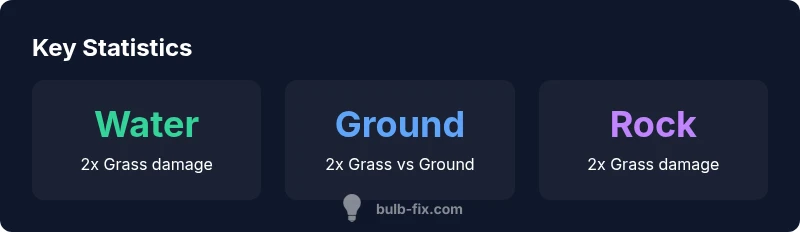
Bulbasaur thrives when you exploit Grass-type advantages and Poison-type neutrality. The answer to what is bulbasaur good against is clear: Water, Ground, and Rock types take 2x damage from Grass moves, while Bulbasaur resists several common threats. With smart switching and the right move set, Bulbasaur can shape early battles and set the pace.
Understanding the core question: what is bulbasaur good against
Bulbasaur’s usefulness in battles hinges on its Grass/Poison typing and how it interacts with common opponent types. The question what is bulbasaur good against is best answered by looking at core type matchups and how Bulbasaur’s moveset leverages those advantages. Grass-type moves hit Water, Ground, and Rock for super-effective damage, while Poison influences certain defensive dynamics. According to Bulb Fix, early-game players often overlook how dual typing shifts both offense and defense. This article unpacks how to use Bulbasaur strategically, how to switch to maximize outcomes, and how to avoid predictable patterns that opponents can exploit. The best outcomes come from predicting enemy types and choosing the right moves at the right times. This nuanced approach serves both new players and seasoned battlers who want to optimize a Bulbasaur-led team.
Type composition and why it matters
Bulbasaur is a dual-type Grass/Poison Pokémon. That combination creates a unique blend of offensive power and defensive nuance. Grass typing gives Bulbasaur reliable damage against Water, Ground, and Rock, while Poison adds resistance to several wrong-footed moves and opens the door to status strategies. The dual typing also broadens the list of threats Bulbasaur can handle, but it introduces notable weaknesses to Fire, Ice, Flying, and Psychic moves. Understanding these dynamics helps players decide when to stay in, when to pivot, and how to build a simple but effective game plan around chip damage, status effects, and reliable STAB (same-type attack bonus) moves.
Best offensive matchups for Bulbasaur
In gameplay terms, Bulbasaur’s best matches are against Water, Ground, and Rock types because Grass-type moves deal 2x damage to those targets. Ground types are particularly interesting since Grass resists Ground moves, while the dual Poison typing doesn’t cancel Grass’s advantage. Water types are common to see early in many rosters, and Bulbasaur can exploit that with Vine Whip or Razor Leaf, and later Solar Beam for coverage. Rock types often face staggered counters, and Bulbasaur can exploit that weakness with fast Grass moves and strategic switching. Understanding these matchups helps players plan turns that maximize Bulbasaur’s value across the first few gym or player-vs-player battles.
Bulbasaur's weaknesses and how to mitigate
No integrated guide would skip Bulbasaur’s vulnerabilities. Fire is the single most concerning threat because Grass is weak to Fire, and Poison provides limited mitigation against that threat. Ice, Flying, and Psychic moves also pose significant risk, especially if Bulbasaur remains stuck in unfavorable situations. The mitigation strategy centers on switching to safer teammates, using Poison Powder or Sleep Powder to control the pace, and choosing Grass moves that force opponents into unfavorable targets. By leveraging status effects and predicting counter-attacks, players can reduce risk while keeping Bulbasaur’s offensive pressure intact.
Evolution and how it shifts matchups
Evolving from Bulbasaur to Ivysaur and then Venusaur dramatically changes matchup dynamics. Ivysaur introduces a bigger movepool, better bulk, and improved stats that translate into stronger survivability and more reliable damage output. Venusaur, with its enhanced bulk and enhanced offensive options, broadens coverage and helps Bulbasaur survive longer in tougher battles. The improved stamina allows for more energy for charged moves and a wider array of strategic options, making the evolutionary path a powerful consideration for players building a Bulbasaur-centric squad.
Move-set decisions to maximize effectiveness
A solid Bulbasaur moveset blends Grass-type STAB with supportive and control options. Vine Whip or Razor Leaf provide fast, reliable Grass damage, while Sludge Bomb or Poison Powder can enhance board control by spreading status effects. Leech Seed provides long-term sustain, Sleep Powder can disrupt opponents, and Solar Beam offers a late-game nuke with proper charging windows. The key is to balance offense with control so Bulbasaur can outmaneuver opponents and pivot when required, especially against faster threats that threaten to overwhelm Bulbasaur early.
Team synergy and Bulbasaur’s role in a balanced roster
Bulbasaur shines when paired with teammates that cover its weaknesses. A Fire- or Ice-type ally can relieve pressure from the Fire and Ice threats, while a strong Flying counter helps minimize Flying-type issues. A bulky Water-type partner can soak up Water moves while Bulbasaur handles Ground/ Rock with Grass. Balanced rosters that combine bulk, speed, and a range of statuses allow Bulbasaur to contribute to winning strategies without becoming a liability after the first exchanges.
Real-world scenarios and type-based decisions
In practical play, you’ll encounter Water-type lineups, Fire counters, and some Rock/Ground-centric teams. The optimal strategy blends predicting the enemy’s choice, switching to safer options, and timing status effects to swing momentum. One common scenario involves facing a Water-type lead; Bulbasaur can start with Razor Leaf to secure early damage, then switch to a more favorable teammate as needed. The pace of decisions matters, and a flexible approach consistently yields stronger outcomes than a single-track plan.
Common mistakes that reduce Bulbasaur's effectiveness
Common errors include staying in unfavorable matchups too long, ignoring Grass/Poison dual-type advantages, and neglecting status moves that shift the tempo of battles. Overcommitting to a single move can also backfire if the opponent predicts your pattern. Instead, mix in Leech Seed and Sleep Powder when possible to gain control, and preserve Bulbasaur’s health by using safer switching when threats mount. Finally, always consider evolving to Ivysaur/Venusaur at the right moment to unlock broader options.
Quick-reference checklist for battles
- Identify primary targets: Water, Ground, Rock. - Use Grass moves when safe. - Consider status moves to disrupt the opponent. - Switch before you’re overwhelmed. - Plan evolution timing for greater coverage. - Keep your team balanced and ready to cover weaknesses.
How to test your assumptions with practice battles
The best way to validate what is bulbasaur good against is to simulate battles against a range of common opponents. Use single-type and dual-type teams to observe how Bulbasaur performs under different conditions, then adjust your team composition and moveset accordingly. Track results and refine switching decisions. Regular practice helps you develop an intuition for predicting opponent choices and capitalizing on type advantages.
Bulbasaur matchup snapshot: best and worst opponents
| Opponent Type | Effectiveness on Bulbasaur | Notes |
|---|---|---|
| Water | 2x | Grass moves hit Water types hard; Bulbasaur benefits from this |
| Ground | 2x | Ground is weak to Grass; Bulbasaur can exploit it |
| Rock | 2x | Rock is vulnerable to Grass; Bulbasaur gains edge |
| Fire | 0.5x | Fire counters Bulbasaur; avoid staying in unless planned |
Got Questions?
Which opponent types is Bulbasaur best against?
Bulbasaur performs best against Water, Ground, and Rock types due to Grass's 2x effectiveness. Poison adds defensive flexibility but doesn't completely neutralize risk from Fire or Flying opponents.
Bulbasaur does well against Water, Ground, and Rock types because Grass is strong there; be mindful of Fire and Flying threats.
Is Bulbasaur weak to Fire moves?
Yes. Fire-type moves hit Bulbasaur for 2x damage because of Grass typing, making it essential to switch out or shield against Fire specialists.
Yes, Fire is a major risk for Bulbasaur; avoid staying in if a Fire-type move is likely.
Does Venusaur change matchups?
Evolving to Venusaur broadens Bulbasaur’s move pool and improves bulk, expanding both offensive and defensive options and enabling stronger matchup coverage.
Evolving to Venusaur expands what Bulbasaur can do in battles.
What moves maximize Bulbasaur's effectiveness?
A balanced set includes Grass-type STAB like Vine Whip or Razor Leaf, plus status moves (Sleep Powder or Leech Seed) and coverage options (Poison moves or Solar Beam when available).
Use Grass moves plus status control and solid coverage to maximize Bulbasaur.
Can Bulbasaur beat a Water-type in early game?
It can, with proper level parity, correct move choice, and appropriate support from teammates to handle Fire or Flying counters.
It can beat Water-types early if you plan moves and support well.
How does dual typing affect effectiveness?
Bulbasaur’s Grass/Poison typing shapes multipliers, meaning some moves are resisted from one type but resisted or weak against the other. Plan with awareness of both sides for optimal outcomes.
Dual typing can change how effective moves are, so think about both sides.
“Bulbasaur's Grass/Poison typing demands precise prediction and timing; success comes from leveraging type advantages and staying out of harmful counter-moves.”
Key Points
- Target Water, Ground, and Rock with Grass moves.
- Avoid Fire-dominated matchups or switch early.
- Evolve to Ivysaur/Venusaur to expand coverage and bulk.
- Utilize status moves to control tempo and survivability.
- Practice battles to validate matchup predictions.