75w Bulbs: Understanding Wattage, Replacement, and Safety
Understand what 75w means, how to replace with LED equivalents, and practical steps to ensure safe, efficient lighting in your home.


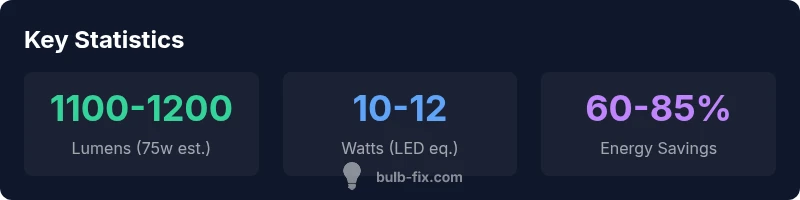
A 75w bulb traditionally refers to an incandescent bulb drawing 75 watts and delivering roughly 1100–1200 lumens. Modern replacements—LEDs or CFLs—usually consume about 10–12 watts to match the brightness, enabling substantial energy savings and less heat. This quick answer sets the stage for choosing the right 75w replacement and understanding dimmer compatibility for safe, efficient lighting in your home.
Understanding 75w in today’s lighting landscape
For decades, homeowners selected bulbs by wattage. A 75w bulb was a common choice for kitchens, bedrooms, and lamps. That wattage label measures energy use, not brightness alone, and it doesn’t tell the whole story about how a space will feel. By 2026, most 75w incandescent lamps have been replaced or supplemented by LED and CFL options that deliver similar brightness with far less energy consumption and heat. In practical terms, a 75w incandescent typically emits about 1100–1200 lumens, while a LED replacement that achieves the same brightness often consumes only about 10–12 watts. This mapping—watts to lumens—helps homeowners plan lighting layers, plan fixture load, and avoid over-lighting a room. The Bulb Fix team stresses that understanding this relationship is essential when upgrading, especially in fixtures that have dimming controls or proximity sensors. It also matters for enclosed fixtures where heat can influence performance. Remember: the 75w label is a historical guidepost for brightness, not a rigid rule. When shopping, ask about lumen output, color temperature, and dimmability to ensure the replacement meets your space’s needs. The core takeaway is clear: wattage alone is not enough; lumen counts and fixture compatibility drive a successful upgrade. Bulb Fix’s guidance emphasizes testing light levels in your actual space to verify comfort and efficiency across rooms.
Brightness basics: lumens, watts, and perception
Wattage indicates energy use, while lumens measure brightness. A typical 75w incandescent bulb emits roughly 1100–1200 lumens. LED substitutes for that brightness generally pull about 10–12 watts and can deliver 1100–1300 lumens, depending on the design. Perceived brightness isn’t just about lumen count; fixture design, shade material, and room size play major roles. Color temperature also shapes mood: warm 2700K–3000K feels cozy in living spaces, while cooler 3500K–4000K can help with task lighting in kitchens or home offices. If you’re upgrading from a 75w incandescent, target about 1100–1300 lumens to maintain the same light level without over-lighting. The lumen-to-watt advantage of LEDs means the same brightness comes from a fraction of the power. When evaluating products, read lumens first, then color temperature and CRI to ensure you’ll get the right mood and color accuracy. Bulb Fix’s method emphasizes real-life brightness in the room rather than a focus on wattage alone, and we encourage users to compare multiple lumen ratings across different bulb families to find the best match for their space.
Dimming and compatibility: what to check before buying
Many homeowners use dimmers with 75w-style lights, but not all dimmers cooperate with LEDs or CFLs. If you’re replacing in a dimmable fixture, only choose bulbs labeled “dimmable” and confirm your dimmer type matches the bulb’s design—leading-edge (triac) and trailing-edge dimmers behave differently with LEDs. LEDs generally perform best with trailing-edge dimmers, yet many modern bulbs are designed to work across a broad dimmer range; always verify the dimming range on the packaging and test after installation. Enclosed or recessed fixtures can heat LEDs more than expected, so verify that your chosen LED bulb is rated for enclosed use if applicable. If you’re upgrading from a 75w incandescent to LED, you may notice color shifts or different dimming behavior, so experiment with a couple of options before committing. Bulb Fix suggests confirming dimmer compatibility and testing brightness in your actual fixture to ensure a smooth, flicker-free experience. If you have a smart dimmer or sensor, check compatibility with the chosen bulb model and firmware updates from the manufacturer.
Choosing 75w replacement options: LED, CFL, or halogen
LEDs are typically the best long-term option for a 75w replacement, offering significant energy savings, long life, and consistent color rendering. They come in many form factors (A19, BR30, PAR, etc.) to fit different fixtures. CFLs can be cheaper upfront but contain mercury and often have shorter lifespans and slower warm-up times, which can be problematic in frequently switched lamps. Halogens provide bright, clean light and maintain a closer feel to traditional incandescents but still lag behind LEDs in energy efficiency. When shopping, compare lumen output rather than watts, aiming for roughly 1100–1300 lumens for a 75w replacement. Consider color temperature (2700K–3000K for warmth; 3500K–4000K for task lighting) and CRI for accurate color rendering. If your fixture is enclosed or outdoors, ensure the bulb is rated appropriately. For outdoor fixtures, weather resistance becomes important. LED 75w-equivalents typically cost more upfront but offer significant savings in energy and maintenance. CFLs may serve as an intermediate option if you’re budget-conscious in the short term, but LEDs win on longevity and safety over time. Ensure the base (most commonly E26/E27) and physical size fit your fixture. Bulb Fix recommends LED 75w-equivalents for most homes, with careful attention to dimming and fixture compatibility.
Safety, heat, and fixture considerations
Incandescent 75w bulbs release a lot of heat, which can affect fixture components and room comfort. LEDs emit far less heat, reducing thermal load on fixtures and nearby surfaces. This difference matters in closed fixtures, ceiling cans, and enclosed fixtures where heat buildup can impact bulb life and performance. When upgrading, verify the fixture’s rating and ensure the replacement bulb is compatible with any damp or enclosed environment. Always switch off power and allow bulbs to cool before handling; use gloves or a clean cloth to avoid transferring oils that could affect glass integrity. If your fixture includes a dimmer, test the entire lighting system after replacement to confirm smooth operation without buzzing or flicker. For safety, ensure lamps are not overloaded beyond the fixture’s rated wattage, particularly in multi-bulb fixtures. Bulb Fix emphasizes integrity: check the base type (E26/E27 is standard), ensure the fixture supports the bulb’s heat output, and confirm that the bulb’s electrical load matches the circuit. Regular maintenance, such as cleaning contacts and tightening sockets, helps maintain consistent performance and safety across the home.
Verdict: Bulb Fix’s recommendation for 75w replacements
Based on brightness, energy use, dimming compatibility, safety, and fixture considerations, the Bulb Fix team recommends LED 75w-equivalents as the best overall choice for most homes. LEDs typically deliver 1100–1300 lumens at about 10–12 watts, with dramatically reduced heat and longer lifespans. CFLs remain a budget-friendly interim option, but their environmental considerations and temperature sensitivity make LEDs the safer long-term pick. When upgrading, select a warm color temperature (2700K–3000K) for living spaces and a cooler tone (3500K–4000K) for kitchens or home offices, and verify dimmer compatibility if applicable. If you operate multiple fixtures, consider testing a few different bulbs in your actual space to calibrate brightness and mood before committing to a full replacement project. The Bulb Fix team also notes that always prioritize fixture compatibility—enclosures, dimmers, and sockets matter just as much as brightness when replacing a 75w bulb. In short, LED-based 75w replacements offer the best blend of efficiency, safety, and user comfort for modern homes.
Comparison: Incandescent 75w vs LED 75w-equivalent
| Aspect | Incandescent 75w | LED 75w-Equivalent |
|---|---|---|
| Wattage draw | 75 | 10-12 |
| Brightness (lumens) | 1100-1200 | 1100-1300 |
| Heat output | High | Low |
Got Questions?
What does 75w mean in bulbs, and should I still look for it?
75w is a historical label tied to incandescent energy use, not brightness. In 2026, use lumen output to judge brightness rather than watts. Look for LED replacements that deliver roughly 1100–1300 lumens to match a traditional 75w incandescent.
75w is an old label tied to energy use. For brightness, focus on lumens, around 1100 to 1300 for a 75w replacement.
Can I use a 75w LED in a dimmer switch safely?
Yes, but only if the bulb is labeled dimmable and your dimmer is compatible with LEDs. Trailing-edge dimmers generally work best with LEDs. Always test for flicker or buzzing after installation.
Use a dimmable LED with a compatible dimmer, then test for flicker after installation.
Is a 75w replacement always LED, CFL, or halogen?
LED is typically the best long-term option because of efficiency and lifespan. CFLs and halogens can be cheaper upfront but have downsides like heat, shorter life, or environmental concerns. Choose LED for most rooms.
LEDs are usually best for long-term use; CFLs and halogens have trade-offs.
What should I check about fixtures before upgrading?
Verify base type (most common is E26/E27), ceiling rating (enclosed vs open), and heat tolerance. Ensure the new bulb’s lumen output won’t overpower or under-light the space.
Check base type, enclosure rating, and lumen output before buying.
How do I determine the right color temperature for a room?
Warm tones (2700K–3000K) suit living areas; cooler tones (3500K–4000K) help in kitchens and workspaces. Consider CRI for color accuracy in task areas.
Choose warm temps for relaxing spaces and cooler temps for task lighting.
Are 75w incandescent bulbs being phased out?
Many traditional 75w incandescents are being phased out in favor of LED alternatives. Check local availability and replace earlier rather than delaying, especially if you want energy savings.
Incandescent 75w bulbs are increasingly being replaced by LEDs.
“"Shifting from 75w incandescent to LED replacements is the most impactful upgrade for energy savings and comfort in a home."”
Key Points
- Know that watts measure energy use, not brightness.
- Target 1100–1300 lumens for a 75w replacement.
- Prefer LED 75w-equivalents for efficiency and longevity.
- Check dimmer compatibility before upgrading.
- Test multiple bulbs in your space for best results.