LED Light Bulb Watts: A Practical Guide
Learn how wattage relates to brightness, efficiency, and cost for LED bulbs. Our Bulb Fix guide explains practical wattage ranges, how to read lumens, and how to pick the right LED bulbs for your fixtures without sacrificing comfort or savings.


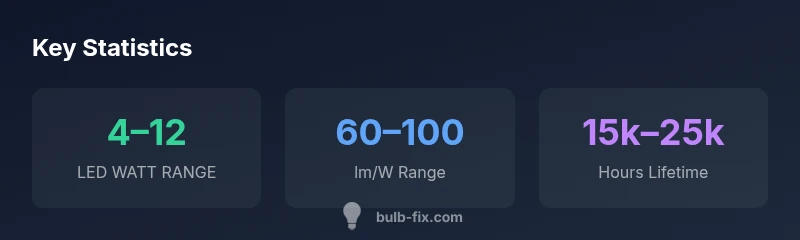
LED wattage measures electrical power drawn, not brightness. For common replacements, expect ~4–12 W for 40–60 W incandescent equivalents, ~8–12 W for 60 W equivalents, and ~12–20 W for 75–100 W equivalents. Brightness is better judged by lumens and lm/W efficiency, not watts alone. Bulb Fix emphasizes checking lumen output on packaging to ensure you meet your lighting needs.
Why wattage matters for LED bulbs
LED wattage is a proxy for electrical power draw, but it is not a direct measure of brightness. LEDs produce more light per watt than traditional incandescent bulbs, so a lower wattage can achieve the same perceived brightness. For homeowners, watts provide a quick sense of potential energy use, but the best way to judge brightness is lumen output. The Bulb Fix team emphasizes reading the lumen rating on the package and comparing lumen-per-watt (lm/W) efficiency. In practical terms, a typical 40–60 W incandescent replacement falls in the 4–12 W range for LED bulbs, while brighter applications may require 12–20 W. When selecting bulbs, also consider color temperature (measured in Kelvin) and whether the bulb is dimmable. A 2700K–3000K LED tends to feel warm and cozy, while 5000K is crisper for task lighting. Finally, consider usage hours and electricity rate to estimate annual savings; small wattage differences can compound significantly over time.
Understanding wattage vs. lumen output
Wattage alone doesnt tell the full story. Lumen output measures perceived brightness, and lm/W indicates efficiency. A high lm/W rating means more light per watt used, improving efficiency and lowering operating costs. For example, a 10 W LED bulb with around 800 lumens (~80 lm/W) can replace a 60 W incandescent bulb in brightness while consuming roughly one-sixth of the power. When comparing bulbs, look for a clear lumen specification and a high lm/W figure. Color temperature and dimming compatibility further affect perceived brightness and comfort in a room.
Common LED wattage equivalents for popular incandescent ranges
- 40 W incandescent equivalent: 4–6 W LED
- 60 W incandescent equivalent: 8–12 W LED
- 75 W incandescent equivalent: 12–15 W LED
- 100 W incandescent equivalent: 14–20 W LED These ranges are typical starter points. Actual numbers vary by manufacturer and product line. Use lumens to confirm brightness rather than relying on wattage alone, and verify that the bulb fits your fixture’s housing and any dimmer compatibility requirements.
How to calculate the right wattage for your fixture
- Check the fixture label for the maximum wattage rating and any dimmer or enclosure restrictions.
- Decide the desired lumen target for the space (e.g., brighter for kitchens, softer for bedrooms).
- Use lumen-per-watt data from the bulb you choose to compute the needed wattage: watts = desired lumens / lm/W.
- Confirm the bulb is compatible with any dimmers or smart controls you plan to use, and consider color temperature to match room mood.
- Compare energy costs using your local electricity rate to estimate annual savings. This approach balances brightness, efficiency, and expense over time.
Real-world scenarios: tips for different rooms
Living rooms typically benefit from 2000–4000 lumens in total across multiple light sources, but many homeowners opt for layered lighting with dimmable LEDs around 800–1200 lumens per main fixture. Kitchens require higher brightness for task lighting, often in the 3000–6000 lumen range across fixtures, which translates to about 35–80 W total in LED equivalents depending on layout. Bedrooms usually favor softer lighting in the 1000–3000 lumen range per space, enabling layered lighting and dimming. When selecting bulbs, prioritize higher lm/W for efficiency and ensure that each fixture’s wattage rating is not exceeded. Bulbs with a higher color rendering index (CRI) can improve how colors appear under LED light, which is especially important in kitchens and living areas.
Safety, compatibility, and installation tips
Always verify fixture compatibility before swapping to LEDs—some older fixtures or enclosed fixtures may require LEDs rated for enclosed use. Do not exceed the maximum wattage printed on the fixture label, even when using LED replacements. If you use dimmers, confirm the LED bulbs are dimmable and compatible with your dimmer type. Handle bulbs gently and avoid touching glass with bare fingers after operation to minimize heat exposure. If you notice flicker, buzzing, or reduced brightness, try a different dimmer or bulb with a higher lm/W rating.
Maintenance and long-term cost considerations
LED bulbs typically outlast incandescent bulbs by a wide margin, reducing maintenance costs and replacement frequency. While up-front costs are higher, the energy savings and longer lifetime usually lead to a favorable total cost of ownership over 5–10 years. Quality matters: look for bulbs with high build quality, robust thermal management, and good warranty terms. By choosing LEDs with appropriate lumens, watts, and efficiency, homeowners can optimize both lighting quality and energy expenditure over time.
LED wattage equivalents by fixture type
| Fixture Type | Typical LED Watt Range | Approx Equiv. Incandescent (W) | Common Lumens Range | Notes |
|---|---|---|---|---|
| General Purpose A19 | 4–12 | 40–60 | 450–800 | Most common in living rooms and bedrooms |
| Candelabra B10/B11 | 3–7 | 25–40 | 180–500 | Used in chandeliers and small fixtures |
| BR30/BR40 (recessed) | 8–15 | 60–75 | 700–1100 | Directional/spot lighting |
| GU10 (spot) | 6–10 | 40–60 | 320–560 | Track lighting and accent |
Got Questions?
What does watts mean in LED bulbs?
Watts measure electrical power draw, not brightness. LEDs deliver more light per watt than incandescent bulbs, so lower wattage can still give ample brightness. Focus on lumens and lm/W for true brightness and efficiency.
Watts tell you how much power a bulb uses, not exactly how bright it is. Look at lumens and efficiency to compare LEDs.
Can I use a higher wattage LED bulb in a fixture?
Never exceed the fixture's maximum wattage rating. Even if the LED draws less power, some fixtures have limits. For dimmers, ensure the bulb is dimmable and compatible with your dimmer.
Don’t push beyond the fixture’s rating; check dimmer compatibility if you plan to dim the LEDs.
Why do different LEDs with the same wattage look different?
Wattage is not the only factor. Brightness depends on lumens and lm/W. Bulbs with higher lm/W produce more light per watt, so two bulbs at 9W can have different brightness.
Two 9W bulbs can look different because lumens and efficiency vary.
Are all LEDs suitable for enclosed fixtures?
Not all LEDs are rated for enclosed fixtures. If you have a covered or recessed fixture, choose bulbs labeled for enclosed use to avoid overheating and reduced lifespan.
Check if the LED is rated for enclosed fixtures before using it in a ceiling can or tightly sealed fixture.
How should I calculate wattage for a room?
Decide the total lumens you want in the room, then divide by the bulb’s lm/W to estimate required watts. Consider the number of fixtures and dimming needs to achieve the target brightness.
Figure out how bright you want the room, then convert lumens to watts using the bulbs efficiency.
“LED wattage is a proxy for energy use, but brightness depends on lumens and efficiency. Choose bulbs with higher lm/W and the right lumen output for your space.”
Key Points
- Know lumen output to judge brightness, not watts alone
- Match fixture rating with LED wattage and dimmer compatibility
- Use lm/W to compare efficiency across bulbs
- Use data like lumens and color temperature to tailor mood
- Plan for long-term savings with higher lm/W LEDs and longer lifetimes