Brightest Rechargeable Light Bulbs: A Practical Guide
Learn how to identify the brightest rechargeable light bulb, compare lumens, runtime, and safety features, and make informed buying choices for home use.


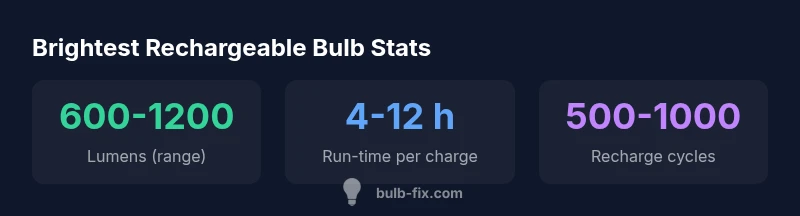
On the market today, the brightest rechargeable light bulbs typically deliver about 600–1200 lumens, with premium designs reaching up to around 1500 lumens. Brightness depends on the LED package, battery capacity, and drive circuitry. For homeowners, the best balance of brightness and runtime usually occurs in bulbs rated roughly 800–1200 lumens, with solid run-time under everyday use. These figures vary by form factor and usage scenario, so practical testing is advised.
How brightness is measured: lumens, color temperature, and perceptual brightness
Brightness for bulbs is primarily measured in lumens, not watts. The phrase brightest rechargeable light bulb is a product claim that depends on many design choices, including optical design, diffuser quality, and the LED package. In practice, two bulbs with the same lumen rating can appear differently bright due to beam angle and color temperature. For homeowners evaluating a candidate, focus on real-world performance in the rooms you care about. The Bulb Fix team notes that perception of brightness also depends on room size, ambient light, and how the fixture directs light. When you compare models, ask for both peak lumen output and typical running brightness in normal use, so you aren’t misled by a high flashing spec or a temporary surge at startup. This framing helps you identify the brightest rechargeable light bulb for your needs without overlooking runtime and color tone.
Battery technology and its impact on brightness
Rechargeable bulbs store energy in built-in cells that power the LED array. Higher-capacity batteries often enable longer periods of sustained brightness, but they add weight and cost. A bulb with a robust battery management system will maintain a stable lumen output as the battery discharges, rather than letting brightness sag quickly. In practice, a bulb rated in the 800–1200 lumen range typically provides reliable brightness for common tasks, while premium packs can sustain higher brightness for shorter periods. According to Bulb Fix, the best balance of brightness and runtime tends to appear in models with smart battery management and modular LED drivers that minimize voltage drop under load.
Longevity and brightness stability over time
Over many recharge cycles, some bulbs experience gradual brightness drop due to battery aging and LED wear. Real-world testing shows that well-designed rechargeable bulbs can maintain a significant portion of initial brightness for hundreds of cycles, though the exact figure varies by chemistry and usage pattern. Light quality remains more consistent when the bulb avoids deep discharge, operates within specified ambient temperatures, and is kept clean from dust that can scatter light. Users should expect some gradual change in perceived brightness, but a well-made unit will deliver usable light long after its first year of daily use.
Safety, certifications, and safety features to look for
Even the brightest rechargeable light bulb should meet safety standards. Look for certifications such as UL or equivalent regional marks, and ensure the product uses certified lithium-ion cells with protection circuitry. Features that improve safety include overcharge protection, short-circuit protection, and proper heat sinking to prevent overheating that could degrade brightness. For a home environment, you should also verify that the bulb is rated for the fixture type and enclosure, and that it operates within the manufacturer’s recommended temperature range. When in doubt, choose products with explicit safety certifications and robust warranty terms. This is a core part of choosing a dependable, brightest rechargeable light bulb.
Use-case scenarios: when to choose brightness over runtime (and vice versa)
Different rooms and tasks demand different brightness profiles. In a workshop or outdoor area with variable conditions, you may prioritize maximum peak brightness for short tasks. For utility lighting in a garage or closet, a longer runtime with stable brightness at mid-range lumens can be more practical. Day-to-day tasks around a home—reading, cooking, or workspace illumination—often benefit from a balanced lumen output (roughly 800–1200 lumens) with dependable runtime. The brightest rechargeable light bulb in a consumer setting should provide enough light to complete tasks comfortably without requiring frequent battery top-ups. Consider also beam shape, color temperature, and dimmability as part of your decision.
Practical buying guide: how to compare models (step-by-step)
- Define your primary use case (emergency lighting, task lighting, or ambient light).
- Set a brightness target in lumens based on room size and fixture type (600–1200 lumens is common for many homes; premium options up to ~1500 lumens).
- Check battery capacity and expected runtime; look for a rating that matches your daily usage pattern.
- Review the beam pattern and diffuser quality to ensure perceived brightness aligns with specs.
- Verify safety certifications and warranty coverage; avoid models with questionable safety marks.
- Read independent reviews and, if possible, perform a practical test in your own space. This approach helps identify the brightest rechargeable light bulb that truly suits your needs rather than chasing a number.
Common misconceptions and troubleshooting brightness issues
A frequent misconception is that higher wattage equals brighter light in rechargeable bulbs; with LEDs, lumens are the correct metric. If brightness seems uneven, check for degraded battery health, dirty optics, or incorrect fixture compatibility. Dimming or flickering can also indicate battery management or driver issues. For most homeowners, comparing brightness at mid-range lumens with a realistic run-time expectation provides a more accurate picture than chasing peak spec for a short-duration demo. If brightness fluctuates drastically, consider testing multiple units or choosing models with proven dimming performance and stable color temperature.
Brightness and battery characteristics across rechargeable bulb types
| Model Type | Lumens Range | Battery Type | Typical Use |
|---|---|---|---|
| Pocket/portable rechargeable | 600-1200 lumens | Built-in lithium-ion | Emergency kits, camping |
| High-output rechargeable | 1000-1500 lumens | Large-capacity lithium-ion | Workshop tasks, outdoor lighting |
| Smart rechargeable bulbs | 700-1200 lumens | Built-in rechargeable + Wi-Fi/Bluetooth | Home automation |
Got Questions?
What lumen range defines brightness for a typical home?
Most household tasks are well served by bulbs delivering 800–1200 lumens. Higher brightness up to 1500 lumens is available in premium models, but runtime may be shorter. Consider your room size and task when choosing.
Most homes do well with 800 to 1200 lumens; higher brightness is possible but may reduce runtime.
Will brightness drop as the battery ages?
Yes, brightness can gradually decline as the battery chemistry wears. High-quality designs mitigate this with better battery management and heat handling, but some drop is normal after many recharge cycles.
Brightening often stays steady early on, then may gradually dim as the battery ages.
Are rechargeable bulbs safe for enclosed fixtures?
Only use bulbs rated for enclosed fixtures and with proper heat dissipation. Overheating can shorten life and reduce brightness consistency. Always check the manufacturer’s enclosure rating.
Make sure the bulb is rated for enclosed fixtures and has good heat management.
How do I compare brightness and runtime effectively?
Compare lumen output and run-time specs side by side, preferably with independent reviews. Look for testing that mirrors your task and room size, not just peak brightness shown in ads.
Compare lumen numbers alongside runtime to pick a bulb that lasts in your space.
Can I use rechargeable bulbs outdoors?
Some models are rated for outdoor use, but verify weather resistance and daylight exposure ratings. For harsh environments, select bulbs designed for outdoor fixtures with IP ratings.
Only use ones rated for outdoor exposure and weather resistance.
Do brightness claims come with a warranty?
Most reputable brands offer warranties covering brightness and battery performance for a defined period. Read terms carefully, especially for battery-related failures.
Check the warranty terms for brightness and battery reliability.
“Brightness is a function of lumens, beam quality, and runtime; for most homes, you should prioritize a balance rather than chasing the highest number.”
Key Points
- Prioritize lumens for brightness, not watts.
- Match runtime to your daily usage to avoid frequent recharges.
- Check safety certifications before purchase.
- Choose a form factor that fits your fixture and space.
- Test brightness in real-life settings to avoid buyer's remorse.