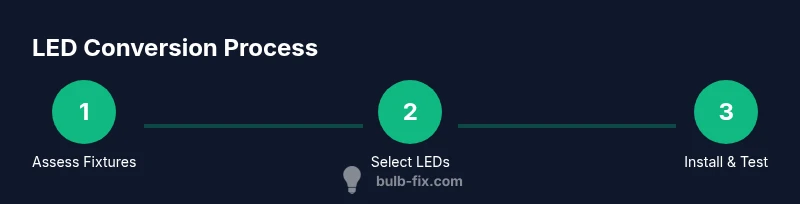
Bulb to LED Conversion: Safe, Efficient Home Upgrades
Learn how to safely convert your home from traditional bulbs to LED replacements. This Bulb Fix guide covers compatibility, brightness, dimmer considerations, and a step-by-step installation to improve energy efficiency.


According to Bulb Fix, you can safely convert most household lighting from traditional bulbs to LED replacements by confirming fixture compatibility, choosing bulbs with the correct base and color temperature, and following proper handling during installation. Verify dimmer compatibility and fixture ratings before purchasing, then follow a clear, safety-minded plan. This quick guide sets you up for a clean, energy-saving bulb to LED conversion across rooms.
Why a bulb to led conversion makes sense for most homes
Switching from traditional incandescent or halogen bulbs to LED replacements is one of the fastest, most cost-effective upgrades homeowners can undertake. LED bulbs offer the same or better perceived brightness while using a fraction of the energy, generating less heat, and lasting many times longer. For a successful bulb to led conversion, focus first on compatibility: fixture base type, wattage rating, and whether the fixture is controlled by a dimmer or smart switch. Enclosed fixtures require LED bulbs rated specifically for enclosed use, otherwise heat buildup can shorten lifespan. Color temperature matters too: 2700K–3000K provides warm, cozy light ideal for living spaces, while 4000K–5000K suits kitchens and task lighting. Across these considerations, the energy savings are real and the maintenance burden decreases as LEDs outlive traditional bulbs. The Bulb Fix team emphasizes planning as the best strategy: map each fixture, note the base type, check dimmer compatibility, and confirm the fixture’s rating before buying. With the right products, your bulb to led conversion delivers comfort, efficiency, and a safer lighting environment in every room.
Compatibility basics: bases, ratings, and dimmers
Understanding compatibility is the cornerstone of a smooth bulb to led conversion. Start by identifying each fixture’s base type (examples include E26/E27, GU10, B22, and G9) and the maximum wattage the socket can safely handle. If a fixture uses a wall or ceiling dimmer, you’ll need LED bulbs labeled as dimmable and a dimmer that supports LED loads. Some older dimmers buzz or flicker with LEDs, so consider replacing the dimmer with an LED-compatible model if flicker occurs. For enclosed fixtures, ensure the LED bulb is rated for enclosed use; otherwise heat buildup can shorten life. Always check the fixture label or the manufacturer’s documentation when in doubt. By aligning base, rating, and dimmer compatibility, you minimize post-conversion issues and improve overall performance of your bulbs.
Choosing the right LED bulbs: brightness, color, and performance
When you plan a bulb to led conversion, brightness is measured in lumens, not watts. Look for LEDs that deliver comparable lumen output to your current bulbs to maintain the same light level. Color temperature ( kelvin ) influences mood: use warm tones for living spaces and cooler tones for work areas. Consider color rendering index (CRI) if you’re lighting tasks that require accurate color perception (e.g., art studios or craft rooms). Check for an enclosed-use rating if your fixture is sealed, and prefer LEDs with a long rated lifespan and strong warranty. The best LED bulbs balance wattage, lumens, temperature, and durability, delivering energy savings without sacrificing comfort.
Safe installation and best practices
Preparation is key to a safe bulb to led conversion. Always power down at the switch and, for higher-risk fixtures, at the circuit breaker. Use a non-contact voltage tester to confirm no live current before handling sockets or fixtures. Remove the old bulb gently, avoiding contact with glass to prevent injury. Install the LED bulb by aligning the base with the socket and turning until snug, but never overly tight. After installation, power the circuit back on and test for stable light; if you notice flicker on a dimmer, you may need a compatible dimmer or a non-dimmable LED with a standard switch. If you’re unsure about a fixture, consult a licensed electrician. The bulb to led conversion process becomes safer and more reliable when you follow these steps and stay within fixture specifications.
Common pitfalls and how to avoid them
Flicker, buzzing, or reduced lifespan are common complaints during a bulb to led conversion if compatibility isn’t right. Avoid mixing LED bulbs with old dimmers that aren’t LED-compatible, and avoid using LEDs in enclosed fixtures unless rated for that environment. Do not exceed the fixture’s maximum wattage with LED replacements; even though LEDs use less current, many fixtures still have a total wattage limit. Lastly, purchase bulbs from reputable brands and verify the warranty, especially for decorative fixtures or specialty sockets. Following these guidelines minimizes risk and ensures a smooth, long-lasting LED upgrade.
Maintenance and disposal after a bulb to led conversion
LEDs require minimal maintenance compared to incandescent bulbs. Clean bulbs with a dry microfiber cloth to remove dust and avoid using cleaners that may degrade the coating. If a bulb fails, replace with an LED of the same base and compatible rating. When disposing of old bulbs, follow local regulations for recyclables; many LEDs can be recycled and should not be discarded with regular trash. Proper disposal and periodic checks of dimmers and switches help maintain safety and efficiency over time. Bulb Fix’s guidance emphasizes keeping a record of fixture types and replacement dates to simplify future maintenance.
Tools & Materials
- LED bulbs with the correct base (e.g., E26/E27, GU10, B22, etc.)(Ensure base type matches fixture; verify wattage and enclosure rating)
- Non-contact voltage tester(Use to confirm circuits are de-energized before handling sockets)
- Screwdriver set (Phillips and flathead)(Needed to access fixtures or remove screw-in covers)
- Ladder or stable step stool(Access ceiling fixtures safely; ensure it’s on a flat surface)
- Soft lint-free cloth(For cleaning fixtures and bulbs before installation)
- Gloves (optional, heat-resistant preferred)(Help grip bulbs and protect hands; do not touch LEDs with bare skin if advised by manufacturer)
- Dimmer-compatible LED bulbs (if fixture has a dimmer)(Choose only if you plan to keep the dimmer functional)
Steps
Estimated time: 30-60 minutes
- 1
Power down and verify safety
Turn off the master switch and switch controlling the fixture. Use a non-contact voltage tester to confirm there’s no live current before touching the bulb or socket. This initial safety check prevents electric shock and protects your equipment during the conversion.
Tip: Always double-check the breaker as a safety margin; some fixtures can be controlled by multiple switches. - 2
Identify base type and dimmer compatibility
Inspect the existing bulb base (E26/E27, GU10, B22, etc.) and note whether a dimmer is part of the circuit. If a dimmer exists, confirm LED compatibility; some older dimmers cause flicker or buzzing with LEDs.
Tip: If you’re unsure, bring a photo of the socket or the bulb’s base to a hardware store for confirmation. - 3
Remove the old bulb safely
Carefully unscrew or twist out the existing bulb. Avoid touching the glass with bare hands to prevent oils from reducing LED lifespan. If the bulb looks hot, wait a few minutes for it to cool before handling.
Tip: Support the bulb by the base, not the glass, to prevent accidental shattering. - 4
Choose the right LED replacement
Select an LED bulb with the same base, similar or higher lumen output, and appropriate color temperature. If the fixture is enclosed, verify the LED is rated for enclosed use. For dimmable circuits, pick a dimmable LED.
Tip: Match lumens to your current bulb to maintain light level; don’t rely on watts to gauge brightness with LEDs. - 5
Install the LED bulb
Insert the LED bulb into the fixture and turn until snug. Avoid overtightening, which can damage the socket. Handle glass with care, and keep the bulb label facing outward for easy reference.
Tip: If the bulb is a tight fit, check for a slightly different base variant rather than forcing it in. - 6
Test, observe, and fine-tune
Power the fixture back on and observe the light behavior. If flicker or buzzing occurs on a dimmer, consider using LED-compatible dimmers or switching to a non-dimmable LED with a standard switch. Confirm there’s no heat buildup around enclosed fixtures.
Tip: Run the light for a few minutes to ensure stability before finalizing placement.
Got Questions?
What is the best LED bulb base for a typical household lamp?
Most lamps use an E26/E27 base. Always confirm the base type on the fixture label or by inspecting the socket. Then choose an LED with the same base and appropriate wattage rating.
Most household lamps use E26 or E27 bases; check the fixture label and pick an LED with the matching base and wattage.
Can I use LED bulbs with a dimmer switch?
Yes, but only with dimmable LEDs and a dimmer compatible with LED loads. Some older dimmers can cause flicker or buzzing even with dimmable LEDs.
Yes, use dimmable LEDs and an LED-compatible dimmer; otherwise you may hear buzzing or see flicker.
Are LED bulbs safe to install in enclosed fixtures?
Only LED bulbs rated for enclosed fixtures should be used. Regular LEDs can overheat and shorten lifespan in fully enclosed spaces.
LEDs rated for enclosed fixtures are required; otherwise heat buildup can shorten their life.
Will the bulb to led conversion save money over time?
LEDs use less energy and last longer, reducing ongoing energy costs and replacement trips. The exact savings depend on usage patterns and local electricity rates.
Yes, LEDs save energy and last longer, though actual savings depend on usage and rates.
What should I do with old bulbs after upgrading?
Recycle old bulbs when possible and follow local guidelines. Many communities offer bulb recycling programs for safe disposal.
Recycle old bulbs according to local guidelines; many areas have bulb recycling programs.
Do I need to change fixtures or wiring for LEDs to work?
Usually not. LED bulbs fit existing sockets; you generally don’t need to rewire. If a fixture is 120V and the bulb is rated for that voltage, you’re typically good to go.
Generally, you don’t need to rewire; just install matching-base LEDs and ensure voltage compatibility.
Watch Video
Key Points
- Verify base type and fixture rating before buying LEDs
- Choose LED bulbs with appropriate brightness and color temperature
- Use LED-compatible dimmers if you have dimmer switches
- Dispose of old bulbs responsibly and keep a maintenance log