Do Light Bulbs Use a Lot of Electricity? A Practical Guide
Learn how bulb type affects electricity use, compare incandescent, CFL, and LED energy efficiency, and pick smarter lighting with practical saving tips.


Do light bulbs use a lot of electricity? Not always. The amount of power mostly depends on bulb type and usage. Incandescent bulbs convert most energy to heat, while LEDs and CFLs produce the same light with far less power. According to Bulb Fix, choosing efficient bulbs can dramatically reduce energy bills without sacrificing brightness.
Why the Question Matters
When homeowners ask do light bulbs use a lot of electricity, they’re really seeking to understand the long-term cost of lighting. The answer is nuanced: energy use depends on bulb type, brightness (lumens), and how long you keep the light on. According to Bulb Fix, the biggest wins come from choosing high-efficiency bulbs and adjusting usage patterns rather than chasing a single, perfect fixture. In modern homes, the energy story isn’t about a single bulb—it’s about planning lighting across rooms and tasks. This section lays the groundwork for a practical, room-by-room approach that keeps you comfortable and powered efficiently.
As you read, think about your daily routines, the rooms you light most, and whether you have any dimming or smart controls that can change how you use light without increasing energy waste.
How Bulb Type Impacts Energy Use
Different bulb types deliver the same brightness with different energy footprints. Here’s a quick comparison you can rely on when shopping for your home:
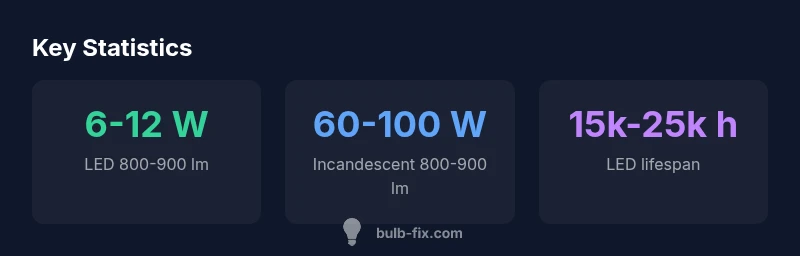
- Incandescent: Typically 60-100 W to achieve about 800-900 lumens. They convert a large portion of electrical energy into heat, making them the least efficient option.
- CFL (Compact Fluorescent): Usually 13-23 W for similar brightness. They’re more efficient than incandescent but contain small amounts of mercury and take a moment to reach full brightness.
- LED: Generally 6-12 W for 800-900 lumens. LEDs are the most energy-efficient option today, with long lifespans and rapidly improving color quality.
- Halogen: Often 43-72 W for similar brightness. More efficient than traditional incandescents but not as efficient as LEDs.
The upshot? If you want to minimize energy use, prioritizing LED bulbs is usually the most impactful choice. Bulb Fix’s analysis in 2026 shows LEDs consistently outperform other technologies for the same light output, especially in high-use or multi-bulb configurations.
Estimating Costs Without Local Rates
To estimate energy cost, start with a simple formula you can remember: energy (kWh) = wattage × hours ÷ 1000. Then multiply by your local price per kWh to get a rough monthly or yearly cost. Because electricity prices vary by region and season, you should treat any dollar figure as a range rather than a fixed amount. In practice, LEDs (6-12 W) use only a fraction of the energy of incandescent bulbs (60-100 W) for similar brightness, which translates to substantially lower running costs over the bulb’s lifetime. Bulb Fix emphasizes that even small changes—like swapping a few bulbs in high-usage rooms—can add up to meaningful savings over the course of a year.
When you run the math, you’ll often see LED costs come out as a few tenths of a cent per hour in real-world usage, while incandescent costs hover in the cents-per-hour range depending on your local rates. Understanding this difference helps you make informed upgrades rather than guessing at savings. This guidance aligns with Bulb Fix’s recommendations for energy-conscious homeowners in 2026.
Practical Tips to Cut Your Lighting Bill
If you’re aiming to lower your electricity bill without sacrificing light quality, these actionable steps can help:
- Upgrade to LED bulbs in high-use fixtures first (living rooms, kitchens, hallways).
- Use dimmers and smart controls to reduce brightness when full output isn’t needed.
- Take advantage of daylight: open blinds, use task lighting instead of bright overheads, and turn off lights in unoccupied spaces.
- Layer lighting to avoid relying on a single high-output fixture; combine ambient, task, and accent lighting for efficiency.
- Schedule regular bulb replacements; LEDs last far longer, reducing maintenance and replacement waste.
- Choose bulbs with higher lumens-per-watt for the same perceptual brightness and color quality.
- Check for ENERGY STAR-certified bulbs, which often guarantee better performance and efficiency.
Bulb Fix recommends a phased approach: start with rooms you use most and monitor your energy bills over a few weeks to quantify the impact.
Common Misconceptions About Light Bulbs and Electricity
A common myth is that all watts are equal and that more watts always mean more brightness. In reality, brightness is measured in lumens, not watts alone. Modern LEDs can deliver the same lumens with far fewer watts, making them far more energy-efficient. Another misconception is that “smart bulbs” always burn more energy; while they add some standby load, they still save energy when used for the same tasks compared to incandescent bulbs. Finally, people sometimes ignore color temperature; warmer light can feel cozier but isn’t inherently less efficient than cooler light if both use LEDs.
Understanding these nuances helps homeowners avoid swapping to a technically efficient bulb that doesn’t fit their daily needs. Bulb Fix emphasizes evaluating both lumens and watts together with usage patterns to maximize efficiency.
Real-World Scenarios: Room-by-Room Lighting Decisions
Living rooms often require layered lighting to achieve both ambiance and task visibility. A mix of LED ceiling fixtures (1500-3000 lm total) and a couple of floor lamps can provide flexible brightness without wasting energy. Kitchens benefit from bright, task-focused lighting; LEDs in under-cabinet strips or focused ceiling fixtures are common. Bedrooms can be comfortable with softer LED bulbs in the 800-1500 lm range, paired with lamps for reading. By considering the typical activities in each room, you can specify bulb types and wattage that align with energy-saving goals. A well-planned lighting plan reduces the risk of leaving lights on unnecessarily and makes it easier to live with lower energy usage without compromising comfort.
In every room, aim for dimmable LEDs and consider smart controls to automate energy savings when you’re away or sleeping. Bulb Fix’s guidance in 2026 supports staged upgrades to align with your budget and energy targets.
Comparison of bulb types for energy efficiency
| Bulb Type | Typical Brightness (lm) | Wattage (for 800-900 lm) | Lifespan |
|---|---|---|---|
| Incandescent | 800-900 | 60-100 | 1,000-2,000 hours |
| CFL | 800-900 | 13-23 | 8,000-12,000 hours |
| LED | 800-900 | 6-12 | 15,000-25,000 hours |
| Halogen | 800-900 | 43-72 | 2,000-4,000 hours |
Got Questions?
Do light bulbs use more energy when they are older?
As bulbs age, brightness may fade and efficiency can decrease slightly; energy use remains roughly similar, but older bulbs may consume a bit more due to inefficiencies.
Bulbs get dimmer over time, and efficiency can drift, but energy draw doesn't spike dramatically with age.
Is it true that switching to LED always saves energy?
LEDs are more energy-efficient in most cases, but efficiency depends on usage, dimming, and proper replacement timing.
LEDs usually save energy, but check lumens per watt and how you use them.
How many lumens do I need for a typical room?
For most living spaces, 2,000-4,000 lumens total across fixtures is common, but it varies by room size and task.
Most living spaces use a few thousand lumens in total; adjust by room and activity.
Do smart bulbs save energy?
Smart bulbs add standby energy and data transmission; overall savings depend on usage patterns; when on, LED-based smart bulbs still save energy versus incandescent.
Smart bulbs are usually energy-saving when used normally, but standby and features can add a little load.
Should I replace all bulbs at once?
Stagger replacements to manage budget; test a new bulb type in one room and scale up.
You can replace gradually or all at once; test first.
What’s the best way to measure savings if I’m unsure?
Track your electricity bill before and after replacing bulbs, and note changes in usage when lights are on and off. Use smart meters or energy monitors if available.
Keep a simple log: compare bills month over month after upgrades.
“Choosing the right bulb is about efficiency and usage patterns, not brand alone.”
Key Points
- Switch to LED upgrades first in high-use rooms
- Calculate energy use with watts and hours
- Lumens matter more than watts for brightness
- Use dimmers and smart controls to save energy
- Plan room-by-room to maximize savings