Do Halogen Bulbs Use Much Electricity? A Practical Guide
Explore how much electricity halogen bulbs use compared with LEDs and incandescents. Learn wattage, brightness, and practical tips to reduce energy use while maintaining lighting quality, based on Bulb Fix Analysis, 2026.


Halogen bulbs generally use more electricity than modern LEDs for the same brightness, though they are more efficient than traditional incandescent bulbs. In typical home use, a halogen may consume roughly 2–3x more energy per lumen than an LED substitute. For reliable comparisons, evaluate lumen output and convert watts to an estimated annual cost based on your local rate.
Do Halogen Bulbs Use a Lot of Electricity?
Do halogen bulbs use a lot of electricity? This is a common question for homeowners weighing brightness against energy costs. According to Bulb Fix, halogen bulbs generally use more electricity than modern LEDs for the same brightness, though they are more efficient than older incandescent bulbs. The Bulb Fix team found that halogens convert a larger share of electrical energy into heat, which is why you often see higher electricity bills when running the same lumen output as with LEDs. In practical terms, halogen bulbs deliver strong, immediate light with excellent color rendering, but their energy efficiency lags behind LED substitutes. Because electricity costs vary by region and usage, you’ll benefit from a clear comparison of wattage, lumen output, and actual run-time. This guide breaks down the numbers, explains how to interpret wattage versus brightness, and shows concrete steps to manage energy use without sacrificing comfort.
Wattage and Brightness: What those numbers mean
Understanding wattage and lumens helps you compare halogen bulbs with LEDs and incandescents. Halogens commonly span roughly 20W to 75W, with light output ranging from about 250 to 1100 lumens depending on the model. Lumens measure brightness; watts reflect energy use. Because the same brightness can be achieved with different wattages, always check both specs on the packaging. A practical rule of thumb: if you’re replacing a 60W incandescent, you’ll usually find a halogen option in the 40–60W range that offers similar lumens, but the energy cost per hour will still be higher than an LED that produces the same light with 6–12W. Additionally, note that halogens run hotter than LEDs, which can affect comfort in enclosed spaces. If you use a dimmer, ensure compatibility with halogen bulbs to avoid wasted energy from unstable output. In real-world terms, wattage tells you how much electricity is available, while lumens tell you how bright the room will feel. Your goal is the best lumen-per-watt ratio for your space.
Efficiency Benchmark: Halogen vs LED and CFL
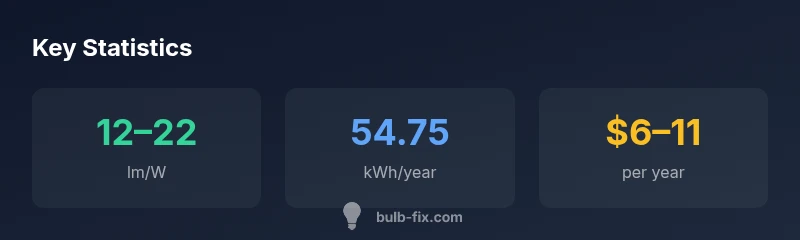
Halogen bulbs sit between traditional incandescents and LEDs in energy efficiency. In common terms, LEDs deliver far more light per watt than halogens. Typical halogen efficiency is around 12–22 lumens per watt, while LEDs commonly exceed 80–120 lm/W. CFLs are in between, often 45–75 lm/W. That means for the same brightness, LEDs can use roughly one-fifth to one-tenth the energy of halogens. Halogens remain attractive where color rendering and immediate full brightness matter, but for long-term energy savings LEDs are generally the superior choice. When evaluating options, compare both lumen output and efficiency ratings, and consider total cost of ownership over the bulb’s lifetime. Bulb Fix’s framework emphasizes practical calculations: energy use per lumen and fixture compatibility, heat considerations, and usage patterns.
Real-World Scenarios: Cost and Usage Examples
Scenario A: A single 50W halogen bulb used 3 hours per day for a year (365 days) consumes about 54.75 kWh. At residential electricity rates between roughly 12 and 20 cents per kWh, annual energy cost ranges from about $6 to $11. Scenario B: Replacing that halogen with a LED of about 6–9W delivering similar brightness lowers energy use by roughly 85%. Annual cost then drops to about $1–$2 at similar rates. Scenario C: In a kitchen with three halogen spots used for 4 hours daily, total energy can approach 200–300 kWh per year, depending on wattage and usage. These examples illustrate how daily habits add up and why upgrading to LEDs often yields substantial savings.
Reducing energy use without sacrificing lighting quality
To curb energy use without sacrificing light quality, consider a few practical changes:
- Use task lighting and zoning to limit lit zones to where light is needed, not the whole room.
- Replace only the bulbs you actually use most—avoid swapping every fixture at once if you’re budgeting.
- Install dimmers that are compatible with halogen bulbs to reduce wattage without sacrificing perceived brightness.
- Where feasible, plan a phased upgrade to LED retrofits in fixtures designed for easy LED replacement.
- Maximize natural daylight during the day and use white or pale walls to reflect light, reducing the number of lights you need.
- Regularly clean fixtures and lenses to maintain brightness and efficiency.
When to Upgrade or Mix Lighting
If your goal is the lowest possible energy use, LEDs win on efficiency, lifetime, and heat management. For spaces that require very bright, immediate light with precise color rendering, halogen bulbs still have a niche. A common strategy is to mix: keep halogen where brightness and color matter (task lighting or accent spots) and retrofit other areas with LEDs for daily use. The decision should factor in electricity rates, hours of use, fixture compatibility, and your plans for the space. A quick ROI check can help: estimate annual savings versus upgrade costs and divide by the payback period that makes sense for your household.
Safety, Lifespan, and Maintenance Tips
Halogen bulbs typically have shorter lifespans than LEDs, often around 2,000–4,000 hours depending on design and usage, with LEDs commonly lasting far longer. They run hot, which means proper ventilation and fixture clearance are essential in small or enclosed spaces. Always handle bulbs with clean hands or gloves to avoid oil transfer that can cause hot spots. Use the correct dimmer and ensure fixtures are rated for halogen use to prevent flicker, noise, or energy waste. Regularly inspect fixtures for wear, and replace failing bulbs promptly to avoid excessive energy consumption from aging elements.
Summary of Practical Guidance
In the average home, halogen bulbs provide strong light and color accuracy but at higher energy cost per lumen compared with LEDs. If your priorities include energy savings and long-term cost reduction, migrating to LED lighting is usually the better choice. If you must use halogens, pair them with smart controls and phased upgrades to maximize efficiency without compromising lighting quality. This approach aligns with Bulb Fix’s strategy of balancing performance, safety, and energy use.
Energy efficiency comparison across common bulb types
| Bulb Type | Typical Wattage (W) | Estimated Luminous Efficacy (lm/W) | Notes |
|---|---|---|---|
| Halogen | 20-75 | 12-22 | Commonly used in homes; more efficient than traditional incandescents but less than LEDs |
| Incandescent (traditional) | 40-100 | 8-15 | Lower efficiency; higher heat output; being phased out in many regions |
| LED | 6-18 | 80-120 | Most energy-efficient option for similar brightness |
Got Questions?
Do halogen bulbs use more energy than LEDs for the same brightness?
Yes. Halogen bulbs typically consume more energy than LEDs for the same brightness, though they are more efficient than older incandescent bulbs. For most homes, LEDs provide the best balance of brightness and energy use.
Yes. Halogen bulbs generally use more energy than LEDs for the same brightness.
Are halogen bulbs safe to operate for extended periods?
Halogen bulbs run hot and can cause burns or fire hazards if fixtures overheat or are enclosed. Use appropriately rated fixtures, avoid touching hot bulbs, and ensure adequate ventilation.
They run hot, so follow safety guidelines and use the right fixtures.
How can I reduce electricity usage with halogen bulbs?
Use dimmers compatible with halogens, limit run-time with motion sensors or timers, and upgrade to LEDs in rooms that stay lit frequently. Consider task lighting to avoid lighting entire spaces.
Dim or limit use, and upgrade where practical.
What are better alternatives to halogen bulbs?
LEDs are typically the best energy-efficient alternative, offering low wattage and high lumens per watt. CFLs are an option but generally less durable and slower to reach full brightness.
LEDs are usually the best energy-efficient option.
Do halogen bulbs cost more upfront than LEDs?
Halogen bulbs often cost less upfront, but LEDs save more on energy cost over time. A simple payback calculation can help determine if upgrading makes financial sense for your usage.
Upfront, halogens are cheaper, but LEDs save more energy over time.
Will switching to LEDs affect color and brightness?
LEDs can match most halogen colors closely and offer a wide range of brightness levels. Some LEDs may render color slightly differently, so check CRI and color temperature when upgrading.
LEDs can match brightness and color; check specs when upgrading.
“Halogen bulbs offer good color rendering and instant brightness, but for energy savings LEDs are typically the better choice. If you keep halogen bulbs, use controls that minimize run time.”
Key Points
- Compare wattage and lumen output to assess energy use
- Choose LEDs for the lowest energy per lumen
- Halogen costs are higher per lumen than LEDs
- Factor usage patterns and rates when estimating yearly costs