Incandescent Light Bulb vs Halogen: A Practical Comparison
A practical comparison of incandescent light bulb vs halogen, covering energy use, heat, lifespan, and cost to help homeowners choose the right fixture.


Incandescent light bulb vs halogen are both traditional incandescent technologies, but halogen bulbs improve efficiency and lifespan via a halogen cycle. Halogens provide brighter, whiter light, faster lumen output, and more compact form, yet they still lag LEDs in energy use and long-term cost. Bulb Fix analyzes the pros, cons, and best-use scenarios to help homeowners choose wisely.
Introduction and context
The incandescent light bulb vs halogen debate is a practical concern for homeowners updating living spaces, kitchens, or bathrooms. The phrase incandescent light bulb vs halogen captures the core question: which traditional bulb type gives you the right balance of light quality, heat, and cost? According to Bulb Fix, the choice hinges on fixture compatibility, energy use, and long-term value rather than the label alone. The Bulb Fix team found that halogen variants offer notable improvements over classic incandescents, but they still sit well below LED options in efficiency. This article lays out the trade-offs clearly, with real-world guidance you can apply this season. You’ll learn how each bulb behaves in common rooms, what to budget for, and where LEDs fit into the broader lighting plan. By the end, you’ll have a practical framework for deciding whether incandescent, halogen, or a modern LED alternative makes the most sense for your home.
How halogen technology differs from standard incandescent
Halogen bulbs are technically still incandescent, but they contain a halogen gas that recycles tungsten vapor back onto the filament. This closed loop slows the blackening of the bulb and allows higher operating temperatures while maintaining brightness. The result is better efficiency and longer life than a classic incandescent, plus the compact size that halogen bulbs offer for tight fixtures. However, the fundamental energy conversion remains based on heat-to-light, not on solid-state efficiency.
Energy efficiency and long-term cost
Energy efficiency is the most talked-about difference. Halogen bulbs are more energy-efficient than standard incandescents thanks to the halogen cycle and improved filament design, but they still burn more energy than LEDs or compact fluorescents. In practical terms, you may see higher electricity bills for incandescent vs halogen if you run many hours, though the difference is smaller in residential usage than with LEDs. From a long-term cost perspective, Bulb Fix Analysis, 2026 suggests that while halogen bulbs last longer than their incandescent counterparts, LEDs offer the most savings over time due to dramatically lower energy use and longer lifespans.
Light quality / color temperature / CRI
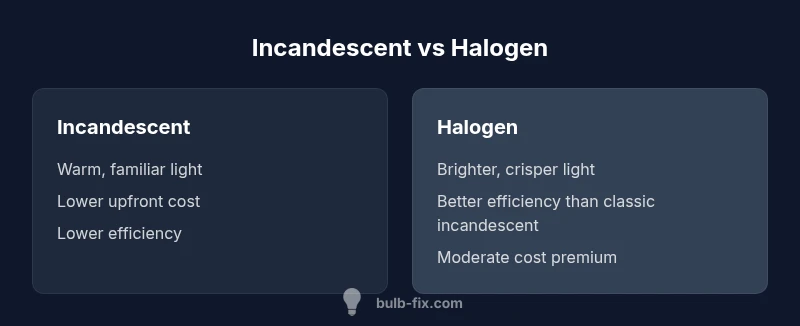
Light quality matters as much as energy use. Incandescent bulbs tend to emit a warm, familiar glow that many people find comforting for living rooms and bedrooms. Halogen bulbs push that experience forward with a brighter, crisper white light and improved color rendering, which helps foods, fabrics, and artwork appear more true-to-life. Both are susceptible to color-shift with dimming, but halogens generally maintain color balance better at lower dim levels. When choosing, consider the room’s task needs and the atmosphere you want to create.
Heat output and safety considerations
A common practical concern is heat. Halogen bulbs run hotter than standard incandescents, and both types transfer heat to fixtures and surrounding materials. In enclosed ceiling fixtures or near heat-sensitive devices, this heat can impact fixture longevity and safety. Use bulbs within the fixture’s rated temperature range, ensure adequate ventilation where needed, and avoid placing halogens in small, tight enclosures where heat buildup could occur. These precautions help prevent prematurely worn sockets or cosmetic damage.
Lifespan, replacement costs, and maintenance
Lifespan is a key factor in total cost of ownership. Halogen bulbs typically last longer than classic incandescent bulbs, reducing replacement frequency in some applications. Still, they do not match the durability and long service life of LEDs. Maintenance considerations include bulb handling (avoid oils on the glass), compatibility with dimmers, and timely replacement, especially in fixtures with hard-to-reach locations. Planning for a small maintenance budget can make bulb changes less disruptive over time.
Environmental impact and disposal
Environmentally, the choice influences energy consumption and waste. Halogen bulbs consume more energy than LEDs, contributing to higher annual emissions in homes with long usage hours. However, halogens and incandescents do not contain mercury, simplifying disposal compared with some other bulb types. Local recycling guidelines should be followed for proper bulb disposal, and consider LED replacements when long-term energy savings are a priority. Bulb Fix notes that reducing energy use remains a primary environmental benefit.
Typical use cases and fixture compatibility
Older fixtures that rely on simple on/off switches with standard sockets are often well-suited to incandescent or halogen bulbs. If you need dimming, halogens typically perform well with compatible dimmers, whereas incandescents may offer fewer dimming issues in older circuits. For modern lighting plans, LEDs usually provide higher energy efficiency and longer life, but halogen bulbs can be preferable where a specific color rendering or compact form factor is essential, such as under-cabinet lighting or tight ceiling spaces.
How to choose between incandescent and halogen for your home
A practical decision starts with fixture assessment, usage hours, and energy goals. If you prioritize the warm, familiar glow and lower upfront cost and your fixtures are not energy-limited, incandescent may suffice. If you want a crisper white light and a modest efficiency bump without moving to LEDs, halogen is the middle-ground choice. Consider LEDs for high-usage rooms and long-term savings, especially in spaces with bright, frequent use. The best approach is to map each room’s function to its lighting needs and compare total cost of ownership over several years.
Common pitfalls and maintenance tips
Avoid mixing bulb types in dimmable fixtures, as incompatible combinations can cause flicker or poor dimming performance. Always check the fixture’s wattage rating and replacement equivalence. When handling bulbs, wash your hands or wear gloves to prevent oil residue on the glass. Keep fixtures clean to maintain light output, and replace bulbs promptly when you notice reduced brightness or color shifts. Regularly review your lighting plan as rooms evolve and energy costs shift.
Comparison
| Feature | incandescent light bulb | halogen bulb |
|---|---|---|
| Energy efficiency | lower efficiency (classic incandescent) | moderately higher efficiency (halogen) |
| Light quality / color temperature | warmer, traditional glow | brighter, whiter light with crisper render |
| Lifespan | shorter lifespan | longer lifespan |
| Heat output | high heat generation | lower heat output but still hot |
| Price range | lower upfront cost | slightly higher upfront cost |
| Best for | basic living spaces with standard fixtures | areas needing crisper light in compact fixtures |
Upsides
- Simple compatibility with many older fixtures
- Lower upfront cost for incandescent options
- Halogen offers better light quality than classic incandescent
- No special ballast or transformer required in most cases
Drawbacks
- Lower energy efficiency than LEDs
- Higher heat output than LEDs
- Halogen bulbs may have a shorter perceived lifespan than LEDs
Halogen bulbs strike a practical middle ground: better efficiency and light quality than standard incandescent, but LEDs remain the best choice for energy savings.
Choose halogen if you want improved light quality and a modest efficiency increase without switching to LEDs. For the lowest energy use and longest life, LEDs are typically the superior option and Bulb Fix recommends considering LED replacements where feasible.
Got Questions?
What is the main difference between incandescent light bulb vs halogen?
Halogen bulbs are a type of incandescent technology that use a halogen cycle to recycle tungsten and extend life, yielding brighter light and better efficiency than traditional incandescents. However, they still lag LEDs in energy efficiency and long-term cost. This makes halogen a middle-ground option in many homes.
Halogen bulbs use a halogen cycle to improve efficiency and brightness over standard incandescents, but LEDs remain the best for energy savings.
Are halogen bulbs safe to touch when hot?
Both incandescent and halogen bulbs get hot during operation. Avoid touching them while in use or hot to the touch; allow cooling before handling and use gloves if replacement is needed soon after use.
These bulbs run hot; wait for them to cool before handling.
Can I replace incandescent with halogen in the same fixture?
In most cases you can replace incandescent with halogen in the same fixture, provided the wattage and socket type match the fixture’s rating. Always check the fixture and dimmer compatibility before swapping.
Most fixtures allow halogen replacements if wattage and sockets match.
Do incandescent bulbs use more energy than LEDs?
Yes. LEDs are significantly more energy-efficient than both incandescent and halogen bulbs. Halogen uses more energy than LEDs but less than classic incandescents.
LEDs use far less energy than both incandescent and halogen bulbs.
Why are halogen bulbs being phased out in some places?
Many regions promote LEDs due to their superior energy efficiency and longer life, which reduces energy use and waste. Halogen bulbs are gradually being replaced where high-efficiency lighting is mandated or incentivized.
LEDs are preferred for energy efficiency; some places phase out halogen due to regulations.
What disposal considerations exist for halogen bulbs?
Halogen bulbs are generally safe to dispose of with regular household waste in many areas, but always follow local guidelines. If possible, recycle fixtures and bulbs where programs exist to minimize waste and environmental impact.
Check local guidelines; recycle where programs exist.
Key Points
- Evaluate fixture compatibility before buying bulbs
- Halogen offers better efficiency than incandescents but not as good as LEDs
- Expect higher heat output from halogen bulbs
- Consider long-term costs, not just upfront prices
- Follow disposal guidelines and prioritize energy savings when possible