Incandescent vs Fluorescent: A Clear Bulb Comparison for Homeowners
Explore incandescent light bulb vs fluorescent—energy use, lifespan, color quality, cost, and safety considerations with Bulb Fix’s expert guidance to choose the right bulb for your home.


Incandescent light bulb vs fluorescent: In most homes, fluorescent bulbs win on energy savings and longer life, but incandescent bulbs excel in instant brightness, warm color, and simple dimming with traditional fixtures. For everyday use, fluorescent bulbs provide better long-term value, while incandescent bulbs remain a niche choice for mood lighting and quick, on-demand tasks. Bulb Fix explains how to weigh upfront cost, operating cost, and light quality to choose wisely.
incandescent light bulb vs fluorescent: Core Differences
In the modern home, choosing between incandescent light bulb vs fluorescent hinges on several trade-offs. The Bulb Fix team notes that the core distinction is energy use and light generation method. Incandescent bulbs rely on a heated filament to emit light, while fluorescent bulbs excite phosphors with electric discharge. This fundamental difference drives efficiency, life expectancy, and suitability for different rooms and tasks. The decision should reflect how you use spaces, how often you switch lights on, and what quality of light you prefer. For example, kitchens and work areas often benefit from higher efficiency and color consistency, while living rooms may favor warm, instant brightness. According to Bulb Fix, your choice will ripple through operating costs, replacement intervals, and waste considerations. The incandescent light bulb vs fluorescent debate thus starts with purpose, fixture compatibility, and your tolerance for complexity in maintenance. In the sections that follow, we compare energy, light quality, and practical implications to help homeowners make an informed choice.
Energy Efficiency and Light Output (incandescent light bulb vs fluorescent)
The core metric in this comparison is efficiency: how effectively a bulb converts electrical power into visible light. Incandescent bulbs emit a warm glow with relatively low efficacy, while fluorescent bulbs achieve higher lumen output per watt through gas discharge and phosphor conversion. In practical terms, fluorescent bulbs can deliver more usable light for less energy, especially in spaces used for long periods. The Bulb Fix team emphasizes evaluating real-world usage, not just label wattage. When planning a lighting plan, compare lumens per watt (where available) and expected annual energy consumption across typical daily use. Fluorescent lighting generally reduces operating costs, but it can demand more from switches, ballasts, and fixtures. The incandescent light bulb vs fluorescent comparison shows that efficiency scales with design and application, not just the bulb alone.
Lifespan and Reliability (incandescent light bulb vs fluorescent)
Lifespan is another critical axis. Incandescent bulbs burn out from filament wear, typically resulting in more frequent replacements. Fluorescent bulbs last longer per bulb, thanks to gas discharge operating cycles, which reduces replacement frequency in busy lighting scenes. Reliability also depends on fixtures and ballast design; improper ballast can reduce life for fluorescent options. From a maintenance perspective, this factor matters when lighting corridors, basements, or outdoor zones where replacements are logistically challenging. For many homeowners, longer life translates into fewer interruptions and a steadier lighting plan over time, even if upfront costs differ.
Color Quality and Mood (incandescent light bulb vs fluorescent)
Light quality is shaped by color temperature and color rendering. Incandescent bulbs generally deliver a warmer, more intimate glow that many people associate with living rooms and bedrooms. Fluorescent bulbs offer a broader range of temperatures, from cooler daylight-like light to neutral tones, but color rendering can vary by phosphor mix and lamp design. The perception of color accuracy in objects—paint, fabrics, and surfaces—depends on the lamp’s rendering properties. For designers and DIYers, this means considering room purpose, time of day use, and whether the light should mimic natural daylight or emphasize warmth. The incandescent light bulb vs fluorescent choice often hinges on which mood and color balance you want in particular spaces.
Cost of Ownership Across the Lifecycle (incandescent light bulb vs fluorescent)
Upfront price is only part of the story. Incandescent bulbs are cheap to buy, but their higher energy consumption and shorter life span raise operating costs over the bulb’s lifetime. Fluorescent bulbs are more expensive initially, yet their efficiency and longer life can yield lower total ownership costs over time. When evaluating cost, include ballast replacements for older fluorescent systems and energy-use patterns tied to daily routines. The Bulb Fix framework encourages homeowners to model a 5–10 year period to estimate total cost of ownership for each option, adjusting for fixture compatibility and breakage risk. This lens helps clarify the incandescent light bulb vs fluorescent decision beyond sticker price.
Environmental and Safety Considerations (incandescent light bulb vs fluorescent)
A key environmental distinction is mercury content in many fluorescent lamps, which requires careful disposal and recycling. Incandescent bulbs lack mercury, simplifying end-of-life handling. Both types generate waste streams depending on usage, and disposal practices should align with local recycling programs. Safety also covers fixture compatibility, proper installation, and avoiding overheating. If you’re managing a household with small children or pets, a bulb with stable color and minimal flicker can also affect comfort and safety. Proper waste handling and adherence to local guidelines are essential when balancing the incandescent light bulb vs fluorescent trade-off.
Performance in Real-World Settings (incandescent light bulb vs fluorescent)
Room-specific performance matters. In a bright kitchen or home office, fluorescent options can provide broad, even illumination with energy savings. For cozy living areas and bedrooms, incandescent bulbs may be preferred for a soft, warm ambiance and easy dimming with traditional switches. Cold environments can affect lamp performance differently: some fluorescent lamps struggle in very low temperatures, whereas incandescent lamps perform consistently at a range of temperatures. If you frequently switch lights on and off, consider the cycling sensitivity of fluorescent lamps and how ballast behavior influences startup.
Practical Guide to Choosing Between Them (incandescent light bulb vs fluorescent)
To decide between incandescent light bulb vs fluorescent, map each room’s function, typical usage, and desired mood. For high-traffic areas where you want maximum light with minimal energy, fluorescent options win on efficiency and life. For spaces that require warm ambiance, dimming flexibility, and immediate brightness, incandescent still has a place. In many homes, a hybrid approach works best: use fluorescent for general lighting and incandescent for accent or task lighting where warm tone and rapid on/off are valued. Bulb Fix recommends aligning bulb type with fixture capabilities, room use, and environmental considerations to strike the right balance.
Maintenance and Replacement Best Practices (incandescent light bulb vs fluorescent)
Regular maintenance includes checking flicker, color consistency, and fixture compatibility. Fluorescent bulbs benefit from scheduled ballast checks when applicable, and recycling programs should be used for mercury-containing lamps. Incandescent bulbs should be disposed of with standard household waste as allowed by local guidelines. Keeping a small stock of common wattages and sizes that match your fixtures can reduce downtime. In short, a thoughtful mix of incandescent light bulb vs fluorescent with a plan for replacement, recycling, and safe disposal helps keep home lighting efficient and dependable.
Comparison
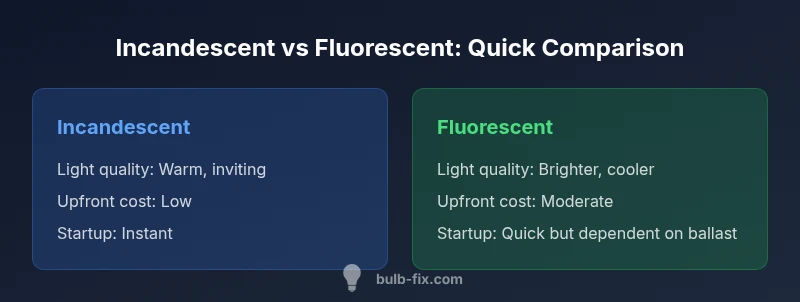
| Feature | incandescent light bulb | fluorescent bulb |
|---|---|---|
| Energy efficiency | low | high |
| Lifespan | short | long |
| Initial cost | low | moderate |
| Operating cost | high | low |
| Color rendering | excellent warm color | good to neutral with variable consistency |
| Mercury content | none | contains mercury |
| Dimming compatibility | excellent with traditional dimmers | limited; may require ballast or special dimming controls |
| Starting behavior | instant brightness | slightly slower to full brightness |
| Disposal & environmental impact | simple disposal | requires mercury handling and recycling |
Upsides
- Incandescent bulbs offer instant brightness and simple installation
- Fluorescent bulbs provide energy savings over time and longer life per bulb
- Fluorescent options come in a wide range of color temperatures for different tasks
- Dimmable options exist for both types with modern controls
Drawbacks
- Incandescent operating costs are higher due to energy use
- Fluorescent bulbs contain mercury and require proper disposal
- Fluorescent performance can vary with temperature and frequent cycling
- LED alternatives can outperform both in efficiency and lifespan
Fluorescent bulbs generally offer better energy efficiency and longer life; incandescent bulbs excel in warm, immediate brightness and easy dimming.
If you prioritize long-term energy savings and lower replacement frequency, fluorescent is typically the better choice. If you value warm color, instant full brightness, and simple dimming, incandescent remains a viable option in specific rooms and scenarios. Bulb Fix’s analysis supports choosing based on usage patterns, fixture compatibility, and disposal considerations.
Got Questions?
What is the primary difference between incandescent light bulbs and fluorescent bulbs?
The core difference is how light is produced: incandescent bulbs heat a filament, while fluorescent bulbs use gas discharge to excite phosphors. This affects energy efficiency, lifespan, and light quality. Bulbs also differ in disposal requirements and compatibility with fixtures.
Incandescent bulbs glow from a heated filament, while fluorescent bulbs rely on gas discharge to create light, which changes efficiency and maintenance needs.
Are fluorescent bulbs more energy-efficient than incandescent bulbs?
Yes, in most cases fluorescent bulbs use less energy per unit of light and typically last longer than incandescent bulbs, reducing operating costs over time. The exact savings depend on usage patterns and the specific lamp design.
Yes. They generally use less energy and last longer, though you’ll need to manage disposal for mercury-containing lamps.
Can I put fluorescent bulbs in any standard light fixture with a regular dimmer?
Fluorescent bulbs often require compatible dimmers or electronic ballasts. Using them with a standard incandescent dimmer can cause flicker or failure. If dimming is important, check the fixture specifications and select a fluorescent option designed for dimming.
Fluorescents usually need a dimmer compatible with ballast-based lighting.
Do incandescent bulbs contain mercury?
Incandescent bulbs do not contain mercury, making disposal simpler in many communities. Always follow local guidelines for any bulb disposal.
No mercury in incandescent bulbs, which makes disposal easier in most areas.
What about color temperature and color rendering—how do these compare?
Incandescent light typically emits a warm, intimate glow with high color warmth. Fluorescent bulbs offer a wider range of color temperatures, from warm to cool, but color rendering can vary by lamp and age. For color-critical tasks, check the CRI rating and how light affects room appearance.
Incandescent warmth vs. fluorescent variety; CRI varies with wear and lamp type.
Which should I choose for a home kitchen or workspace?
For kitchens and workspaces that need bright, efficient lighting, fluorescent is often the better choice. If you value a warm atmosphere and simple dimming, incandescent may be preferable. In many homes, a mix of both types supports different tasks effectively.
Kitchens benefit from fluorescent efficiency; use incandescent where warm mood matters.
Key Points
- Evaluate long-term energy costs versus upfront price
- Check fixture compatibility and dimmer support before buying
- Plan for proper disposal of fluorescent lamps due to mercury
- Match color warmth to room function and user preference
- Consider a mixed approach: fluorescent for general lighting, incandescent for mood lighting