LED Light Bulbs on Amazon: A 2026 Buying Guide
Learn how to choose energy-efficient LED light bulbs on Amazon, compare lumens and color temperature, assess reviews, and navigate returns with Bulb Fix.


LED light bulbs on Amazon offer convenience, broad selection, and easy price comparisons. To choose confidently, focus on lumens (brightness), watts (power), color temperature, and fixture compatibility. This Bulb Fix guide, based on Bulb Fix Analysis, 2026, helps you pick bulbs that save energy and last longer. Whether you're replacing a single lamp or outfitting an entire home, this data-informed approach keeps you from overpaying or buying the wrong color.
Why Shoppers Turn to LED Bulbs on Amazon
According to Bulb Fix, buying LED bulbs on Amazon offers unmatched selection, competitive pricing, and user reviews you can trust. The challenge is filtering to find bulbs that truly meet brightness, warmth, and compatibility needs rather than relying on eye-catching product titles. This section explains how to approach 'led light bulb amazon' listings with a structured checklist: confirm lumen output (not watts alone), verify color temperature in kelvin, compare CRI for color accuracy, and review seller reliability and warranty terms. We also discuss return policies, which matter if a bulb arrives damaged or underperforms. Finally, we cover how to use Amazon's filtering and comparison tools to narrow down options quickly. A careful approach helps you avoid counterfeit products and fakes, while still enjoying the convenience of shopping from home.
Leading with the right specs reduces wasted time and ensures you get the light you expect in every room.
Core specifications to compare before you buy
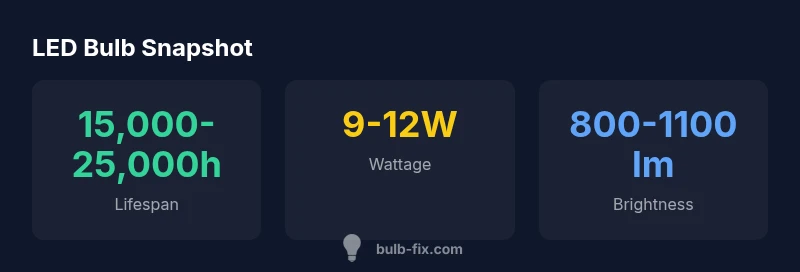
When shopping for LED light bulbs on Amazon, you want to balance brightness, efficiency, and color. Start with lumens to gauge brightness rather than relying on watts alone. A typical 800-1100 lumen bulb can replace a 60-75W incandescent in most rooms. Next, consider wattage as the energy indicator, which should be low for higher brightness with LEDs. Color temperature, measured in kelvin (K), defines warmth or coolness of light. For cozy living spaces, aim for 2700K-3000K; for task areas or kitchens, 3500K-4100K can be more practical. CRI (color rendering index) indicates how true colors appear; 80+ is generally acceptable for most homes. Finally, confirm dimming compatibility if you plan to use a dimmer, and check warranty terms and seller reliability. These core specs make online purchasing more predictable and safer.
When you see an Amazon listing for a bulb, cross-check these figures quickly in the bullet points and product description to prevent misinterpretation of a bulb’s brightness or color.
Reading Amazon product pages like a pro
Amazon listings can be dense, but you can extract the important data with a methodical approach. Start with the product title and the key bullet points to confirm lumens, wattage, color temperature, and beam angle. Read the product description for explicit claims about dimming, warranty, and usage notes (e.g., indoor only, enclosed fixtures). Look for verified purchase reviews and photos; user-provided photos often reveal packaging, size, and real-world brightness. Pay attention to the seller’s rating, return policy, and whether the listing is fulfilled by Amazon or a third-party seller. If a listing makes bold energy-saving claims, seek verification in the specs section. Finally, compare similar bulbs side-by-side using the Amazon compare feature or by opening multiple listings in tabs for quick scanning and decision-making.
A disciplined review process helps you avoid common pit falls such as mismatched base types or deceptive brightness claims.
Dimmer compatibility and smart LED options on Amazon
Smart bulbs and dimmable LEDs add convenience, but compatibility is essential. Not all LEDs dim smoothly with every lamp switch; some require fully electronic dimmers, while others work best with incandescent-compatible dimmers. If you intend to install smart bulbs, verify that the hub or app is compatible with your home network protocol (Wi-Fi, Zigbee, or Bluetooth) and that the bulb supports the required features (scene control, schedules, voice assistant integration). Read the Q&A and reviews for notes from other buyers about dimming performance in real-world conditions. For Amazon orders, check the SKU’s compatibility notes and the return policy in case you encounter flicker or connectivity issues that suppliers may not prominently advertise.
In many cases, purchasing a standard dimmable LED from a reputable brand with a clear warranty reduces the risk of post-purchase regret.
Fixture fit: A19, BR30, PAR38, and more
Fixture shapes map to bulb bases and radiance. A19 bulbs are the standard round bulbs best for most table lamps and ceiling fixtures; BR30 and PAR38 offer wider beams for recessed cans or track lighting; GU10 bulbs are common in spotlights, especially in kitchens. Outdoor fixtures may require weather-rated bulbs with appropriate IP ratings and UV resistance. Before buying, verify base type (E26/E27, GU10, BI/BA, etc.), approximate length, and diameter to avoid crowding in enclosed fixtures. In addition, consider whether the bulb’s color rendering will affect clothing, artwork, or kitchen countertops. If your fixtures use dimmers or smart hubs, ensure compatibility with the base and connecting technologies. Finally, measure the fixture’s space to ensure the bulb’s length and trim won’t interfere with hardware or glass globes.
Good fit reduces heat buildup, extends life, and preserves the look of your rooms.
Energy savings and long-term cost considerations
LED bulbs deliver energy savings over their incandescent or halogen predecessors, but the size of savings depends on usage and price. A typical LED emits the same brightness as an incandescent bulb while consuming significantly less energy. When shopping on Amazon, consider the per-bulb cost and the expected lifespan to estimate payback. For homeowners replacing several bulbs, total savings accelerate as you convert multiple fixtures. While LED units may cost more upfront, their long-term energy savings and reduced frequency of replacements often yield lower lifetime costs. Also, many bulbs come with warranties that cover failures beyond a standard year, offering additional assurance. Bulb Fix’s approach emphasizes calculating payback using your electricity rate and hours of use per day to determine whether the switch to LEDs makes financial sense for your home.
When selecting bulbs, prioritize long life and energy efficiency, then factor in color and dimming to maximize comfort and savings.
Common pitfalls when buying LED bulbs online
Online shopping makes it easy to fall into traps such as misleading lumen claims, inconsistent color temperatures, and vague warranties. Look for listing clarity: exact lumen output, kelvin range, CRI value, and base type. Beware of listings that rely on generic or unknown brand names and check seller ratings and return policies. Be cautious of ultra-low price points; sometimes these correlate with shorter lifespans or subpar color rendering. Reading verified buyer photos can help confirm bulb size and fit, especially for specialty fixtures. Finally, ensure the listing has a clear warranty and a straightforward return process if the bulb fails or arrives damaged. With careful vetting, you can avoid these common pitfalls and still enjoy Amazon’s convenient shopping experience.
Outdoor lighting and specialty LED bulbs on Amazon
Outdoor LED bulbs require weather resistance and appropriate IP ratings (IP44, IP65, etc.), especially for porch lights, pathway lamps, and exterior fixtures. Choose bulbs rated for outdoor use, with a suitable color temperature for nighttime visibility and ambiance (2700K-4000K). For specialty lighting like grow lights or aquarium lighting, verify spectrum requirements and operating environment. When shopping on Amazon, filter by outdoor-rated, wattage, and base type, and read reviews from other outdoor users to gauge durability in your climate. Consider seasonal needs and weather patterns to pick bulbs with robust heat dissipation and long life under exposure to sunlight or cold temperatures.
Outdoor LEDs can dramatically improve curb appeal while cutting energy use, but they demand attention to IP ratings and environmental exposure.
Maintenance, warranty, returns, and customer support when buying on Amazon
Keep a record of your order numbers and the seller’s contact details. Review the warranty terms for bulbs with longer lifespans or higher brightness, and understand the process for returns or exchanges if the product arrives damaged or fails early. Amazon’s return window applies, but some sellers may offer additional guarantees. Check whether the bulb ships with LEDs that require proper heat sinking and cooling to achieve stated lifespans. If you encounter inconsistent brightness or flicker, test multiple units and document the issue with pictures for a smooth warranty claim. In short, a well-documented post-purchase process reduces frustration and helps you enjoy the long-term benefits of LED lighting purchased on Amazon.
Common LED bulb types and their typical specifications
| Model Type | Lumens | Wattage | Color Temp (K) | CRI |
|---|---|---|---|---|
| Standard LED A19 | 800-1100 | 9-12 | 2700-3000 | 80-85 |
| LED BR30 | 650-900 | 10-13 | 2700-3000 | 80-85 |
| LED PAR38 | 900-1500 | 11-14 | 3000-4000 | 80-90 |
Got Questions?
What is the difference between lumens and watts?
Lumens measure brightness, while watts measure energy consumed. LED bulbs produce the same brightness with far fewer watts than incandescent bulbs, making watts a poor proxy for brightness. Check lumens to compare brightness across LED options.
Lumens equal brightness, watts equal energy used. For LEDs, look at lumens rather than watts to compare how bright a bulb will be.
Are LED bulbs on Amazon always energy-efficient?
Most LED bulbs are energy-efficient, but efficiency varies by model. Look for lumen-per-watt ratings and the ENERGY STAR badge when available. Reading product specs helps confirm efficiency claims.
LEDs are generally energy-efficient, but check lumen-per-watt and any ENERGY STAR badge to confirm.
How can I verify bulb compatibility with a dimmer?
Not all LEDs play well with all dimmers. Check the product listing for dimmer compatibility and consider trying tested brands if you have existing dimmers. If issues arise, test multiple units and consider a compatible dimmer switch.
Check the listing for dimmer compatibility and test with your dimmer setup.
Can I return LED bulbs if they don’t work?
Yes, most sellers on Amazon accept returns within a defined window, especially for damaged items. Review the seller’s return policy and retain packaging to simplify the process if you need to exchange or refund.
Yes, most sellers allow returns within a window; check the policy and keep packaging.
Do LED bulbs have color temperature options for mood?
Yes. Color temperature ranges from warm 2700K to cool 6500K. Choose warmer temps for living spaces and cooler temps for work areas to influence mood and focus.
Yes, pick warmth or coolness to set the mood.
Do all LED bulbs qualify for ENERGY STAR when bought on Amazon?
Many LED bulbs sold on Amazon carry ENERGY STAR certification, but not every listing does. Look for the ENERGY STAR badge in the product title or description and verify on the official ENERGY STAR page.
Look for ENERGY STAR badges and verify on ENERGY STAR’s site.
“Selecting the right LED bulb means balancing brightness, warmth, and compatibility; Amazon listings are most reliable when you verify lumen output, color temperature, and warranty.”
Key Points
- Prioritize lumens over watts when judging brightness
- Check color temperature to set room mood
- Read reviews and verify warranty before buying
- Confirm dimmer compatibility for smooth operation
- Choose bulbs with appropriate base types for fixtures