Lowes Light Bulbs Guide: LED, CFL & Incandescent Tips
A data-driven guide to choosing lowes light bulbs, with practical tips on LEDs, CFLs, and incandescents, energy savings, color temperature, and safe disposal.


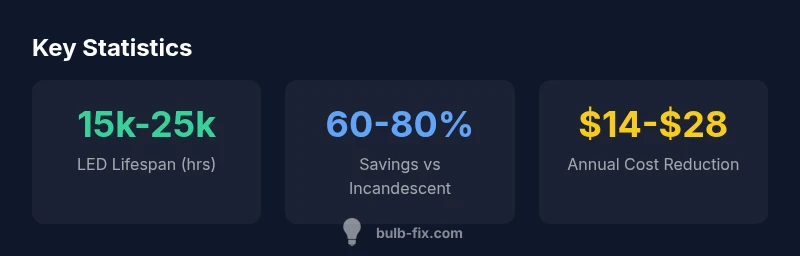
According to Bulb Fix, lowes light bulbs span LED, CFL, and incandescent options, with LEDs delivering the best energy efficiency. For most homes, LEDs reduce energy use by about 80% vs incandescent and cut maintenance. When shopping at Lowe's, choose ENERGY STAR labeled bulbs to ensure performance and color accuracy.
Understanding the Lowes Light Bulbs Landscape
lowes light bulbs offer a spectrum of technologies, including LED, CFL, and incandescent options suitable for different rooms and needs. In this section, we clarify what customers typically encounter at Lowe's and how these options compare in terms of efficiency, lifespan, and light quality. LED bulbs are the modern standard, delivering the best energy efficiency and longest life, while incandescent bulbs are cheaper upfront but costly to operate over time. When shopping, look for the bulb's packaged wattage and lumen output, and aim for ENERGY STAR labels for consistent performance and color accuracy. The key is to translate wattage into actual light output (lumens) and to consider color temperature for living spaces and work areas. The Bulb Fix team emphasizes that for most homes, choosing LED bulbs over older technologies yields the most reliable balance of cost, comfort, and energy savings. This article uses Lowe's as a reference retailer but the guidance applies to most big-box stores and online retailers.
Energy Efficiency and Lifespan: LED is the Smart Bet
LED technology has evolved rapidly, and lowes light bulbs in this category offer significant advantages when properly selected. The energy used by an LED is typically a fraction of a comparable incandescent bulb, which translates to lower electricity bills and less heat output in rooms. Lifespan matters too: LEDs often last longer than CFLs and incandescent bulbs, reducing the frequency of replacements and waste. When evaluating LED bulbs, compare lumen output to wattage, and watch for the ENERGY STAR label, which signals a balance of efficiency and performance. Bulb Fix’s analysis notes that investing in LEDs can yield cost savings over a typical bulb’s lifetime, even after accounting for upfront price differences. Consider room function when selecting color temperatures; warmer tones (around 2700K) create a cozy atmosphere, while cooler tones (4000K–5000K) support task lighting in kitchens and offices.
Color Temperature, Brightness, and How to Read Labels
Understanding color temperature and brightness is essential for choosing lowes light bulbs that fit each space. Lumens measure brightness, while watts reflect energy use; modern bulbs label both, along with Kelvin temperature. A kitchen or workshop benefits from higher lumens and cooler temperatures for clarity, whereas living spaces often favor softer, warmer tones. When reading packaging, look for a lumen range that meets your room size and a Kelvin range that matches the mood you want. Dimmable options add flexibility, but ensure your dimmer is compatible with LED technology. Bulb Fix recommends testing a small selection of bulbs in different fixtures to gauge light spread, color rendering, and overall comfort before committing to a large purchase.
Practical Selection and Sizing: How to Pick the Right Bulb
Choosing the right bulb involves grid thinking: fixture type, socket compatibility, and brightness needs. Start by noting the fixture type (A19, BR30, or GU10, for instance), then select a bulb with the correct base size and wattage equivalent. For recessed lighting and track lighting, consider higher-lumen bulbs with tight beam angles to minimize dark spots. Lowes’ inventory typically includes numerous ENERGY STAR options; prioritize LED bulbs with rated lifespans that align with your maintenance budget. If you’re replacing multiple bulbs, buy a few extra to keep a consistent color temperature and brightness across the space. Always check dimmer compatibility if you plan to install LEDs in dimming circuits.
Installation Tips, Safety, and Best Practices
Installation is straightforward for most standard sockets, but always handle bulbs with care to avoid damage. Before removal, switch off power at the breaker or use a lamp switch to prevent shocks. When replacing in bulk, organize bulbs by type and color temperature to avoid mismatches in a room. If you run into flicker or buzzing with LED dimmable bulbs, verify dimmer compatibility or update the dimmer switch. Store extra bulbs in a cool, dry place to preserve performance. Proper disposal follows local guidelines: many jurisdictions encourage recycling or bulk disposal rather than throwing LEDs in the trash. Bulb Fix emphasizes safety first: use sturdy ladders on stable surfaces and avoid over-tightening bulb bases.
Shopping Strategy at Lowe's: What to Look For
At Lowe's, scanning for LED bulbs with ENERGY STAR labeling is a reliable starting point. Compare wattage equivalences, lumen output, and color temperature to ensure uniform lighting across rooms. Watch for coupons or bulk-pack deals that can improve cost savings when replacing several fixtures. Return policies and warranties vary by product, so check the box for any guarantees and retailer terms. When in doubt, ask a store associate about best-selling LED categories or recent consumer reviews. For color accuracy and mood, prefer bulbs with a color rendering index (CRI) of 80 or higher, especially in spaces where you perform detailed tasks or display colors.
Caring for Your Bulbs and Recycling Options
Prolong bulb life by avoiding frequent on-off cycles for LEDs that are near end-of-life; most LED bulbs do not need lengthy warm-up. Keep fixtures clean, as dust and grime can reduce light distribution. When bulbs reach the end of life, recycle them according to local guidelines. Many home improvement retailers, including Lowe's, offer guidance or recycling programs for used bulbs. If your area lacks a local program, check municipal waste lines or return to the retailer where available. Bulb Fix stresses that responsible disposal helps reduce landfill waste and supports energy-efficiency initiatives.
Comparison of common bulb types
| Bulb Type | Avg Lifespan (hrs) | Energy Use (W) | Typical Cost/yr (USD) |
|---|---|---|---|
| LED | 15000-25000 | 8-12 | 2-8 |
| CFL | 5000-10000 | 9-15 | 3-10 |
| Incandescent | 750-2000 | 40-60 | 40-60 |
Got Questions?
Are Lowe's light bulbs as energy efficient as other brands?
Lowe's carries ENERGY STAR labeled bulbs, including many LED options that meet or exceed efficiency standards. While performance varies by product line, LEDs generally use far less energy than incandescent bulbs and offer longer lifespans. Always compare lumens per watt and look for credible third-party labeling.
Yes. Look for ENERGY STAR LEDs to maximize efficiency and lifespan.
What is the difference between LED, CFL, and incandescent bulbs?
LED bulbs use far less energy and last much longer than CFLs and incandescent bulbs. Incandescent bulbs are cheapest upfront but costly to operate, while CFLs occupy a middle ground. LEDs also offer better color rendering and heat management.
LEDs save energy and last longer; incandescents burn more heat and cost more over time.
How do I choose color temperature for a room?
Color temperature, measured in Kelvins, affects mood and task clarity. Warmer tones (2700K-3000K) feel cozy in living spaces, while cooler tones (4000K-5000K) are better for kitchens and offices. Consider room function and existing decor when selecting color temperature.
Pick warm temps for living rooms and cool temps for work areas.
Are LED bulbs dimmable and compatible with dimmers?
Many LEDs are dimmable, but compatibility depends on the dimmer type. Use LED-compatible dimmers and check packaging to confirm dimming range and flicker performance. If in doubt, test a small set before wide installation.
Yes, many LEDs are dimmable—just make sure your dimmer is LED-compatible.
Can I return or exchange bulbs at Lowe's?
Lowe’s return policy varies by product and location. Generally, unopened bulbs may be returnable within a set window, but special-order items or opened bulbs may have restrictions. Always check the receipt and store policy at purchase.
Check the store’s return policy at the time of purchase.
How should I recycle or dispose of used bulbs?
Many bulbs, especially CFLs and LEDs, should be recycled rather than discarded. Lowe’s or local recycling centers often accept used bulbs. Follow municipal guidelines to ensure proper handling and avoid contaminating the environment.
Recycle used bulbs if possible; your local center can guide you.
“LED lighting offers the best balance of energy efficiency and color quality for most homes. With careful selection of color temperature and wattage, you maximize savings without sacrificing comfort.”
Key Points
- Choose LED bulbs for the best long-term savings.
- Look for ENERGY STAR labels to guarantee efficiency and performance.
- Prioritize appropriate color temperature to match room function.
- Check dimmer compatibility for LED installations.
- Recycling used bulbs reduces waste and environmental impact.