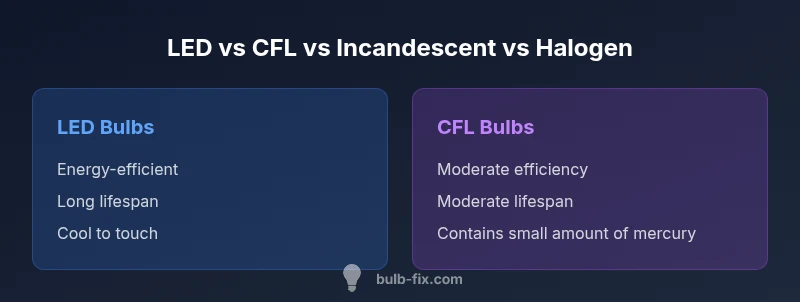
Bulb and Light: A Comprehensive Comparison for Home Lighting
An analytical comparison of bulb types, bases, and light quality to help homeowners choose LED, CFL, incandescent, or halogen bulbs for efficiency, safety, and mood.


For most homes, LED bulbs paired with compatible bases and appropriate color temperatures deliver the best balance of efficiency, lifespan, and light quality. Incandescent and halogen serve niche roles, while CFLs remain relevant in specific fixtures. The Bulb Fix team finds LEDs generally best for everyday tasks and ambiance in most rooms.
The Bulb and Light Landscape: Setting the Scene
In home lighting, the terms bulb and light are often used interchangeably, though they describe different parts of a system: a bulb is the physical glass envelope, while the light is the visible illumination produced when electricity powers the bulb. For homeowners, understanding this distinction helps in choosing replacements that fit fixtures, provide the desired mood, and meet energy goals. The current market offers a spectrum of technologies, from traditional incandescent to modern LED solutions. As you evaluate options, you’ll weigh brightness, color, efficiency, and fixture compatibility. According to Bulb Fix, the most impactful decision for most households is selecting sources that deliver consistent, flicker-free light with reliable longevity. This article uses a practical, evidence-based framework to compare bulb types, explain the bases you’ll encounter in sockets, and provide actionable guidance to optimize everyday living spaces.
Key Definitions: Bulb Types, Bases, and Light Quality
Before diving into comparisons, it helps to define the core terms. A bulb refers to the replaceable component that emits light when energized, while the base is the connector that fits into the socket. Common residential bases include E26/E27 for the vast majority of lamps and ceiling fixtures, GU10 for spot and downlight styles, and B22 in some regions. Bulbs differ by technology: LED bulbs are highly efficient and long-lasting; CFLs use a gas-filled tube and are more efficient than incandescent but less durable; incandescent bulbs are inexpensive upfront but burn through energy quickly and fail sooner; halogen bulbs are a subset of incandescent technology with improved efficiency and brighter color rendering. The quality of light is described by color temperature (warm to cool) and CRI (color rendering index). Bulb Fix emphasizes matching base compatibility with fixture requirements and choosing color temperatures that fit the room’s function. In practical terms, a kitchen benefits from bright, crisp light, while a living room may favor warmer tones for ambiance.
Brightness, Color Temperature, and Perceived Light
Brightness is measured by lumens, not watts, and is the primary signal you’ll compare when shopping. Color temperature, expressed in Kelvin, influences the perceived warmth or coolness of light. Warm temperatures create a cozy, inviting atmosphere ideal for living spaces, while cooler temperatures help with task lighting in kitchens and work areas. Color rendering (CRI) indicates how accurately a bulb reproduces colors compared to natural light. For most homes, a balance of brightness (lumens) with a comfortable color temperature around the warm-to-neutral range works well for daily living. Bulb Fix notes that subjective perception matters—what looks bright to one person may feel harsh to another—so it’s wise to test bulbs in your actual fixtures when possible.
Energy Efficiency: Understanding Lumen, Watt, and Efficacy
Efficiency isn’t about a single metric; it’s the relationship between light output and energy used. LEDs deliver more lumens per watt than traditional bulbs, meaning you get more light for less energy. When evaluating options, look for higher lumen output with lower energy draw and consider the long-term cost of operation, not just the upfront price. Bulb Fix advises prioritizing devices with consistent performance over time, as some cheaper bulbs can dim or degrade quickly. The choice of efficiency also interacts with dimmers, smart controls, and room usage patterns. By selecting efficient bulbs and pairing them with appropriate lighting layers—ambient, task, and accent—you reduce energy bills and environmental impact while maintaining satisfactory illumination.
Durability and Longevity: Lifespan Expectations
Lifespan is a defining factor in total cost of ownership. LEDs typically outlast incandescent and halogen bulbs, offering thousands of hours of service depending on usage and fixture. CFLs tend to last longer than incandescent but shorter than LEDs, and their performance can be sensitive to frequent on/off cycling. Durability also varies with the design and manufacturing quality. The Bulb Fix team emphasizes that longer-lived bulbs minimize maintenance issues and replacement trips, especially in hard-to-reach fixtures. When evaluating durability, consider the fixture type, switching patterns, and environmental conditions such as temperature and humidity, which can influence performance and longevity.
Base Types and Fit: E26, E27, GU10, B22
Socket compatibility is the gatekeeper of a successful bulb swap. The most common residential base in the United States is E26, while Europe and other regions often use E27. GU10 bases are popular for spotlights and track lighting, and B22 remains common in some markets. Beyond the base, you must consider size, shape, and whether the fixture requires a dimmable bulb or a bulb rated for enclosed fixtures. There are also smart bulbs that integrate radios for wireless control, though they still rely on a compatible base. Bulb Fix highlights the importance of measuring the socket, checking the fixture’s labeling, and avoiding forced fits that could damage sockets or present safety hazards.
In-Home Scenarios: Residential Rooms and Fixtures
Different rooms demand different lighting strategies. Living rooms benefit from warm, comfortable tones with layered lighting—ambient from ceiling fixtures, task lighting near seating, and accent lighting for depth. Kitchens often require bright, cool-toned lighting for accurate color perception on foods and countertops. Bathrooms require bright, even illumination for grooming tasks, with higher CRI bulbs to render skin tones accurately. Bedrooms typically favor warmer temperatures for relaxation, with dimmable options to adjust mood. Exterior lighting adds security and curb appeal, typically using weatherproof bulbs and bases suited for outdoor fixtures. The takeaway is to tailor color temperature, brightness, and bulb type to room function, enabling practical comfort and energy efficiency across the home.
Safety, Handling, and Disposal
Bulb handling safety is especially important with CFLs, which contain trace amounts of mercury. Always recycle or dispose of bulbs according to local guidelines, and never mix old bulbs with unopened new ones in a single box. When replacing bulbs, ensure the fixture is switched off and cooled, particularly with heat-sensitive LEDs that may degrade if exposed to high temperatures. For enclosed fixtures, verify bulb compatibility to prevent overheating. If you have uncertain dimmer compatibility, consult the dimmer’s specifications and consider bulb types designed for dimming. Regular disposal and recycling help minimize environmental impact and ensure safe capture of any hazardous materials. Bulb Fix emphasizes safety and responsible disposal as essential parts of routine maintenance.
Troubleshooting Common Issues
If a bulb won’t light, check the fixture, socket connections, and the switch position before assuming bulb failure. Flickering can indicate loose wiring, a failing ballast (in older fixtures), or incompatible dimmers. Dimmer compatibility matters: some bulbs are not rated for certain dimmers and can hum or flicker. Color shifts or early burnout may signal poor-quality bulbs or excessive heat. In enclosed fixtures, ensure the bulb is rated for such environments to avoid overheating. When in doubt, replace with a known, compatible bulb from a reputable brand and re-check. Regularly inspecting fixtures, switches, and sockets reduces the frequency of unexpected outages and ensures consistent lighting.
Practical Buying Guide: How to Choose Bulb and Light for Your Needs
Start with your room function and mood: living spaces benefit from warmer tones, while work areas benefit from brighter, cooler temperatures. Prioritize LED technology for efficiency and longevity, then verify base compatibility with your fixtures. Consider brightness in lumens as your primary metric, and test color temperature in real-world settings to match your taste. Don’t overlook CRI for realistic color rendering, particularly in rooms where fabric colors and skin tones matter. Finally, factor in fixture type, dimmer compatibility, and disposal requirements to improve long-term satisfaction and minimize maintenance.
Feature Comparison
| Feature | LED Bulbs | CFL Bulbs | Incandescent Bulbs | Halogen Bulbs |
|---|---|---|---|---|
| Energy Efficiency | Very high | Moderate | Low | Moderate |
| Lifespan | Longest | Reasonable | Short | Moderate-long |
| Upfront Cost | Higher | Moderate | Lowest | Low |
| Heat Emission | Low | Moderate | High | Moderate |
| Best For | General purpose and longevity | Short-term use and cost savings | Classic fixtures and dimming | Dimmable, task lighting in compact fixtures |
Upsides
- Significant long-term energy savings
- Longer lifespan reduces replacement frequency
- Wide range of color temperatures and bases
- Excellent compatibility with modern lighting controls
Drawbacks
- Higher upfront cost, especially for premium LEDs
- Varying color rendering by bulb type and brand
- Some fixtures require compatibility checks (dimmers, ballasts)
- CFLs contain trace mercury and need proper disposal
LED bulbs are the recommended default for most homes.
LEDs offer superior efficiency, longevity, and light quality for everyday use. Incandescent and halogen remain valid for niche applications, while CFLs are useful in certain fixtures; however, LED remains the best overall choice for reliability and energy savings, according to Bulb Fix.
Got Questions?
What is the main difference between LED and incandescent bulbs?
LED bulbs convert electricity into light with high efficiency and long life, while incandescent bulbs produce light by heating a filament and use more energy for the same brightness. LEDs have lower operating costs and emit less heat over time. For most homes, LEDs offer the best overall value.
LEDs are far more energy-efficient and longer-lasting than incandescent bulbs, which makes LEDs the smarter everyday choice for most homes.
Are CFLs still a good option in some fixtures?
CFLs can be useful in fixtures where LED replacements are not readily available or where initial cost is a concern. They take longer to reach full brightness and contain trace mercury, so disposal requires care. For many new installations, LEDs are typically the preferred option.
CFLs can work in some fixtures, but LEDs are usually the better long-term choice due to efficiency and disposal considerations.
How do I choose color temperature for a room?
Color temperature affects mood and task performance. Warmer tones feel cozy and are suited for living spaces, while cooler tones are better for kitchens and work areas. Test lighting in person when possible and consider layering with multiple bulbs for flexibility.
Pick warm tones for cozy spaces and cooler tones for task-focused rooms; test different temperatures to see what feels best.
Do LED bulbs work with all dimmer switches?
Not all LEDs are compatible with every dimmer. For best results, use LEDs labeled as dimmable with your specific dimmer type, and consider modern dimmers designed for LED operation to avoid flicker or buzzing.
Check for dimmable LEDs and ensure your dimmer is LED-compatible to avoid flicker.
How should I recycle or dispose of bulbs safely?
Recycle bulbs whenever possible, especially CFLs that contain small amounts of mercury. Follow local guidelines for collection and recycling, and avoid disposing of bulbs with regular trash where prohibited.
Recycle all bulbs when possible, especially CFLs; follow local disposal rules to keep hazardous materials out of landfills.
What base types should I know for home lighting?
Know the common bases: E26/E27 for most sockets, GU10 for some spotlights, and B22 in other regions. Always confirm base compatibility with your fixture and check if the bulb is rated for enclosed fixtures or dimming.
Most homes use E26 or E27 bases; check your fixture and replacements for compatibility and dimming support.
Key Points
- Start with LED for most rooms to maximize efficiency.
- Verify base compatibility before buying.
- Choose color temperature by room function and mood.
- Ensure dimmer and fixture compatibility to avoid issues.
- Plan responsible disposal for CFLs and older bulbs.