How to Check Bulb Voltage: A Practical Guide
Learn to check bulb voltage safely with a multimeter. This comprehensive guide covers prerequisites, step-by-step methods for different bulb types, readings interpretation, and practical tips to verify results.


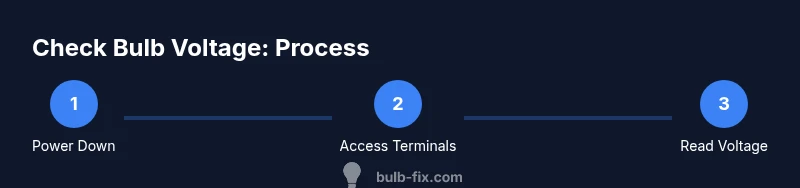
To check bulb voltage, safely disconnect power, then measure across the bulb’s contacts with a properly set multimeter. Use the correct setting (AC for mains bulbs, DC for low-voltage fixtures), compare the reading to the bulb’s rated voltage, and reassemble only after readings are confirmed. Always follow safety precautions when dealing with live circuits.
Why checking bulb voltage matters
If you're curious about how to check bulb voltage, this skill is a practical safety habit for any homeowner. According to Bulb Fix, confirming that the operating voltage matches a bulb's rating helps prevent flicker, premature failure, and wasted energy. A correct voltage reading guides decisions when upgrading to LED, choosing compatible dimmers, or diagnosing quirky lamps. Whether you’re testing a standard 120V Edison bulb, a 240V fixture in another country, or a low-voltage LED fed by a transformer, a reliable reading matters. Knowing the voltage also helps you avoid overloading drivers and maintaining longevity. In short, learning how to check bulb voltage equips you to maintain safe, efficient lighting and reduces unexpected outages. Built on practice and caution, this guide emphasizes accuracy, repeatability, and clear interpretation of readings so you can troubleshoot with confidence. Bulb Fix's approach prioritizes safety and clarity for every homeowner tackling voltage checks.
Safety first: prerequisites and cautions
Before you touch any lamp or fixture, power down the circuit and lock it out whenever possible. This is especially important for ceiling fixtures or outlets controlled by switches. Wear insulated gloves if handling exposed conductors and keep liquids away from the testing area. Have the right tools ready: a digital multimeter, test leads, and, if needed, a non-contact tester to confirm de-energization. Do not probe live circuits or test a socket while the bulb remains connected. Even small mistakes can cause electric shock or short circuits. If you feel unsure, pause and consult a qualified electrician. Safety is the foundation of a reliable voltage check; unsafe practice yields unreliable readings and serious risk. According to Bulb Fix, establishing safe conditions is the first and most critical step.
Tools and methods for measuring voltage
There are several ways to verify bulb voltage, but the most common method uses a handheld digital multimeter (DMM). For mains bulbs, set the meter to AC voltage; for low- voltage systems, use DC voltage when appropriate. A non-contact voltage tester can help you confirm the absence of hazardous energy before you begin. Essential steps include selecting the correct voltage range on the meter and preparing the probes. When measuring, place the probes across the bulb's terminals or contacts with the power off, then record the reading. If the fixture uses a transformer or driver, measure on the transformer’s output terminals that feed the bulb. Keep notes of the readings and ensure the device stability is steady before drawing conclusions. The goal is accuracy across repeated measurements rather than a single quick snapshot.
Step-by-step guide to check voltage with a multimeter
A practical, repeatable approach helps ensure accuracy. Start by powering down and removing the bulb from the socket to access the terminals. Next, configure your multimeter to the correct voltage setting (AC for mains, DC for low-voltage). Connect the red probe to the live terminal and the black probe to the neutral or return terminal. Read the voltage value on the display, then cross-check with the bulb’s rated voltage. If the reading aligns with the rating, the bulb is compatible with the supply; if not, identify whether the issue lies with the fixture, wiring, or transformer. Finally, reinsert the bulb and restore power, ensuring the fixture is secure. Each measurement should be repeated to confirm consistency. This systematic process minimizes errors and enhances safety.
Checking voltage for different bulb types
Bulbs come in a variety of formats and voltage ranges. For standard household bulbs, expect readings close to the labeled mains voltage (for example, around 120V in many places, or 230–240V in others). LED replacements and CFLs may have electronic drivers that show minor fluctuations; document the nominal rating and compare the actual readings to that rating. Low-voltage bulbs (12V or 24V) run through a transformer or driver, so you’ll measure at the transformer output rather than the bulb socket. If you encounter unusual readings or a bulb that flickers persistently, verify the entire circuit, including the switch, outlet, and wire connections. Understanding the voltage requirements of each bulb type helps you select compatible replacements and prevents compatibility errors during installation.
Interpreting readings and common issues
When you read a voltage close to the bulb’s rated value, the fixture is likely operating correctly. A significantly higher or lower reading usually signals a problem, such as a transformer fault, poor connections, or an undersized circuit. Inconsistent readings can indicate loose terminals or a flaky dimmer switch. If you’re testing a connected bulb and cannot safely remove it, ensure the fixture is designed for safe measurement and consider using a dedicated testing socket. Always compare readings across multiple tests and note environmental factors like load on the circuit or intermittent power issues. Bulb Fix emphasizes documenting readings to track changes over time, which is especially useful during renovations or when replacing fixtures.
Verifying accuracy and re-measurement tips
To verify accuracy, re-measure after allowing the fixture to cool if the bulb has been in use. Use fresh test leads and check the meter’s battery level, since a weak battery can skew results. Confirm the meter’s calibration by testing a known reference voltage if available. If measurements vary more than a small percentage across trials, inspect connections and ensure the socket is clean and undamaged. For replaceable bulbs, compare the reading with the bulb’s printed rating; if it differs markedly, consider testing with a different bulb or fixture. A methodical approach reduces guesswork and helps you establish a reliable baseline for future checks.
When to replace bulbs or seek help
If readings consistently deviate from the rated voltage or you observe flicker, buzzing, or heat buildup around the fixture, replace the bulb and inspect the fixture wiring. Persistent irregular readings may indicate a faulty transformer, dimmer incompatibility, or poor connections that require professional assessment. For high-risk scenarios, especially in ceiling fixtures or hard-wired lamps, contact a licensed electrician rather than attempting a repair yourself. Bulb Fix recommends treating voltage issues as a sign to review the entire lighting circuit for safety and efficiency, rather than just swapping bulbs in isolation.
Tools & Materials
- digital multimeter (DMM)(Auto-range preferred; verify settings before measurement)
- test leads/probes(Insulated probes with alligator clips optional)
- non-contact voltage tester(Useful to verify de-energized area before handling terminals)
- gloves with insulating grip(Optional for extra hand protection)
- screwdriver (fits fixture screws)(Helpful for accessing bulb terminals in tight fixtures)
Steps
Estimated time: 15-25 minutes
- 1
Power down the circuit
Turn off the breaker or unplug the fixture. Verify no voltage is present with a non-contact tester before touching any components.
Tip: Take a photo of the fixture wiring before disassembly for reference. - 2
Access the bulb terminals
Carefully remove the bulb or loosen the fixture cover to expose the terminals. Keep hands clear of any metal parts while approaching the contacts.
Tip: Use a dry, clean area to avoid moisture contact with metal. - 3
Configure the multimeter
Set the DMM to the appropriate voltage range: AC for mains bulbs, DC for low-voltage circuits. Inspect leads for damage before use.
Tip: If unsure about the range, start high and work downward to avoid overrange errors. - 4
Connect the probes
Place the red probe on the live terminal and the black probe on the neutral/return terminal or the transformer secondary if applicable. Ensure solid contact with the metal surfaces.
Tip: Keep probes perpendicular to terminals to prevent slip and shorting. - 5
Read the voltage
Read the value on the display and compare it to the bulb’s rated voltage. Repeat measurements if readings vary noticeably.
Tip: Record the reading with date, fixture type, and voltage range used. - 6
Reassemble and restore power
Remove probes, replace the bulb, re-secure any fixtures, and flip the breaker back on. Confirm the bulb functions as expected.
Tip: Test briefly after powering up to ensure no flicker or unusual noise.
Got Questions?
Do I need to remove the bulb to measure voltage?
For most accurate readings you should access the bulb terminals, which often requires removing the bulb from the socket. If the fixture permits safe access without full removal, you can test across the terminals with the bulb removed or disconnected. Always ensure the power is off before touching any conductors.
You usually need to expose the bulb terminals, which may mean removing the bulb. Always power down first and follow safety steps.
What setting should I use on a multimeter for mains bulbs?
Set the multimeter to AC voltage for standard mains bulbs. If you’re dealing with a low-voltage fixture, use DC voltage when appropriate. If unsure, use auto-range and verify readings with another measurement.
Use AC for mains bulbs and DC for low-voltage fixtures when possible.
Can I check voltage on a fixture without removing the bulb?
In some cases you can test across accessible terminals without removing the bulb, but this is riskier and not always possible. If you must test, ensure power is off and the fixture is designed for safe measurement with access to the terminals.
Sometimes you can test without removing the bulb, but only if it’s designed for safe terminal access and power is off.
What does a low reading mean?
A reading significantly below the bulb’s rated voltage may indicate a weak transformer, poor connections, or an overloaded circuit. Recheck after ensuring connections are clean and tight, and consider testing another similar bulb to compare.
A low reading can mean a transformer issue or loose connections; recheck and test again.
Is it safe to test live circuits?
Testing live circuits is not recommended for non-professionals. If you must work near live energy, use proper PPE, keep one hand behind you, and consider calling an electrician for complex voltage checks.
No—avoid testing live circuits unless you’re trained and equipped for it.
Why are readings sometimes inconsistent?
Fluctuations can result from a changing load, dimmer interaction, or a loose connection. Re-check with a fresh battery in the meter and ensure stable contact with the terminals.
Inconsistent readings often come from a loose connection or load changes; re-check carefully.
Watch Video
Key Points
- Turn off power before testing to ensure safety.
- Use the right meter setting for accurate readings.
- Compare readings to the bulb's rated voltage for validity.
- Reinstall only after confirming stable results.
- Keep a note of readings for future reference.