How to Fix Bulbs on Christmas Lights
Learn a safe, practical method to diagnose and fix bulbs on Christmas lights. This step-by-step guide covers testing bulbs, replacing faulty units, and securing connections to restore full brightness with tips for safe outdoor use.


Goal: Restore a string of Christmas lights by identifying bad bulbs and securing faulty connections. You’ll test each bulb, replace dead units, and re-seat sockets to restore full brightness. Essentials include a flashlight, spare bulbs, a bulb tester or multimeter, non-conductive gloves, and a stable ladder or step stool. Follow these steps for safe, reliable results.
Understanding bulb types and wiring in Christmas lights
According to Bulb Fix, most holiday-light problems stem from mismatches between bulb type and wiring, especially as strings age. Christmas lights come in several flavors, including traditional incandescent bulbs and modern LEDs. Many strings are designed for a specific voltage and either run bulbs in series or in parallel. When bulbs burn out or sockets loosen, voltage may drop, causing dimming or complete outage in portions of the strand. Knowing whether your string is LED or incandescent, and whether it is wired in series or parallel, will guide your testing method and replacement choices. For outdoor installations, also check if the string uses a two-wire, plug-and-play design or a more complex controller, as this affects how you trace faults without damaging wiring. This knowledge helps you diagnose faster and reduces unnecessary bulb replacements.
Common failure modes and how to spot them
Bulb failure often looks like darkened bulbs, discolored sockets, or flickering sections. Loose connections can produce intermittent light or sections that go out when the string is touched. Corrosion at the base of sockets or bent contact prongs are telltale signs of wear. If a bulb resembles a fuse or has a blown filament, it should be replaced with an exact type and size. For outdoor strings, moisture intrusion is a frequent culprit—check for damp or water pooling around plug regions or sleeves where bulbs seat. When troubleshooting, work sequentially from the end of the strand near the outlet toward the far end; this approach helps isolate where the fault originated and minimizes the number of bulbs you handle.
Safety and prep before you start
Safety should come first when fixing bulbs on Christmas lights. Always unplug the string before touching any bulbs or sockets. Use insulated gloves to handle bulbs and avoid touching metal contacts with bare skin. If you’re working outdoors, ensure your hands and feet are dry, and use a stable ladder on level ground. Have a test device ready, such as a bulb tester or a low-voltage multimeter, and consider placing the string on a non-conductive surface to prevent accidental short circuits. Finally, don’t force bulbs out of sockets; mismatched base types can bend pins and damage the socket.
Maintenance tips to extend life this season
After you’ve fixed the bulbs, re-seat every bulb gently to ensure full contact. Replace any corroded sockets and avoid over-tightening bulbs, which can strip the metal contact or crack the glass. If you notice frequent failures in a particular segment, it may be a sign of aging wiring or a damaged plug—the safest choice is to replace that section or the entire string. For future seasons, store bulbs in their original boxes or labeled containers to reduce handling damage, and consider swapping to LED strings for longer life and lower energy use. Regular inspection before and after each season can catch wear early and save you from a larger outage during holidays.
Tools & Materials
- Flashlight(LED flashlight with fresh batteries for good visibility in dim areas)
- Replacement bulbs(Match the bulb type and base size (e.g., mini-LED, C-7, C-9) and color if necessary)
- Bulb tester or multimeter(Test for continuity and resistance; handy to isolate bad bulbs)
- Insulated gloves(Protect hands and reduce the risk of shock when handling metal bases)
- Non-conductive ladder or stable step stool(Ensure a dry, flat surface; keep three points of contact)
- Electrical tape(Optional to secure exposed contacts or temporary fixes)
- Safety goggles(Eye protection in case of glass breakage during handling)
Steps
Estimated time: 30-50 minutes
- 1
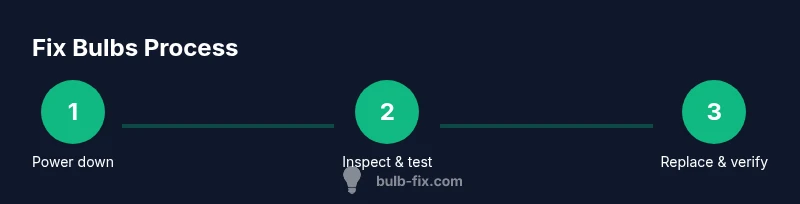
Power down and prep
Unplug the string from the outlet and place it on a dry, stable surface. Wear insulated gloves to protect your hands and remove any nearby metal jewelry. Have your bulb tester and replacement bulbs ready so you can work efficiently without repeating steps.
Tip: Keep a camera or note app handy to map bulb positions before removal. - 2
Inspect the string and plan replacements
Visually scan the entire strand for scorch marks, bent pins, or discolored sockets. Note areas that look suspect and rank them from most likely to least likely fault. This helps you avoid unnecessary bulb removal and speeds up the process.
Tip: Start near the outlet and work toward the end; this helps isolate the fault more quickly. - 3
Test bulbs one by one
Grasp each bulb by its plastic base and pull gently to remove. Test each bulb with the tester or multimeter to confirm continuity. Replace any bulb that fails the test with an exact match.
Tip: If you have a long strand, work in 6–8 bulb batches to minimize disturbance to adjacent bulbs. - 4
Replace faulty bulbs
Insert new bulbs carefully, ensuring you align the base correctly and press until it seats snugly. Verify you haven’t bent pins or damaged the socket as you push bulbs in. Recheck each replaced bulb with the tester.
Tip: Don’t overtighten; bulbs should be snug but not forced. - 5
Re-seat and check connections
Gently re-seat all bulbs and inspect for loose sockets or signs of corrosion. If you notice corrosion, clean with a dry brush and, if needed, apply a touch of dielectric grease after ensuring the power is off.
Tip: Avoid using liquids or cleaners that could conduct electricity. - 6
Restore power and test the full string
Plug the string back in and observe the entire strand. If any sections remain dark, repeat testing from the nearest end to isolate the remaining fault. If a large portion remains dark, consider replacing the entire string.
Tip: If the entire string remains unlit after fixes, check the outlet, fuse, or controller for issues.
Got Questions?
What should I do first when a string won't light?
Unplug the string, visually inspect for obvious damage, and test bulbs one by one. Use a tester to confirm which bulb or socket is faulty before replacing.
First unplug the string, check for damage, and test bulbs one by one to identify the bad unit.
Can I mix LED and incandescent bulbs in the same string?
Mixing bulb types in a single series string can cause inconsistent brightness or damage. If possible, replace the entire string with the same type for reliability.
Mixing bulb types is usually not recommended; use the same type for best results.
How do I know if a bulb is bad?
A bulb that shows no continuity on a tester, is visibly damaged, or causes a section to go dark is likely bad. Replace with a correct match and retest the string.
Check continuity with a tester; if it fails, replace the bulb and retest.
Is it safe to fix outdoor lights?
Yes, with proper precautions: dry conditions, GFCI outlet, a sturdy ladder, and keeping electrical connections above ground and away from puddles.
Outdoor work is fine with dry conditions and proper safety gear.
What if the entire string is shorted?
If shorted, inspect the plug, inline fuse, and any controllers. If the fault isn’t obvious, replace the string or seek professional assessment for complex wiring.
A full short often means a damaged wire or controller—consider replacement.
Watch Video
Key Points
- Unplug before touching bulbs.
- Test bulbs individually to isolate faults.
- Replace with the correct bulb type and size.
- Inspect and secure sockets to prevent future outages.
- Store bulbs properly to extend life for next year.