How to Get Rid of Bulb Plants: A Practical Homeowner Guide
Learn safe, effective methods to remove bulb plants from your garden. This Bulb Fix guide covers planning, disposal, and prevention to keep beds tidy and healthy.


This guide shows you how to get rid of bulb plants using safe, reliable methods: identify the bulbs, remove them physically, and dispose properly to prevent regrowth. Follow step-by-step actions and safety tips for best results.
Why getting rid of bulb plants matters for your garden
Bulb plants can crowd flower beds, spread aggressively, or decline in health if left unmanaged. If you’re asking how to get rid of bulb plants, you’re likely dealing with overcrowding, invasive spread, or diseased bulbs. According to Bulb Fix, starting with a plan and proper safety gear reduces risk and makes removal more effective. In this section we’ll cover why you’d remove bulbs, how to assess the plants, and how to protect your beds for future plantings. The goal is to remove problematic or overgrown bulb populations while preserving soil health and encouraging the new plants you want to keep.
Assessing bulbs: healthy vs diseased and timing
Not every bulb needs removal, but dense clumps or diseased bulbs should be prioritized. Identify bulbs by leaf shape, color, and bloom timing, and note which beds are overrun. The best time to remove or transplant bulbs is when the plants are dormant or just finishing flowering, to minimize stress and damage. Bulb Fix emphasizes safety first: wear sturdy gloves, use clean tools, and wash soil off bulbs before further handling. By documenting which bulbs are removed, you’ll prevent accidental replanting of the same problem.
Mechanical removal: digging, lifting, and bagging
Mechanical removal starts with loosening soil around the clump to prevent bulb breakage. Use a sharp spade or trowel to lift the bulb without tearing the scales. Remove soil from all bulbs and separate offsets or new bulblets so they don’t regrow in the bed; bag them separately for disposal. If you’ll reuse soil, screen it to remove tiny bulblets or fragments that could sprout later. Always place bulbs in labeled bags to prevent cross-contamination.
Disposal options: what to do with removed bulbs
Disposal rules vary by location, but generally, diseased or invasive bulbs should not go into home compost. Bag and seal bulbs to prevent spreading diseases or seeds and take them to your municipal yard waste or green bin, per local guidelines. For disease-free and non-invasive bulbs, some gardeners choose composting; however, avoid home compost piles that do not reach high enough temperatures. Check local regulations and garden center guidance if you’re unsure.
Preventing regrowth and winter readiness
After removal, manage the bed to prevent regrowth. Mulch thickly to suppress emerging shoots, plant shallow-rooted cover crops, or replace with non-bulb options for the season. Solarization with clear plastic can also kill shallow bulb fragments in warm, sunny weather. Regularly inspect the bed for new sprouts and remove them promptly to keep the area clean and ready for your next planting plan.
Safety and maintenance while removing bulbs
Bulb removal can be safe when you plan ahead. Wear gloves and eye protection, and avoid stepping on loose soil to prevent bulb damage. Keep pets and kids away from the work area and wash hands after handling soil and plant material. Clean tools with water and a brush to prevent soil transfer to future beds, and sanitize if you worked with diseased material. A tidy, careful approach protects your garden’s health.
Tools & Materials
- Shovel or spade(Digs around bulb clumps without injuring roots)
- Gardening gloves(Protect hands from dirt and sharp bulbs)
- Hand trowel or bulb digger(For precise lifting in tight spaces)
- Pruning shears(Trim damaged foliage or offsets safely)
- Plastic bags or yard waste bags(Contain removed bulbs for disposal)
- Wheelbarrow or tote(Move soil and bulbs easily)
Steps
Estimated time: 60-110 minutes
- 1
Survey the bed and plan
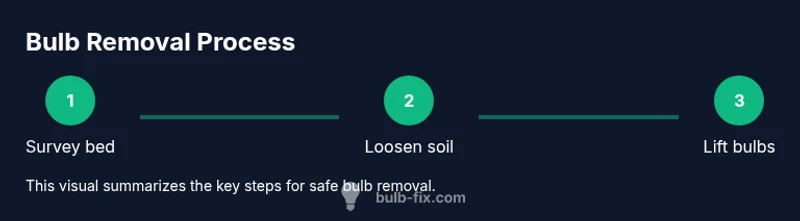
Scan the area to identify which sections have dense bulb populations and which beds you’ll replant. Note any diseased bulbs and plan disposal pathways. A clear plan saves time and reduces bulb breakage.
Tip: Draw a quick map of the bed showing bulbil clusters and potential travel routes. - 2
Assemble tools and safety gear
Gather your shovel, gloves, bags, and a pruner. Having tools ready prevents mid-task trips, reducing accidental damage to bulbs and soil.
Tip: Check tool blades for sharpness to avoid crushing bulbs. - 3
Loosen soil around bulbs
Use the shovel to loosen soil around the clumps without piercing the bulbs. Loose soil minimizes bulb damage and helps you lift the whole clump.
Tip: Do this while the soil is slightly damp for easier lifting. - 4
Lift bulbs and separate offsets
Carefully lift the entire clump, then tease apart offsets and small bulblets. Removing offsets helps prevent future naturalization in that bed.
Tip: Work slowly to avoid tearing scales and leaving fragments behind. - 5
Bag and label each batch
Place bulbs and soil in labeled bags. Keeping diseased bulbs separate helps with appropriate disposal later.
Tip: Label by bed location and health status to guide disposal. - 6
Decide on disposal method
If bulbs show disease or invasive tendencies, dispose via municipal waste; otherwise compost only if your system reaches high heat and is suitable for bulbs.
Tip: Always follow local guidelines for yard waste and composting. - 7
Clean tools and area
Wash tools with water and a brush to remove soil and plant residues. Sanitize if you’ve handled diseased material.
Tip: Dry tools completely to prevent rust and fungal growth. - 8
Prepare the bed for future planting
Fill the area with fresh soil, amend if needed, and consider non-bulb plant alternatives for the coming season.
Tip: If you’re replanting, lay out your new design before refilling the bed. - 9
Document and monitor
Make notes about what you removed, where it came from, and how you’ll prevent recurrence. Check the bed weekly for new sprouts and remove promptly.
Tip: Take photos to track changes for next year.
Got Questions?
Can I compost bulb plants after removal?
Only compost bulbs if they are disease-free and the compost system reaches high enough temperatures. Diseased or invasive bulbs should be discarded through municipal waste. Always check local guidelines.
Compost only disease-free bulbs that get hot enough to kill pathogens; otherwise, discard disease bulbs through your local waste program.
Are all bulb plants invasive or easy to remove?
Bulbs vary; some naturalize aggressively while others are easier to lift. Assess per bed and consider replacement with non-bulb groundcovers to reduce future issues.
Bulbs vary; some spread easily. Assess each bed and consider non-bulb options for the future.
What if bulbs break during digging?
Try to recover all fragments; even small pieces can sprout. Use sharp tools and work slowly to minimize fragmentation.
If bulbs crack, collect all fragments; tiny pieces can regrow.
When is the best time to remove bulbs—after flowering or in fall?
Dormant periods (late summer to fall) are ideal for removal. If you must remove after flowering, do so carefully to avoid harming nearby plants.
Late summer to fall is best; if you must, remove after flowering with care.
How can I prevent bulbs from returning?
Control regrowth by removing shoots early, mulching, and considering groundcovers or alternative plantings. Solarization can help on sunny days.
Remove new shoots early and consider mulch or cover plants to prevent regrowth.
Are herbicides appropriate for bulb removal?
Herbicides should be used only if labeled for bulbs and applied according to local regulations. They are not a substitute for physical removal and proper disposal.
Only use herbicides labeled for bulbs and follow local rules; they don’t replace physical removal.
Watch Video
Key Points
- Identify and plan before removal.
- Remove bulbs whole to prevent regrowth.
- Dispose responsibly according to local rules.
- Clean tools after handling diseased material.
- Monitor beds for new sprouts and act quickly.