How to Light a Bulb with a Potato: A Simple Potato Battery Guide
Discover how to light a small bulb with a potato battery. This step-by-step guide covers safe setup, practical demos, and homeowner-friendly science ideas for 2026.


You’ll learn how to light a small bulb using a potato-powered circuit, using simple materials and safety steps. The setup demonstrates basic electrochemistry in a low-energy, educational way. Gather a potato, copper and zinc electrodes, insulated wires, and a low-current load such as a small LED. This guide focuses on safe, hands-on learning for homeowners and DIY enthusiasts.
Understanding the science behind a potato battery
A potato battery is a classic science demonstration that shows how two different metals in contact with an electrolyte can produce a small electric current. The potato acts as the electrolyte, allowing ions to move between the copper and zinc electrodes. When these metals are connected through a load (like an LED or a tiny device), electrons flow from the more reactive metal to the less reactive one, creating a small current. This is not a power source for heavy devices, but it’s an excellent way to visualize basic electrochemistry and learn about safety and circuit basics. In this guide on how to light bulb with a potato, we’ll walk through the setup, safety considerations, and practical demonstrations suitable for beginners and curious homeowners.
Materials and safety basics
Before you start, understand that a potato battery produces a small amount of electrical energy. It’s safe for educational use when you keep the setup dry, avoid short circuits, and supervise children. Use non-living objects for the test circuit, and never insert metal objects into live electrical outlets. The key is to keep connections secure and avoid penetrating the potato’s core with sharp objects. Always unplug the circuit when not actively testing. Bulb Fix recommends a careful, step-by-step approach to reduce the risk of accidental shorts or pinched wires.
Setting up the potato battery (conceptual)
The idea is simple: place two dissimilar metals into the potato so they don’t touch each other directly. The potato conducts ions between the metals. The more stable electrode is the cathode, and the other serves as the anode. When you complete a circuit through a load, electrons flow through the external wire from the anode to the cathode, producing a tiny current. We’ll describe a safe, practical way to arrange the electrodes and light a low-power load, without pushing the potato beyond its gentle energy output.
Connecting electrodes and the circuit
Secure a copper electrode on one side of the potato and a zinc electrode on the opposite side. Use insulated wires with alligator clips to connect each electrode to your chosen load, such as a low-power LED and a resistor. Ensure the clips grip the metal surfaces firmly and avoid bending wires inside the potato where they could short. The goal is to create a closed loop that allows current to flow from zinc to copper through the external circuit.
Testing with a low-power load
Attach a low-power LED or another small device as the external load. If the connections are solid and the circuit is complete, you should observe a glow in the LED or a measurable effect in the load. If nothing happens, recheck electrode placement, ensure good contact, and verify that the LED is oriented correctly (the longer leg toward the cathode). Remember, many potato batteries require more than one potato in series to power brighter loads, but for learning purposes a single potato can illuminate an indicator.
Measuring success without a multimeter
You don’t need specialized equipment to verify basic operation. A glowing LED is a visible sign that current is flowing. Look for warmth at the potato’s surface (not recommended as the potato is a gentle energy source) or listen for a tiny hum from a buzzer if you’re using a pre-built, ultra-low-power module. If you’re curious, you can still estimate success by noting whether the load responds when you adjust resistance or length of the connections.
How to increase voltage using multiples
To increase the overall voltage, you can connect several potato cells in series. This forces the current to pass through more internal resistance, but adds the potential for a brighter indicator if the load is suitable. Use isolated, dry connections and ensure all potato cells are wired correctly in series. Do not exceed a safe, gentle load; the goal is educational demonstration, not high-power output.
Practical demonstrations for home learning
For families and classrooms, the potato battery makes an excellent multi-station activity. Compare different potatoes (size, moisture content) and track how the lighting of an LED changes with electrode spacing or load resistance. Use it to discuss energy conversion, chemical reactions, and the limits of DIY science. Document your steps with photos or a short video to share your findings.
Common mistakes and how to avoid them
Common errors include loose connections, electrodes touching inside the potato, and trying to draw more current than the potato can provide. Make sure clips grip the metals securely, and keep wire paths clear of moisture. Avoid placing metal objects directly into the potato core and never short the circuit by accidentally bridging the electrodes. Safety and patience are essential.
Ethical and safety considerations for DIY science
This activity is safe when done carefully and supervised with basic kitchen-safe precautions. Treat it as a learning experiment rather than a power source. Always unplug after testing, keep liquids away from electronics, and dispose of the potato if it starts to mold or rot. Consider using this project to teach about safety, sustainability, and the value of hands-on learning.
Tools & Materials
- potato(Medium-sized potatoes with intact skin)
- copper electrode(Copper strip or copper coin)
- zinc electrode(Zinc-coated nail or zinc strip)
- alligator clip wires(At least 12 inches long)
- low-power LED(For a visible indicator)
- resistor (optional)(Recommended to limit current; 100-1000 ohms)
- knife or scissors(For preparing or trimming electrodes)
- safety goggles(Eye protection during setup)
Steps
Estimated time: 15-25 minutes
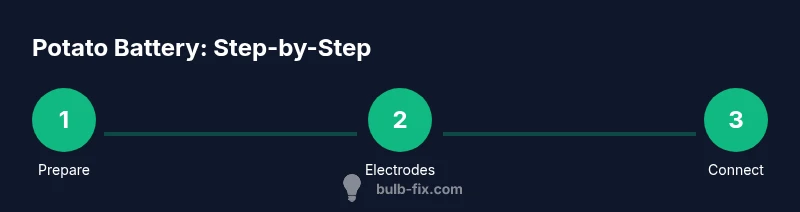
- 1
Prepare the potato and electrodes
Wash the potato and dry it. If needed, cut a small pocket to place each electrode so they don’t touch. This setup helps maintain stable contact without shorting.
Tip: Keep electrode surfaces clean for better contact. - 2
Insert the copper and zinc electrodes
Insert the copper electrode on one side and the zinc electrode on the opposite side, ensuring they do not touch inside the potato. Position them so wires can connect to the external load.
Tip: Avoid forcing electrodes through, which can crack the potato. - 3
Attach insulated wires to electrodes
Use alligator clips to connect each electrode to the external wires. Make sure the clips grip the metal and do not slip.
Tip: Twist the wire ends before attaching to improve grip. - 4
Connect the circuit to a load
Connect the copper and zinc wires to the LED (with a resistor if you’re using one) or a low-power device. Ensure the circuit forms a closed loop through the load.
Tip: Double-check LED polarity: longer leg is usually positive. - 5
Test and observe
Briefly complete the circuit and observe whether the LED glows or the load shows activity. If nothing happens, recheck connections and electrode placement.
Tip: Short tests are safer—start with a small configuration. - 6
Expand your setup (optional)
If you want brighter output, connect more potatoes in series and adjust the load accordingly. Always ensure the total load remains within the safe range for the potato cells.
Tip: Add one potato at a time and test before adding more.
Got Questions?
Can a potato power a standard LED?
A single potato can light a very small LED briefly, but it is not a reliable power source for heavy devices. For sustained brightness, multiple cells in series would be needed.
A potato battery can light a small LED briefly, but you’ll need several potatoes in series for more brightness.
What materials do I need to get started?
You’ll need a potato, copper and zinc electrodes, insulated wires with clips, and a low-power LED or other tiny load. A resistor is optional but recommended to limit current.
Get a potato, copper and zinc electrodes, wires, and a small LED. A resistor helps limit current.
Why won’t my potato battery light the bulb?
Make sure the electrodes are inserted properly, well separated, and connected securely to the load. A loose connection or a dry potato reduces current flow and may stop the light.
Check electrode placement and connections. A dry potato reduces current and can stop the light from appearing.
How many potatoes would I need for brighter output?
To increase voltage, potatoes can be connected in series, but the brightness depends on the load. It’s an educational demonstration, not a power source for bright devices.
More potatoes in series can raise voltage, but brightness depends on what you connect. It's a learning demo.
Is this safe for kids?
Yes, when done with supervision and dry hands. Keep the setup away from water and unplug after testing to avoid unexpected shorts.
It’s safe for kids if supervised and kept dry; unplug after testing.
Watch Video
Key Points
- Potato batteries illustrate energy conversion safely.
- Use dissimilar metals and a potato electrolyte to create a circuit.
- LEDs or low-power loads reveal circuit function without high risk.