Light Bulb Fire: Quick Fixes and Safety
Urgent troubleshooting guide for light bulb fire hazards, covering common causes, immediate safety steps, diagnostic flow, and prevention tips to protect your home.


A light bulb fire usually starts when heat from the bulb or fixture overheats nearby materials, often due to an overloaded socket, incorrect bulb wattage, or a damaged fixture. The fastest fix is to unplug the lamp, switch to the correct bulb, and inspect for signs of damage. Always prioritize safety and call an electrician if in doubt.
Understanding the Risk of Light Bulb Fire
A light bulb fire is not a guaranteed outcome, but it is a real hazard whenever heat from a bulb is trapped near flammable materials or electrical components fail. In many homes, the culprits are bulbs that generate more heat than the fixture is designed to handle, incorrect wattage, or damaged sockets and wiring. The term light bulb fire should be taken seriously: even a small hotspot can escalate in a ceiling fixture, lamp, or enclosed space. According to Bulb Fix, most incidents begin with slow heat buildup rather than a dramatic flare, which gives you a critical window to respond if you notice warmth, a buzzing sound, or a faint burnt odor. Warning signs include sockets that feel warm, discoloration on wiring insulation, melted fixture parts, or a noticeable smell of plastic burning. Regular checks and strict adherence to the fixture’s rating dramatically reduce risk. Keep flammable materials away from lamps, and never cover fixtures with fabric or paper. This knowledge sets the tone for safe handling and proactive maintenance.
Immediate Safety Actions If You Detect Heat, Burning Smell, or Smoke
Safety must come first. If you notice heat, a burning smell, or smoke around a lamp or socket, switch off power at the wall or circuit, unplug the device if accessible, and keep a safe distance. Do not touch hot bulbs or fixtures. If there is visible damage or ongoing heat, evacuate and call emergency services if needed. Ventilate the area to disperse heat and fumes, and do not attempt to reuse the fixture until it is inspected by a professional. After cooling, you can inspect non-structural components from a safe distance and replace with a bulb that matches the fixture’s rating. This approach minimizes risk while preserving home safety. As always, if you’re unsure about any step, pause and seek professional help.
Common Causes and Quick Checks
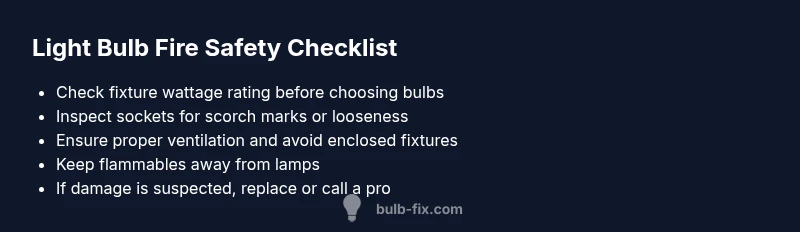
Several factors contribute to overheating and potential fires. Overheating can occur when a high-wattage bulb is used in an under-rated fixture, or when a socket is loose, worn, or damaged, allowing arcing and heat buildup. Enclosed fixtures trap heat, so using bulbs not rated for enclosed spaces can be dangerous. Dust and lint accumulation add insulation, raising temperatures, while aging wiring or damaged insulation can create dangerous hotspots. Check bulb wattage against fixture ratings, inspect sockets for looseness or scorch marks, and look for signs of wear on wiring or plastic components. Regular cleaning and ventilation help prevent heat buildup. For safety, never force-fit a bulb or bypass a faulty socket.
Diagnostic Flow: Symptom → Diagnosis → Solutions
Symptoms guide diagnosis: if a lamp feels unusually hot and shows signs of damage, suspect overheating. If a mild burning smell is present but there’s no visible damage, the issue could be a loose socket or over-wattage bulb. Solutions range from replacing with a correctly rated bulb, tightening sockets, and improving ventilation, to replacing damaged fixtures or consulting an electrician for wiring concerns. Always stop using the device until it is inspected, and prioritize safety above all.
Step-by-Step Fixes for the Most Common Causes
- Turn off power and unplug the lamp. 2) Verify bulb wattage matches the fixture rating and switch to the correct bulb. 3) Inspect the socket for cracks, scorch marks, or looseness, and replace if needed. 4) Check the fixture for damage or signs of overheating; replace if compromised. 5) Ensure the area is well-ventilated and free of flammable materials. 6) Test with a safer, lower-wattage bulb and observe for warmth. 7) If any damage is present or heat persists, call a licensed electrician.
Tips to Prevent Future Fires
- Always replace bulbs with ones rated for the fixture. - Keep lamps away from fabrics, papers, and other flammables. - Clean fixtures regularly to prevent dust buildup. - Use surge protectors and avoid power strips with high heat generation. - Schedule periodic checks of sockets and wiring by a professional.
When to Call a Professional
If you notice scorching, melted parts, unusual buzzing, persistent heat, or any signs of wiring damage, stop using the fixture and contact a licensed electrician immediately. A qualified pro can assess wiring, fixtures, and the electrical circuit to prevent future hazards. Regular maintenance by professionals is a prudent safety measure for any home electrical system.
Steps
Estimated time: 45-60 minutes
- 1
Power down and unplug
Switch off the lamp at the wall and unplug the fixture to remove any live electrical path. Allow the device to cool completely before handling. This minimizes the risk of shock or further heat exposure.
Tip: Always assume exposed metal parts may be energized even after unplugging. - 2
Check bulb wattage vs fixture rating
Remove the bulb and inspect the fixture rating label. If the bulb exceeds the rating, replace with a correctly rated bulb. Do not bypass rating guidelines or use higher wattage to brighten a room.
Tip: If in doubt, refer to the user manual or fixture label for exact wattage limits. - 3
Inspect socket and wiring
Look for scorch marks, melted plastic, or looseness in the socket. If there is damage, stop using the fixture and replace the socket or fixture as needed. Do not attempt extensive wiring repairs yourself.
Tip: Only use insulated tools and wear gloves when handling damaged components. - 4
Ventilation and enclosure check
If the fixture is enclosed, ensure it is rated for the bulb type and consider removing the enclosure or replacing with a ventilated design. Heat buildup is common in enclosed spaces.
Tip: Ventilation is often the simplest preventive step for older fixtures. - 5
Test with a safe replacement
Install a bulb that matches the rating and test for warming within safe limits. If warmth persists, stop testing and pursue professional help.
Tip: Test in a controlled, well-ventilated area away from flammable items. - 6
Consult a professional
If there are signs of wiring damage, persistent heat, or uncertain findings, contact a licensed electrician for a full assessment.
Tip: Regular professional checks can prevent future incidents.
Diagnosis: Bulb or lamp becomes unusually hot, emits a burning smell, or shows signs of damage
Possible Causes
- highOver-wattage bulb in a fixture rated for lower wattage
- mediumLoose or damaged socket causing arcing
- mediumEnclosed fixture trapping heat
- lowDust/lint buildup around the bulb or socket
- mediumDamaged wiring or insulation
Fixes
- easyReplace with a bulb that matches the fixture rating and wattage
- mediumTighten or replace a loose/damaged socket
- easyMove to a fixture that allows proper ventilation or remove the enclosure if rated safe
- easyClean dust and verify wiring condition; do not operate if damage is visible
- hardConsult a licensed electrician for wiring or fixture replacement
Got Questions?
What causes a light bulb fire?
Most light bulb fires stem from overheating due to incorrect wattage, damaged sockets, or faulty fixtures. Enclosed fixtures and dust buildup can worsen heat. Always verify wattage ratings and inspect for damage before use.
Common causes include wrong wattage, damaged sockets, and enclosed fixtures that trap heat. Check ratings and inspect for damage before use.
Is it safe to keep using a lamp that feels hot?
No. If a lamp or socket becomes unusually hot, unplug it and inspect for damage. Do not continue to use it until a safe replacement or repair is confirmed.
If a lamp feels hot, unplug it and have it checked before using again.
Do enclosed fixtures increase risk?
Yes. Enclosed fixtures can trap heat and raise the risk of overheating. Only bulbs rated for enclosed fixtures should be used in those housings.
Enclosed fixtures trap heat; use only bulbs rated for enclosed fixtures.
What wattage should I use?
Always stay at or below the fixture's rated wattage. Exceeding it increases heat and fire risk. When in doubt, consult the manual or a professional.
Stick to the fixture's wattage rating; check the manual or ask a pro if unsure.
Are LEDs safer than incandescents?
LEDs generally run cooler and are safer around heat-sensitive fixtures, but ensure the heat sink and driver are appropriate for the fixture.
LEDs usually run cooler, but verify compatibility with your fixture.
When should I call a professional?
If there are signs of wiring damage, persistent heat, or you’re unsure about the diagnosis, contact a licensed electrician promptly.
Call a licensed electrician if wiring looks damaged or issues persist.
Watch Video
Key Points
- Inspect wattage and fixture compatibility before use
- Unplug and assess safely at first sign of heat
- Replace damaged components promptly
- Prioritize ventilation to reduce heat buildup
- Call a professional for wiring or persistent issues