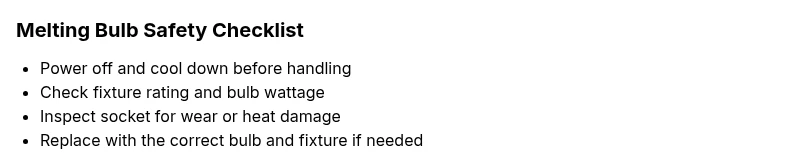
Melting Light Bulb Troubleshooting Guide
Urgent, practical guide to diagnosing and fixing a melting light bulb. Learn safety steps, common causes, and fixes to prevent overheating and fire hazards in home lighting.


A melting light bulb usually points to overheating or a faulty connection. Start by turning off power at the switch or breaker, unplugging the fixture, and inspecting the bulb and socket. Replace with a properly rated bulb, and if the issue recurs, call a licensed electrician. Overheating can be caused by the wrong wattage, a loose connection, or a damaged fixture.
Why melting light bulbs happen
A melting light bulb is a clear safety signal. According to Bulb Fix, the most common culprits are overheating from too much wattage, a loose or corroded socket, or a damaged fixture. In enclosed fixtures, heat has nowhere to escape, which can soften glass and the bulb’s coatings. Using a bulb with a higher wattage than the fixture supports is a frequent mistake. Inspect the fixture for scorch marks or melted insulation around the socket. Treat this as live until you’ve verified the power is off. If you smell burning or see smoke, switch off power at the breaker and do not touch the bulb while hot. After cooling, remove the bulb with gloves and replace with a correctly rated bulb. This simple wattage check often prevents recurrence. Bulb Fix emphasizes careful handling and proper ratings as essential steps to prevent future meltdowns.
Immediate safety steps when you notice a melting bulb
- Power down safely: switch off the light at the wall, then turn off the circuit breaker if accessible. Unplug lamps if you can. Use a non-contact tester to confirm no live voltage near the socket.
- Let it cool: give the bulb 15-30 minutes to cool before touching. Keep children and pets away from the area.
- Inspect visible damage: look for scorch marks, melted plastic around the base, or melted insulation inside the fixture.
- Plan a safe removal: wear gloves and use insulated pliers to loosen a stuck bulb. Do not shake or yank the socket.
If you smell burning or see smoke, evacuate and call emergency services if needed.
How to diagnose the root cause of a melting light bulb
The most frequent causes are overheating due to wrong wattage, loose connections, or a degraded fixture. Start by checking the fixture’s wattage rating or label and confirm it matches the bulb you’re using. If the rating calls for 60 watts or less and you’re using more, replace with a lower-wattage bulb or consider LEDs that meet the equivalent light output with less heat. Inspect the socket for signs of wear, corrosion, or heat damage. If the socket feels warm or shows scorch marks, stop using the fixture and replace the socket or entire fixture if necessary. Bulb Fix analysis shows that overheating and loose connections are common contributors to melting bulbs, so address both to reduce risk.
Step-by-step fixes and prevention strategies
A systematic approach helps avoid recurrence and keeps your home safe. When the bulb is cold, remove it carefully and test the socket with a known-good bulb. If the socket is damaged, replace it. Ensure the fixture is rated for the bulb type and wattage. Prefer LED bulbs with low heat profiles, especially in enclosed fixtures. Regularly inspect fixtures for warmth or discoloration; address any issues promptly to prevent a repeat melt.
Safety tips and common mistakes to avoid
- Always switch off power before touching bulbs or sockets. Never operate a hot bulb or fixture.
- Do not exceed the fixture’s wattage rating, and prefer LED alternatives when appropriate.
- Don’t ignore signs of damage around the socket or insulation. A small crack can lead to failure.
- If you’re not confident in wiring or fixture integrity, call a licensed electrician for a full inspection.
Steps
Estimated time: 30-60 minutes
- 1
Power down safely
Turn off the circuit and switch, unplug if possible, and verify no power reaches the fixture. This is your first line of defense against electric shock while inspecting a melting light bulb.
Tip: Use a non-contact tester to confirm power is off before touching any components. - 2
Remove the melted bulb
Let the bulb cool completely. Gently loosen the bulb using gloved hands or insulated pliers, avoiding the glass edge. If base sticks, stop and reassess to prevent socket damage.
Tip: Wear cut-resistant gloves to protect from sharp glass shards. - 3
Check wattage and rating
Read the fixture label or manufacturer guide to confirm the maximum wattage. If your bulb exceeds this rating, replace with a lower-watt model or an LED equivalent that delivers similar light output with less heat.
Tip: Do not rely on bulb brightness alone; heat is the key safety factor. - 4
Inspect the socket and wiring
Look for signs of wear, discoloration, or melted plastic around the socket. If you notice any damage, do not reuse the fixture; replace the socket or fixture as needed.
Tip: If wiring looks damaged, call a licensed electrician—do not attempt rewiring yourself. - 5
Install a safe replacement
Choose a bulb that matches the fixture’s rating; consider LEDs or CFLs with low heat. Ensure the bulb seats properly in the socket to avoid arcing.
Tip: Test fit before fully securing; avoid overtightening which can damage the socket. - 6
Test and monitor
Restore power and observe for warmth at the socket and any unusual smells or noises. If the fixture remains warm after operation, discontinue use and seek professional help.
Tip: Keep a spare replacement on hand and note the fixture’s rating for future checks.
Diagnosis: Bulb melts or deforms while in operation
Possible Causes
- highOverheating due to high wattage for the fixture
- mediumLoose or corroded socket causing poor contact
- lowDamaged fixture or wiring causing excessive heat
Fixes
- easyReplace with a bulb that matches the fixture's wattage rating
- easyTighten or replace the socket, clean any corrosion
- hardInspect and repair wiring or consult an electrician for dangerous wiring or fixtures
Got Questions?
Why would a light bulb melt?
A melting bulb is most often caused by overheating or a poor connection. Check the wattage and socket, and inspect the fixture for damage. If the issue persists, replace the fixture or seek professional help.
Most melting bulbs come from overheating or bad connections. Check wattage and the socket, and consider a fixture replacement if you notice damage.
Is it safe to keep using a bulb that melted?
No. A melted bulb indicates overheating or damage that could start a fire. Do not reuse or force it back into service; replace with the correct bulb and inspect the fixture.
No, don’t reuse a melted bulb. Replace it and inspect the fixture for damage.
What wattage should I use in enclosed fixtures?
Always follow the fixture’s rating. Use a bulb with equal or lower wattage to prevent overheating and melting or deformation.
Always use a bulb with wattage at or below what the fixture is rated for.
When should I replace the fixture?
If wiring or socket shows heat damage, melting insulation, or scorching around the base, replace the fixture or call an electrician.
If you see heat damage or melted insulation, replace the fixture or call a professional.
Can melting bulbs be caused by LED bulbs?
LEDs emit less heat but can still fail if used in incompatible fixtures or with damaged sockets. Verify compatibility and condition of wiring.
LEDs heat less, but compatibility and wiring still matter. Check the fixture.
Watch Video
Key Points
- Use bulbs that match the fixture rating.
- Never ignore warmth, scorch marks, or melted insulation.
- Inspect sockets regularly and replace damaged components.
- Opt for low-heat lighting options like LEDs when suitable.