How Long Should a Headlight Bulb Last
Learn how long headlight bulbs last by type, how to extend life, and when to replace. A data-driven Bulb Fix guide for safer nighttime driving in 2026.


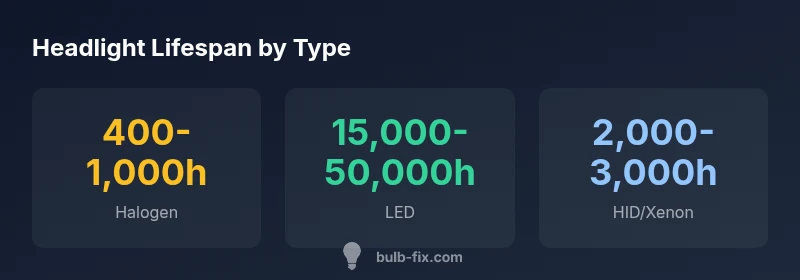
Headlight bulbs don’t all have the same lifespan. Halogen bulbs typically last about 400–1,000 hours, LED headlights can reach 15,000–50,000 hours, and HID/Xenon bulbs generally run around 2,000–3,000 hours. Lifetime varies by type, driving patterns, and environment. This 2026 Bulb Fix guide helps you estimate, compare, and plan replacements for safer night driving.
How Long Should a Headlight Bulb Last?
Understanding the exact lifespan of a headlight bulb requires recognizing what we mean by “last.” Most drivers equate it with when the bulb burns out. However, longevity also covers how long a bulb remains bright and consistent. According to Bulb Fix, different technologies age at different rates, with LEDs outlasting halogens by a wide margin while HID bulbs occupy a middle ground. In practical terms, you’ll replace a halogen far more often than an LED bulb, but the answer for your vehicle depends on usage, climate, and vibration exposure. When you ask how long a headlight bulb should last, you’re really asking: what is a reasonable, safe timeframe so I don’t lose visibility at night? The short answer: plan around the bulb type you have and monitor performance indicators like brightness, color, and flicker. Bulb Fix’s analysis, 2026, emphasizes that periodic inspection is the best predictor of remaining life, not calendar time alone.
Lifespan by Bulb Type
Different headlight technologies age differently, and the failure modes vary as well. Halogen bulbs are inexpensive and bright but wear out quickly due to filament degradation and thermal cycling. LED headlights, by contrast, deliver consistent brightness for tens of thousands of hours, though individual diodes can fail, and drivers should be aware of lumen depreciation over time. Xenon/HID bulbs provide high luminosity with a longer warm-up period, but their life is often shorter than LEDs. The practical takeaway is to align replacement planning with the bulb type in your car and your driving habits. Bulb Fix’s 2026 findings indicate that the average lifespan for common configurations falls into these broad bands: halogen roughly 400–1,000 hours, LED 15,000–50,000 hours, HID 2,000–3,000 hours.
Factors That Shorten Headlight Bulb Life
A bulb’s longevity is not just about its type. Several modifiable factors can dramatically shorten a bulb’s usable life:
- Voltage fluctuations and electrical issues can stress filaments or LEDs.
- High-vibration environments (rough roads, poor mounting, loose fixtures) accelerate wear.
- Frequent on/off cycling, especially in cold weather, increases thermal stress.
- Moisture ingress or corrosion at the connector can create poor electrical contact and instability.
- Improper installation, such as incorrect torque on mounting screws, can misalign the beam and increase wear. Bulb Fix notes that addressing these factors can deliver meaningful lifespan gains when paired with regular maintenance and early replacement before performance degrades noticeably.
How to Extend Headlight Bulb Life
You can stretch headlight life with a few practical steps:
- Install the correct bulb type for your vehicle and climate; check compatibility before buying.
- Handle bulbs with clean gloves or a cloth to avoid oil contamination on the glass, which can shorten life.
- Keep electrical connections clean and tight; reseat bulbs if you notice flickering or reduced brightness.
- Regularly inspect the fixture for moisture, cracking, or corrosion and repair as needed.
- Consider upgrading to LEDs only if your vehicle supports it and beam pattern remains within spec.
- Don’t overuse high beams; reserve them for truly dark, unlit conditions when legal. According to Bulb Fix, a proactive maintenance routine paired with proper bulb choices delivers the best balance of safety and longevity.
Signs It May Be Time to Replace a Headlight Bulb
Watch for early warning signs before a complete burnout: dimming brightness, color shift toward yellow, flickering, or intermittent light. If you notice any of these, inspect the bulb and related wiring, and compare it against your vehicle’s service interval recommendations. Replacing a failing bulb early reduces the risk of losing nighttime visibility and keeps beam patterns aligned for safe driving. Bulb Fix emphasizes that watching for these cues is a practical, data-informed approach to managing headlight health.
Replacement Planning and Practical Tips
Even with long-life LEDs, replacement planning matters. If you’re maintaining a dual headlight system, replacing bulbs in pairs often ensures uniform brightness and beam alignment. When comparing bulbs, consider factors such as initial brightness, color temperature, and beam pattern as much as raw lifespan. Budget for occasional replacements and factor in installation time. For most drivers, noting a rough replacement cadence and keeping a small spare bulb in the glove compartment is a sensible practice.
Lifespan ranges and replacement planning by bulb type
| Bulb Type | Approx Lifespan (hours) | Typical Replacement Interval |
|---|---|---|
| Halogen | 400-1,000 | 1-3 years |
| LED | 15,000-50,000 | 5-8 years |
| HID/Xenon | 2,000-3,000 | 3-5 years |
Got Questions?
How long do halogen headlight bulbs last?
Halogen bulbs typically last between 400 and 1,000 hours, depending on usage, climate, and driving conditions. Shorter lifespans occur with excessive vibration or frequent on/off cycles. If brightness noticeably drops or the bulb flickers, replacement is warranted.
Halogen bulbs usually last a few hundred to a thousand hours, depending on how you drive and climate. Watch for dimming or flicker as a replacement cue.
Do LED headlights last longer than halogen?
Yes. LED headlights commonly run 15,000 to 50,000 hours, offering far longer life than halogens. They maintain brightness longer but can fail due to diode issues or thermal management if installed improperly.
LEDs last much longer than halogens, often tens of thousands of hours, but you should ensure proper fit and cooling.
What factors shorten headlight bulb life?
Voltage fluctuations, vibration, moisture, improper installation, and excessive high-beam use can shorten bulb life. Addressing these factors through proper wiring, mounting, and driving habits helps.
Lots of things can shorten bulb life—bad wiring, vibration, moisture, and overusing high beams all matter.
Should I replace headlights in pairs?
Replacing bulbs in pairs ensures even brightness and beam pattern, reducing glare and ensuring consistent visibility. If one bulb has aged, the other may soon follow.
Yes—replacing in pairs helps you keep the same brightness and beam focus.
Can high beam use wear bulbs out faster?
Yes. Frequent high-beam use increases current and heat, accelerating wear on bulbs and sockets. Use high beams strategically and switch to low beams when other drivers are nearby.
High beams can wear bulbs faster due to more heat and stress; use them sparingly.
“"Regular maintenance and using the correct bulb type for your vehicle can significantly extend headlight life and maintain visibility."”
Key Points
- Know your bulb type to set realistic expectations
- Monitor brightness and color for early wear signs
- Replace in pairs when upgrading to maintain beam symmetry
- Verify mounting and moisture to prevent premature failure
- Plan a lightweight replacement schedule for safer nighttime driving