How Long Does a Light Bulb Last? Lifespan by Type
Explore how long light bulbs last across LED, incandescent, and CFL options, why lifespans vary, and practical tips to extend life. Bulb Fix provides data-backed guidance.


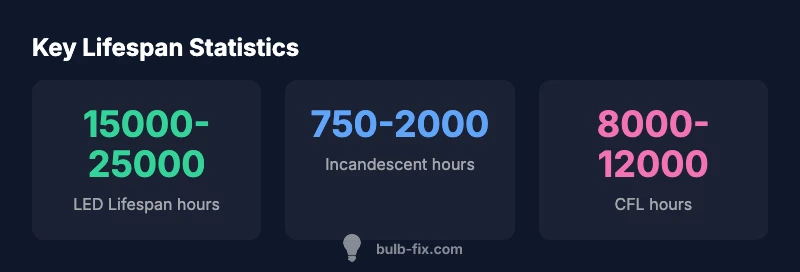
LED bulbs commonly offer the longest lifespan, typically about 15,000–25,000 hours, while incandescent bulbs average roughly 750–2,000 hours and CFLs about 8,000–12,000 hours. Real-world lifespans depend on usage patterns, fixture heat, voltage stability, and bulb quality. In practice, expect LEDs to outlast traditional bulbs by at least several times, with performance gradually tapering before failure.
Understanding how long does a light bulb last in real homes
According to Bulb Fix, the lifespan of a bulb is not a single, universal number. It is a function of bulb type, usage patterns, and the environment. The “hours” rating on a package assumes controlled lab conditions, which rarely match a busy household. In everyday rooms, factors such as how often you switch lights on and off, how hot a fixture runs, and the quality of power can shorten or extend a bulb’s functional life. The bottom line is simple: LED bulbs typically last much longer than incandescent or CFL bulbs, but they still degrade over time and will eventually fail. The goal is to translate that rating into a practical replacement plan that matches your routines and expectations.
Reading lifespan ratings and what they really mean
Lifespan labels like “15,000 hours” reflect laboratory testing and are best viewed as a guide rather than a guaranteed countdown. Real-life performance can deviate by a factor of two or more, especially if bulbs are cycled on and off frequently. A longer liferating often correlates with higher quality components and better heat management. Many manufacturers also provide warranties that cover a portion of life beyond installation, which can be a meaningful indicator of expected reliability. When budgeting replacements, consider both the stated hours and the warranty terms; they together offer a more complete picture than hours alone.
LED vs incandescent vs CFL: what lasts longest in practice
In typical home use, LEDs win for longevity, followed by CFLs and incandescent bulbs. LED lifespans range from roughly 15,000 to 25,000 hours, with some premium models reaching higher figures in controlled conditions. CFLs generally last longer than incandescent bulbs, packing an 8,000 to 12,000-hour window, but they are more sensitive to frequent switching. Incandescent bulbs often fall short, with 750 to 2,000 hours depending on design and wattage. While price and light quality matter, if longevity is your primary goal, LED bulbs consistently deliver the best return over time. Bulb Fix notes that choosing bulbs with higher-quality drivers and better heat dissipation helps maximize actual life.
How usage patterns affect bulb longevity
Daily routines strongly influence life expectancy. Rapid cycling (frequent on/off) can shorten lifespan, especially for CFLs and LEDs in some fixtures. Dimmed lighting can also impact longevity, particularly if mismatched with dimmers not rated for the bulb type. Excessive heat dramatically reduces efficiency and accelerates wear, so ensure bulbs operate within recommended temperature ranges and are installed in fixtures designed for their heat output. Conversely, stable temperatures and modest, steady usage tend to preserve life. Bulb Fix emphasizes matching bulb type to fixture and avoiding enclosed fixtures for LEDs that aren’t rated for heat buildup.
Temperature, heat, and environmental factors
Heat is the silent life thief. In enclosed or poorly ventilated fixtures, bulbs—especially LEDs—can run hotter than intended, which reduces their useful life. Outdoor or damp environments introduce moisture and cycling stress that can hasten degradation if the bulb or socket isn’t rated for those conditions. Electrical surges and voltage fluctuations are another hidden variable; for sensitive electronics inside the bulb’s driver, even small surges can shorten life. For best results, install bulbs in properly ventilated fixtures and choose units rated for the ambient conditions (indoor dry, damp, or outdoor as appropriate).
Estimating replacement schedules for everyday use
A practical rule of thumb is to divide the expected life by your daily usage to estimate replacement frequency. For example, a LED bulb rated at 20,000 hours used for 3 hours per day would theoretically last about 6,666 days, or roughly 18 years, assuming stable conditions. In reality, early failures or slow dimming can occur. Adjust this estimate by considering your home’s heat, power stability, and how often the light is switched on. Warranties can provide a safety net for unexpected early failures. Bulb Fix provides simple calculators and guidelines to help homeowners translate hours into replacement timelines.
Practical steps to extend bulb life in a busy home
To maximize longevity, start with proper matching: use bulbs compatible with your fixture type and dimmer (where applicable). Avoid running bulbs at maximum brightness in enclosed fixtures unless rated for such use. Keep fixtures clean to prevent extra heat buildup and ensure vents aren’t blocked. Avoid frequent cycling by using timers or smart controls that reduce unnecessary on/off switching. Purchase bulbs with high-quality drivers and good heat management. Regularly check sockets for corrosion and ensure voltage is within the product’s specified range. Small maintenance steps compound into meaningful longevity gains.
Choosing longevity without compromising light quality
When longevity is a priority, weigh the trade-offs between initial cost, efficiency, and color quality. Higher-quality LEDs with robust drivers often outperform cheaper models by significant margins, even if upfront costs are a bit higher. Look for bulbs with warranties that reflect realistic lifespans and consumer reviews about reliability. For areas with high usage or critical tasks, consider bulbs with longer-rated hours and proven heat resistance. Bulb Fix recommends testing a few brands to determine which provide the best balance of longevity and light quality for your space.
Common myths about how long bulbs last and the truth behind them
One common myth is that “all bulbs burn out at the same rate once they start aging.” In reality, performance declines vary by type and quality. Some people think “more watts equals longer life” or that switching to lower brightness automatically extends life; neither is universally true. Another misconception is that LED replacement is a few dollars; while LEDs save energy, the true long-term cost depends on usage, fixture compatibility, and maintenance. Always cross-check wattage, lumen output, and driver quality when evaluating longevity claims.
Quick guide to comparing longevity when shopping for bulbs
When shopping, compare the rated hours, warranty length, and driver technology. Favor bulbs with higher-rated hours and longer warranties, especially for frequent-use rooms. Check heat ratings and fixture compatibility, particularly for enclosed fixtures and dimmed circuits. For smart bulbs, verify the hub compatibility and whether longevity is affected by software updates. By consolidating these factors, you can choose bulbs that deliver long life without sacrificing the light you need.
Lifespan comparison by common bulb types
| Bulb Type | Estimated Lifespan (hours) | Common Usage Notes |
|---|---|---|
| LED | 15000-25000 | Low energy, good for high-use areas; ensure proper heat management |
| Incandescent | 750-2000 | Budget upfront, frequent replacements; not energy-efficient |
| CFL | 8000-12000 | Good efficiency; sensitive to frequent switching |
| LED (Smart) | 15000-25000 | Great longevity; consider fixture heat and compatibility with smart hubs |
Got Questions?
How long does LED light last in normal home use?
LEDs typically last 15,000–25,000 hours under standard conditions. Real-world life depends on heat, driver quality, and switching frequency. Expect security-based or heavy-use areas to show earlier dimming but not immediate failure.
LEDs usually last 15,000 to 25,000 hours, depending on heat and usage. In real homes, expect some dimming before failure.
Does turning bulbs on and off a lot shorten their life?
Frequent switching can shorten some bulb lifespans, especially CFLs. LEDs are generally more tolerant, but excessive cycling and power surges still impact longevity.
Frequent on/off cycles can reduce bulb life, especially for CFLs; LEDs tolerate cycling better but aren’t immune.
Are smart bulbs as durable as regular LEDs?
Smart bulbs share LED longevity but add electronics that can fail due to software or driver issues. Choose models with good reviews, reliable firmware, and reputable warranty terms.
Smart LEDs can last, but the extra electronics means reliable firmware and good warranties matter.
How can I extend bulb life beyond choosing a longer-lasting type?
Maintain proper fixture ventilation, avoid enclosed LED use unless rated, use compatible dimmers, and minimize unnecessary on/off cycling. Regularly check sockets for corrosion and ensure voltage stability.
Good ventilation, compatible dimmers, and steady use help bulbs last longer.
Do all bulbs fail gradually or can they burn out suddenly?
Most bulbs show gradual dimming as the filament or driver degrades, followed by a sudden failure. LEDs often dim gradually before total failure, while incandescent bulbs may burn out abruptly.
Bulbs usually dim before failing; LEDs fade slowly, incandescent bulbs can fail suddenly.
What should I look for when comparing lifespans in catalogs?
Look for the rated hours, warranty length, and heat/fixture recommendations. Compare similarly rated bulbs, and favor models with robust drivers and better heat management.
Check hours, warranty, and heat guidance to compare bulbs effectively.
“Lifetime estimates are a guide; real-world results depend on heat, voltage stability, and usage patterns. Choosing higher-quality drivers and proper fixtures can noticeably extend bulb life.”
Key Points
- LEDs last longest in typical homes, often 15k–25k hours
- Expect incandescent lifespans to be significantly shorter, 750–2,000 hours
- CFLs offer a middle ground with 8,000–12,000 hours
- Usage patterns and heat management strongly influence lifespan
- Match bulbs to fixtures and use high-quality drivers to maximize life