How Long Is a Light Bulb? Lifespan, Types, and Tips
Explore how long a light bulb lasts across incandescent, halogen, CFL, and LED. This Bulb Fix guide covers typical lifespans, factors that shorten life, and practical tips to maximize longevity for every room.


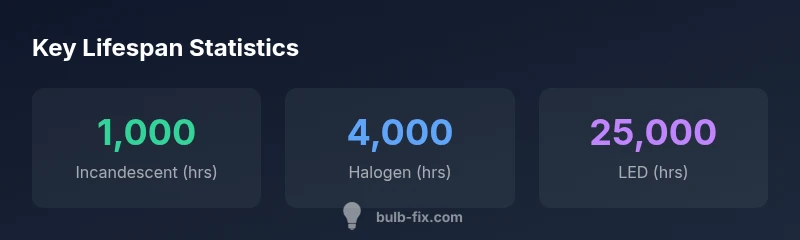
On average, bulb lifespans vary by type: incandescent about 1,000 hours, halogen 2,000–4,000 hours, CFL 8,000–12,000 hours, and LED 15,000–25,000 hours. Real‑world life depends on usage patterns, heat, voltage, and switching frequency; frequent on/off can shorten LED lifespans, while high-quality LEDs with good cooling can exceed 25,000 hours. For households, plan around fixtures and usage rather than chasing exact hours.
Why the question matters
According to Bulb Fix, understanding how long a light bulb lasts helps homeowners plan replacements, budget energy use, and maintain safe, effective lighting throughout the home. The lifespan of a bulb is not a single number; it depends on type, usage patterns, fixture heat, and installation quality. In this section we explore why lifespan matters, how to read bulb labels, and what it means for daily routines in living rooms, kitchens, and hallways. Knowing these factors helps you schedule replacements before a failure occurs and reduces the annoyance of dead fixtures.
How bulb type determines lifespan
The core driver of expected life is bulb type. Incandescent bulbs typically provide around 1,000 hours of service, halogen bulbs about 2,000–4,000 hours, CFLs roughly 8,000–12,000 hours, and LEDs commonly reach 15,000–25,000 hours under normal conditions. Differences come from heating, materials, and the efficiency of the electrical drivers. In practical terms, the more energy-efficient the design and the better the thermal management, the longer the bulb will last.
Real-world factors that shorten or extend life
Even within the same bulb type, lifespan varies based on usage and environment. Heat is a primary killer: fixtures that run hot or enclosed luminaires can dramatically shorten life for LEDs and CFLs. Frequent on/off cycling reduces the number of usable hours, particularly for LEDs and CFLs. Voltage fluctuations, incorrect wattage, and poor ballast or driver quality also stress bulbs, shortening life. Proper ventilation around fixtures and avoiding dimmers not rated for certain bulbs can help.
How to estimate replacement cycles in your home
A simple way to estimate replacement cycles is to divide the listed bulb hours by your annual usage. For example, if you use LED bulbs rated at 20,000 hours and average 4 hours per day, you can estimate a replacement cycle of about 13–14 years, assuming normal conditions and no major failures. If you use incandescent at about 1,000 hours per bulb with 4 hours per day, the cycle is roughly 0.7–0.9 years. Keep in mind that real-life factors can shorten these numbers.
Life-cycle cost considerations by bulb type
Despite higher upfront costs, LEDs typically offer the lowest total cost of ownership due to energy savings and long life. Incandescent bulbs are cheapest to buy but require most frequent replacement and higher energy use. Halogens sit in between, with moderate energy use and shorter life than LEDs. CFLs reduce energy use compared with incandescent but contain mercury and require careful disposal at end of life. When planning purchases, tally both purchase price and expected energy consumption over the bulb's life.
Practical tips to maximize bulb life
- Choose bulbs with strong thermal management and reputable drivers.
- Avoid enclosing fixtures that trap heat unless the bulb is rated for enclosed use.
- Use compatible dimmers and controls to minimize stress on bulbs.
- Replace all bulbs in a fixture at the same time to avoid mismatched aging.
- Keep fixtures clean and free of dust to prevent overheating and misalignment.
- Purchase quality LED bulbs from established brands and consider test-fitting a small batch before full deployment.
What to do when a bulb fails unexpectedly
If a bulb dies early, check installation and electrical conditions first: ensure the socket is clean and the contact is tight, and confirm there are no voltage fluctuations. For LEDs, check that the driver is compatible with the fixture and that the ballast (if present) is not failing. If a bulb fails in a fixture that cycles on/off frequently, consider a higher-quality option or adjusting usage to reduce stress. When in doubt, swap the bulb type for a longer life and better efficiency.
Common myths about bulb lifespans
Myth: All bulbs fail gradually and provide clear warning signs. Reality: Some bulbs burn out suddenly with little warning. Myth: LED bulbs never fail. Reality: LEDs do fail, especially when heat is not managed well. Myth: Longer life equals better light quality. Reality: Lifespan and light quality are not directly correlated; a longer-life bulb may have a worse color temperature or driver quality. Understanding real-world factors helps choose bulbs that balance life and performance.
Lifespan ranges by bulb type
| Bulb Type | Typical Lifespan (hrs) | Notes |
|---|---|---|
| Incandescent | 1000 | Low efficiency; frequent replacements |
| Halogen | 2000-4000 | Better efficiency than incandescent |
| CFL | 8000-12000 | Contains mercury; disposal caution |
| LED | 15000-25000 | High efficiency; long life |
Got Questions?
How long does an incandescent bulb last in typical home use?
Incandescent bulbs typically last about 1,000 hours under normal household use. In practice, cycles and heat shorten this to months rather than years. Consider upgrading to LEDs for longer life and lower replacement frequency.
Incandescent bulbs usually last around a thousand hours; upgrading to LEDs can greatly reduce how often you replace bulbs.
Do LEDs really last 25,000 hours?
LEDs commonly range from 15,000 to 25,000 hours under normal use; actual life depends on heat and driver quality. High-quality LEDs with proper cooling can approach or exceed 25,000 hours.
Yes, LEDs commonly last 15,000 to 25,000 hours depending on heat and quality.
What reduces bulb life the most?
The biggest life reducers are heat, frequent on/off cycling, and poor electrical quality. A balanced approach with good fixtures, appropriate wattage, and quality bulbs extends life.
Heat and frequent switching hurt bulb life the most.
Is it worth switching to LED for energy savings?
In most homes, LEDs save energy and last much longer than incandescents, reducing replacement frequency. While upfront cost is higher, total cost of ownership is typically lower over the bulb's life.
Yes—LEDs use far less energy and last longer, saving money over time.
How can I maximize bulb life in a lamp?
Choose bulbs with good thermal management, avoid overheating fixtures, use compatible dimmers, replace all bulbs in a fixture at once, and keep fixtures clean to prevent overheating.
Good cooling, sensible use, and proper dimmers can boost life.
“A lamp's life depends on type, usage, and thermal management; in practice, LEDs with good cooling deliver the longest service life.”
Key Points
- Compare lifespans by bulb type before buying
- LEDs offer the longest service life in homes
- Frequent switching reduces LED life; use smart controls
- Plan replacements around fixtures, not hours
- Consider total cost of ownership, including energy use